


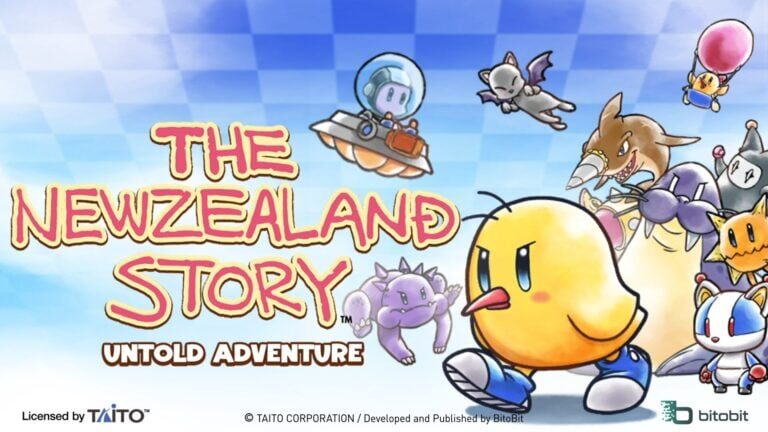
If I let my imagination run wild, I can visualise the way The New Zealand Story tormented a generation of children in the late 1980s. The extremely cuddly attract screen of the colourful arcade cabinet must have drawn in swarms of kids like flies to a sparking fluorescent light. Yet, once a coin was begged for and deposited, the initially wonderfully cute platformer revealed itself as a ferocious monster, chewing up the hopes and dreams of the “light” arcade experience the game seemed to promise from the outset. Instead, players were served one of the most deceptive coin-gobblers of 1988. Still, if you carried a bit of perseverance and some skill, The New Zealand Story and its mascot Tiki the Kiwi would reveal a fun but knuckle-bleedingly hard puzzle-platformer that remained in the collective memory of gamers for 35 years.
Still, there is a general consensus among gamers and games media alike that the adventures of Tiki the Kiwi deserve at least an honourable mention in the annals of video game history. It pioneered some pretty neat mechanics back in 1988; the verticality and puzzle elements inherent to its labyrinthine level design were quite unique for the time. The slew of floatable modes of transport – which could be nicked from the minions of the oppressive Wally the Walrus – allowed players to doge the dangerous concentrations of enemies and them off in a more tactical.
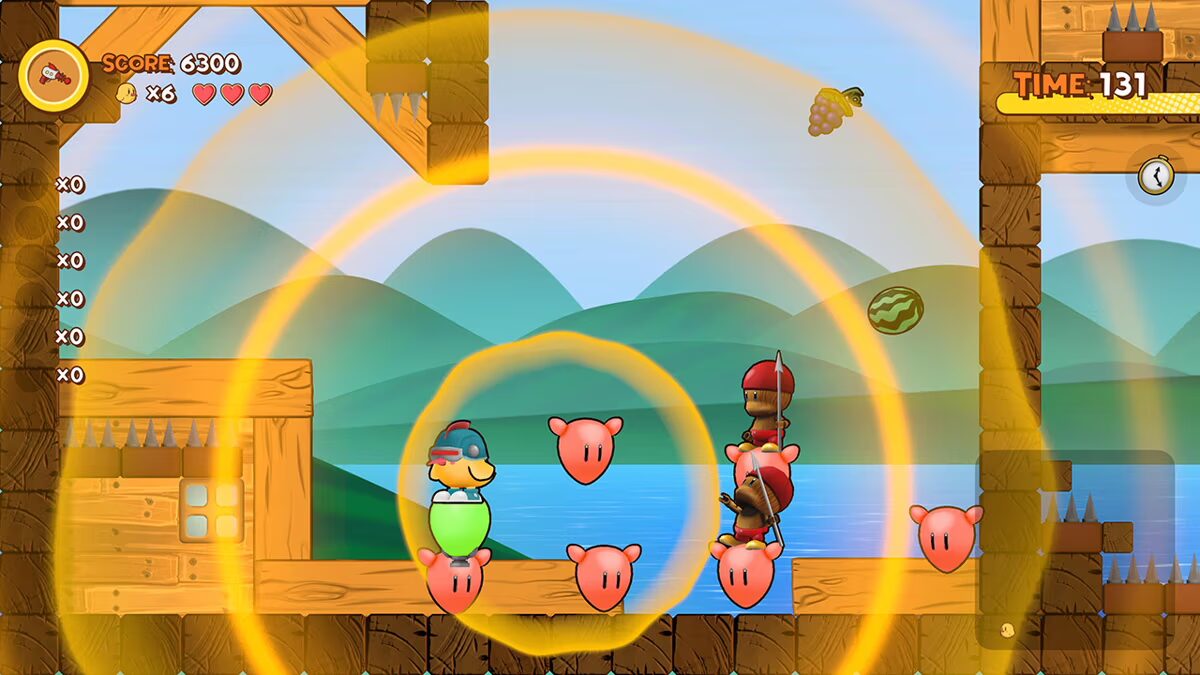
In true Taito cutesy-platformer tradition, eliminated opposition drop a wide variety of fruit and power-ups. While the fruit serves as a means of gathering points, the power-ups significantly increase your otherwise slim chance of survival. The tight platforming and somewhat weighty controls of the Kiwi make the hordes of incoming enemies difficult to navigate; consequently, it is this punishing difficulty that remains the key memory lingering with the majority of gamers who played either the arcade original or one of its many console and home computer ports.
Plastic surgery
The relatively new Italian developer and publisher, Bitobit, was granted the honours of taking Taito’s The New Zealand Story IP and remaking it. They clearly went in with the MO to keep the original game intact, updating the visuals while adding a few new features. Much like Lizardcube’s Wonder Boy: The Dragon’s Trap, the new graphical style is draped over the original game’s core mechanics as if it were plastic surgery.
Uncanny Valley
While this sounds like an effort to preserve what was there—and what fans of the game regard as great—the reality is that the new ‘coat of paint’ is a bit off. Whereas Lizardcube poured a boatload of character and charm into their graphical overhaul, Bitobit’s treatment is a bit too straightforward, essentially just cleaning up the pixels. Ultimately, it ends up unintentionally looking like a somewhat well-made ‘Scratch’ game (for those familiar with the entry-level development software for kids) if a bit of an ‘Uncanny Valley’ from the perspective of its original pixel art.
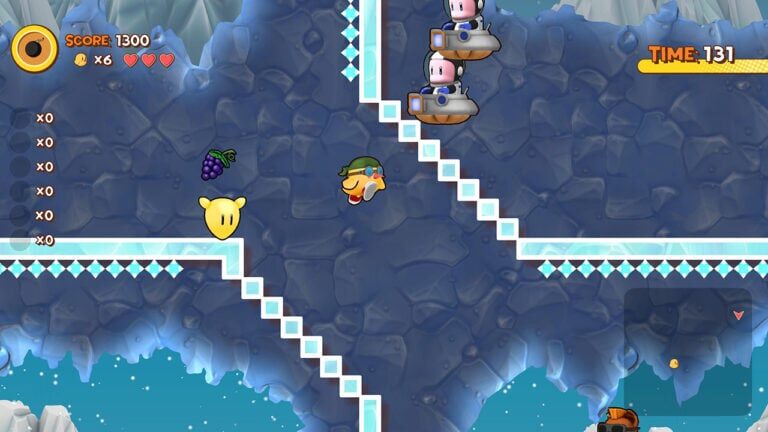
To some extent, this is The New Zealand Story’s own fault. While the original looked attractive with its cute anime characters it also severely lacked on the animation front, with some sprites having no animation at all. We all have seen the idea of remaking character sprites before dozens of times in retro remakes and redoing the animation always seemed to marry the classic gameplay with modern graphics more effectively than just redrawing the old assets to a tee. With that said, I do find Tiki the Kiwi her-/himself made the transition to a 3D sprite fairly well and seems to have got a little bit of animation work done.
The original backgrounds and platform elements didn’t go over well in the transition to the new visual style, either. Generally, most of the sprite work, with the exception of Tiki and his numerous outfits, is rather stale. This is largely because the assets were taken directly from the original; updating the visuals only served to make their simplicity even more apparent.
Adventurous platforming
So much for the graphical choices made. In terms of gameplay, however, Bitobit has made some some very sensible decisions. They have introduced a three-heart system for hit points and the ability to continue the level after running out of lives, much like the Mario platformers have done since Super Mario World. Both features massively boost the game’s longevity, as the arcade original is such a rage-inducing, ball-breaking experience. These additions make it actually playable for casuals (like me).
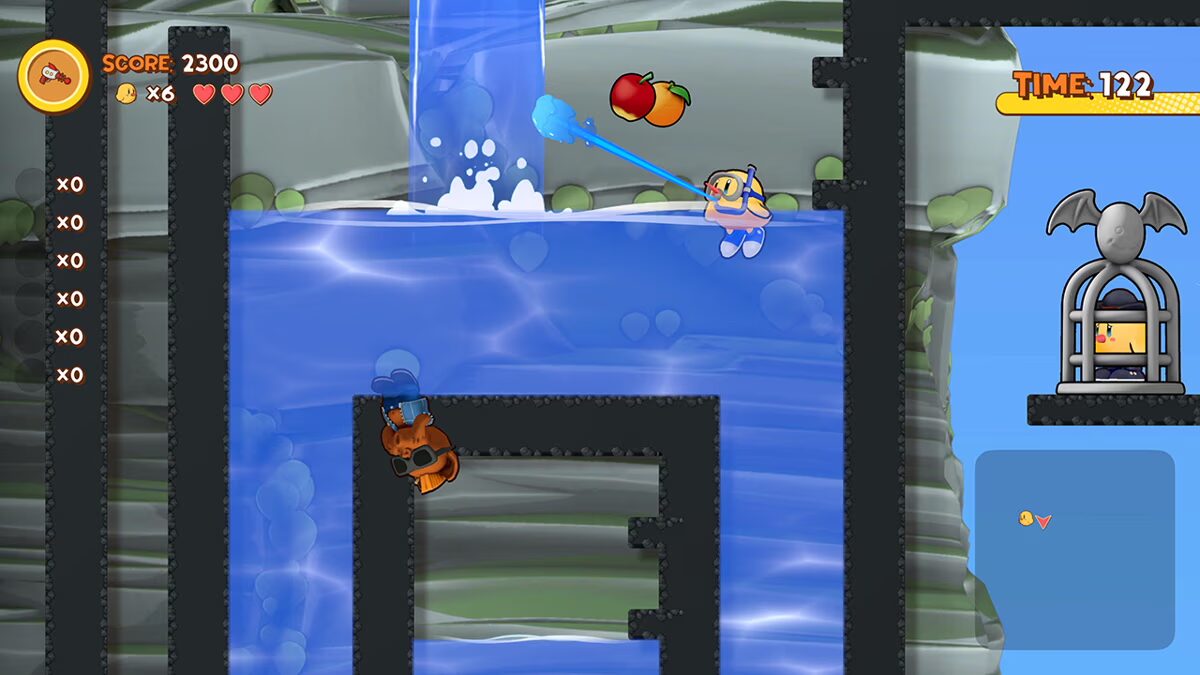
Well, “playable” might be a stretch as some levels introduce several highly annoying bugs that suggest playtesting wasn’t the highest priority. In these stages, you can get trapped in random glitches that essentially “portal” you around; in the blink of an eye, you disappear off-screen, the camera pans to a nearby section, and you’re popped back in.
In some areas, this is so notorious that it significantly hindered my progress. It forced me to “speedrun” through the levels, as any attempt to hunt for fruit increased the risk of getting caught in one of these glitches—which sometimes resulted in being dropped into the path but of enemies but more often letting valuable time tick away whilst trying to escape the technical hiccups. Of course, these bugs can be squashed in post-launch support if Bitobit intend to support the game after release.
Nostalgia stripped away
Consequently, anyone playing the game is caught in a dilemma: while this remake offers the opportunity to enjoy the sometimes-brilliant, puzzle-fuelled level design previously hidden behind an impenetrable wall of ‘git gud’, the player is simultaneously confronted by a host of technical issues. Additionally, I’m not convinced the source material is as good as some may have you believe. Alongside the adventurous level design the controls feel incredibly clunky and the hit detection is spotty. I had to boot up an emulator to determine if this had been carried over from the original, and to my surprise, all the clunky tomfoolery—with the exception of the hit detection and technical bugs—seems to have been copy-pasted into the remake, as-was.
In a sense, the very things that drew kids to The New Zealand Story back in the day—the cuteness and Taito-hallmark aesthetic appeal—are likely to attract the same people now, lured in by foggy memories. Simultaneously, it will attract the hardcore fans who love to sink their teeth into the tough-but-fair gameplay. Both categories of gamer will likely be disappointed; the gameplay is hindered by glitches, and the nostalgia isn’t served by the visual appearance of this remake.
It feels a bit harsh to critique the developer for staying true to the source material: keep the gameplay intact while adding modern graphics. Ultimately, however, this approach magnified the glaring holes in the 1988 original: the lack of animation, the mundane backgrounds, and the not-so-great controls. The execution lacks as well, where BitoBit introduced some annoying bugs and inconsistencies what feels like the final blow for this remake. In the end, it the result is that the game feels "unlocked" for the casual gamers, but as a side effect takes you along a series of problems that, especially with the nostalgia stripped a way, makes this feel like an untested beta-product.
