

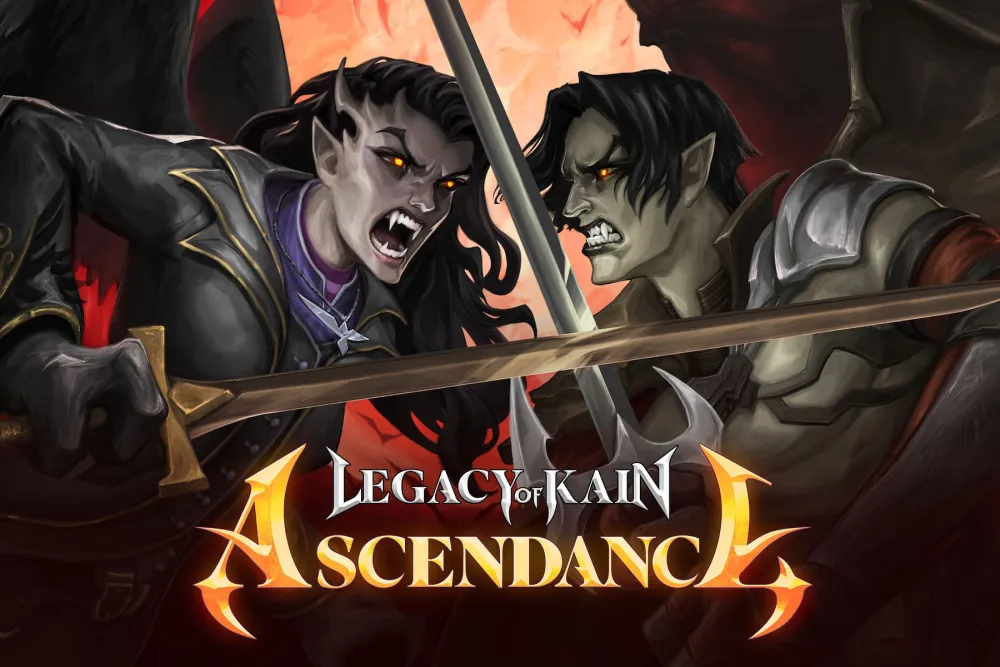

In the early years of 3D action-adventure games, Crystal Dynamics’ Tomb Raider and Legacy of Kain series positioned themselfs as a titles that pushed narrative quite a lot in a 3D action games of the time. Legacy of Kain: Soul Reaver became the breakout hit, arriving at a time when the genre was still moving away from rigid tank controls toward something closer to what we now consider standard. Its movement and world design helped nudge that transition forward.
While Soul Reaver brought the series into wider recognition, it began with Blood Omen: Legacy of Kain. That first entry already laid the groundwork for Amy Hennig’s approach to storytelling, applying a dense, character-driven narrative to a top-down 2D structure. From the outset, the series built a layered timeline shaped by moral ambiguity, where its central figures aim to save the world, yet leave a trail of consequences in their wake.
Risen from dormancy
While several successful sequels followed the original PlayStation releases, the series effectively came to a halt after Legacy of Kain: Defiance in 2003. It’s striking to realise that the game is now over two decades old and the series dormant for all those years. In recent years, a number of legacy publishers and IP holders have revisited dormant franchises, either through acquisitions, internal revivals, or by repositioning older brands for a new audience.
Crystal Dynamics, however, followed a different trajectory. The studio was acquired by Embracer Group (via Square Enix’s Western studios sale in 2022), a company known for consolidating large numbers of legacy IPs. While Crystal Dynamics itself has not actively revived Legacy of Kain in the past, Embracer’s broader strategy has often leaned toward re-evaluating dormant franchises. Within that context, Legacy of Kain: Ascendance emerges as a new long awaited additional to the series.
A small-scale take on Nosgoth
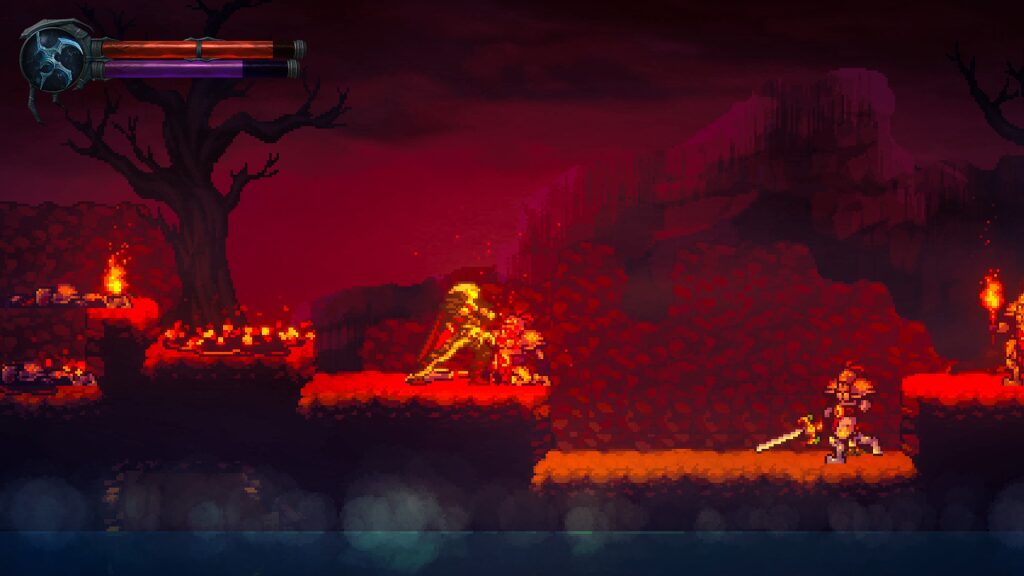
From the Crystal Dynamics perspective Ascendance is much more contained experience than we are used to from them. So unsurprisingly, Crystal Dynamics/Embracer Group outsourced the IP to Bit Bot and HitZone Games’ Sam Beddoes. The latter is know for working on 2D adaptations of known IPs, like The Angry Video Game Nerd when he worked for Mega Cat studios. In contrast to the series’ original scope, Ascendance takes the form of a 2D platform slasher, structured across twelve chapters that explore the rise of the Soul Reaver. Calling it a straightforward prequel would not quite fit. As many earlier entries, the series’ hallmark of timeline shifts and overlapping perspectives remains present, and Ascendance leans heavily into that structure.
Story-first design
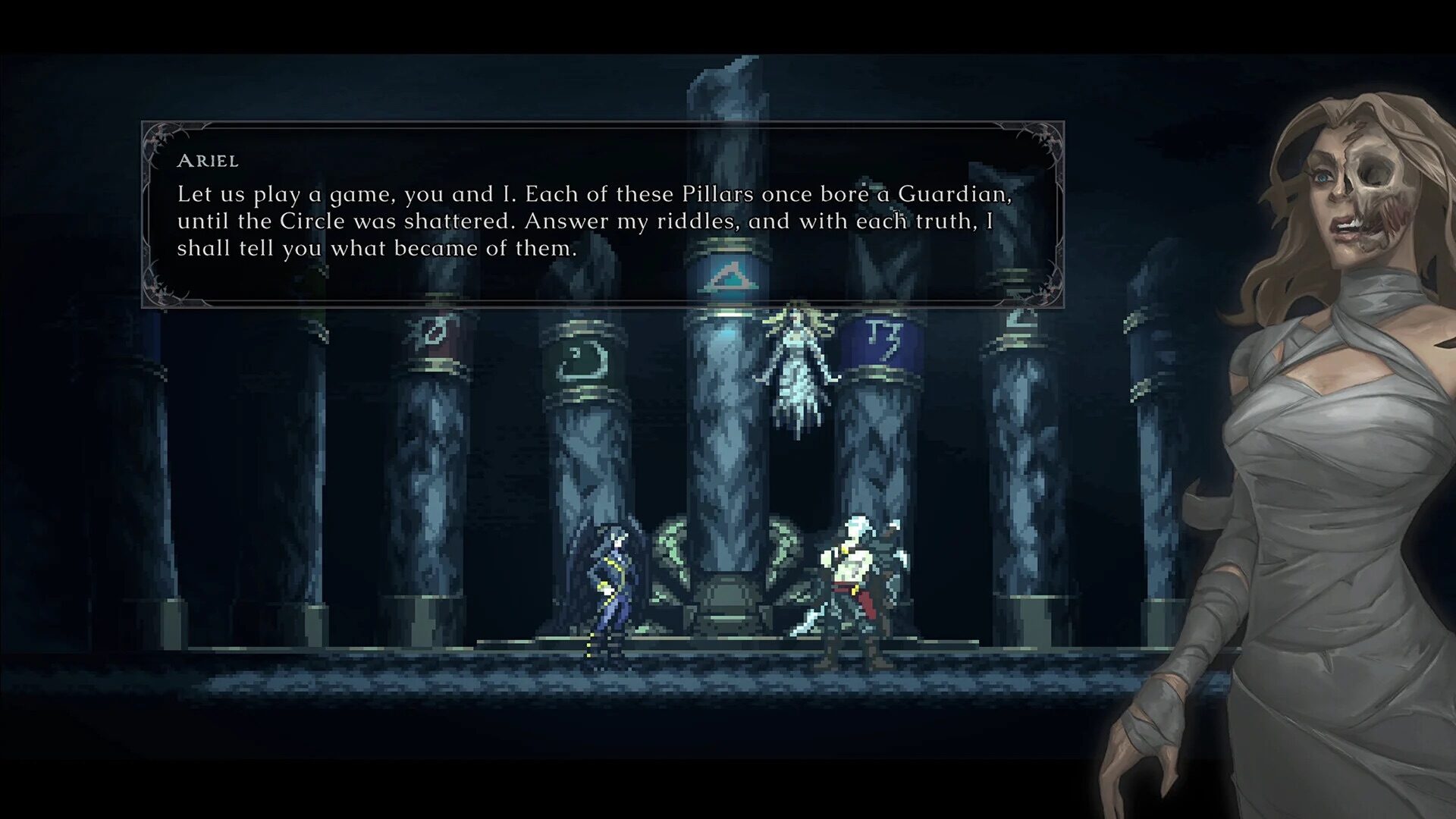
In the process of fitting the narrative into a retro-esque game, HitZone Games seems to have opted to let the story lead the design choices. While the core of the game is a 2D hack-and-slash fest, in some chapters the perspective literally shifts to retro-style 3D, and later to hand-painted stills, before ending in fully anime-leaning animation. This also means that chapters differ widely in gameplay context. In some, the only interaction is solving riddles, while others simply convey a pivotal part of the story without player intrusion. It’s a fairly uncommon approach which initially feels odd, but starts to make sense the further you go.
Platforming drag
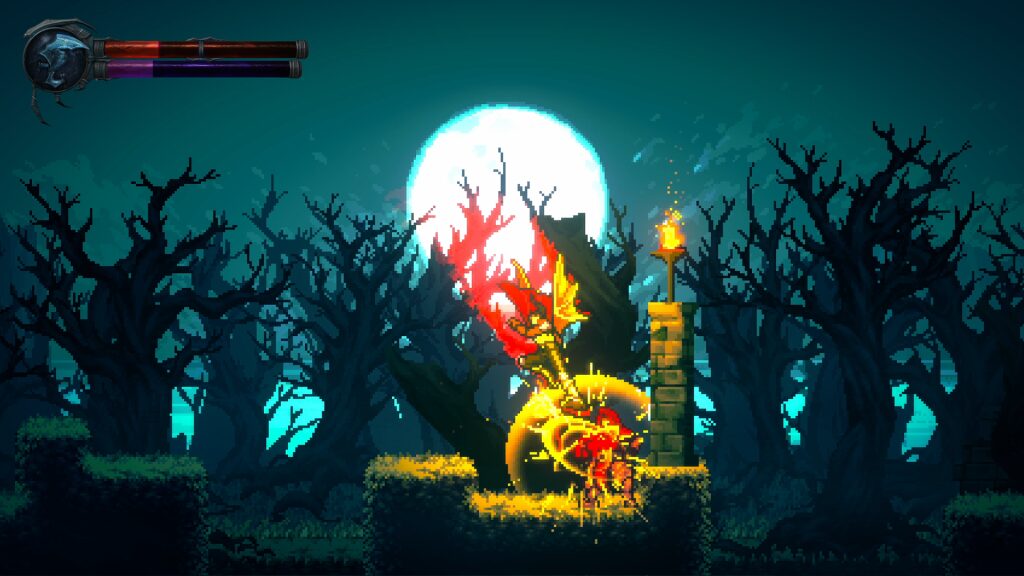
The 2D platforming is the meat of the game, though it is also its weakest point. The first four to five stages are very straightforward, left-to-right platforming affairs without much excitement. As the story progresses, you switch between characters: Raziel as army captain, Elaleth, and later on Kain himself. Of the two initial playable characters, Elaleth—Raziel’s sister—has a more interesting set of traits, as she is a vampire with some unworldly skills. Still, for both characters the range of abilities is severely limited, and combined with the straightforward platforming, it is not as engaging as it could be. It leans heavily on a first-generation Castlevania pacing and move set, with the occasional added aerial attack. It feels just as sluggish, which, with today’s standards in mind, could have been pushed further. Either by expanding the move set, or simply speeding things up.
The basic combat, combined with needlessly long and, at times, dull staging, turns this into a bit of a drag.
Style-divergent
Then, halfway through, the game shifts. Kain is introduced, which immediately makes the combat feel more credible and allows the game to add some variation. The final -out of a risk of spoilers- undisclosed character adds another layer, making the platforming a bit more adventurous from a gameplay perspective as well.
It helps that at this point the story, and the way it is laid out, pushes the game toward other forms of visual exposition. This breaks up the slow pacing and rekindles some momentum, albeit quite late in the playthrough. But while it does break up the monotony of the first part of the game, the constant switching between visual styles feels highly incoherent.One of those styles, the retro-styled 3D sequences, is clearly intended to mimic the look of Blood Omen: Legacy of Kain cutscenes.
These scenes come out of nowhere and will likely raise an eyebrow for unsuspecting players, and can feel awkward. To some extent, they serve a purpose. Had these particular scenes been presented within the 2D plane, they would likely have felt extremely static, despite being essential to the story.Still, it feels like a missed opportunity. A stronger focus on a single alternative visual style would have helped the game deliver its narrative with more coherence.
Value
The amount of story exposition through cutscenes and text balloons takes up a large portion of the playthrough, which raises the question of whether the amount of actual gameplay justifies the €19,99 price tag. Apart from that, I’m not convinced that the remaining hour and a half of platforming feels inspired enough. Even a decent story does little to help Legacy of Kain: Ascendance rise to a level that makes it easy to recommend to the average gamer for that amount of money. This month alone brought forth several titles that offer a much more interesting gaming experience in the same genre.
