



I don’t think I’ve ever seen the hype for a game build quite so suddenly, just a week before release. It was as though everyone with a soft spot for Metroidvanias had forgotten that one of the genre’s two namesakes was about to return, only to scramble for the remaining pre-orders a few days before launch.
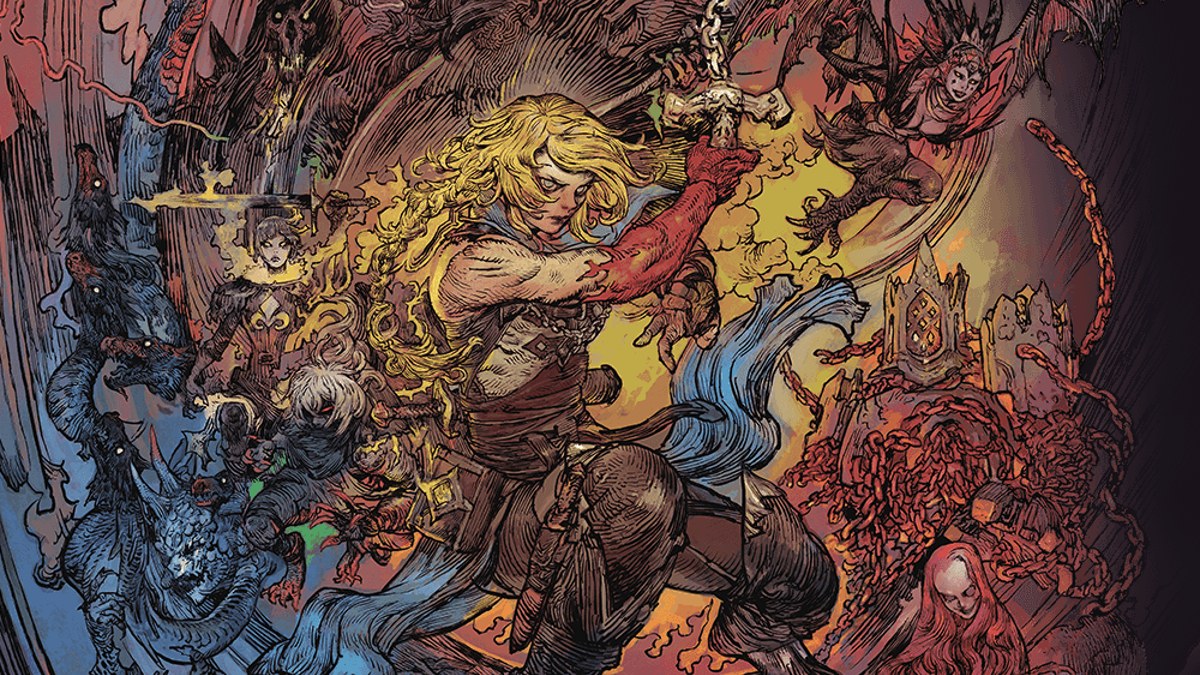
The Midnight Edition of Castlevania: Belmont’s Curse, sporting that fantastic cover art, quickly became hard to find. The Steelbook version sold out and soon resurfaced on eBay and similar sites for anywhere between €80 and €100.
Why the initial interest in the first new Metroidvania-style Castlevania since the DS games seemed so modest is still a bit of a mystery to me. Perhaps it had something to do with the relatively brief reveal during February’s PlayStation State of Play, followed by a marketing campaign that never really seemed to gather much momentum. It felt like we, retro-sensitive foks, all suddenly woke up when the release date was staring us in the face.
Konami seemed, and still seems, strangely reluctant to make much noise about what I would consider one of the best Metroidvanias around, apparently being very selective about distributing review keys. And I’m not just saying that because we missed out. Even outlets like Kinda Funny reportedly received only a single key, while other gaming pundits had to make do with the demo. Yet now the praise, the nines and tens and the endless Castlevania posts are everywhere. Quality tends to find its audience, even when the publisher appears to do relatively little to help it along.
The Belmonts in Paris
The story takes us to Paris in 1499, where Trevor Belmont and his daughter Rose investigate an apocalyptic outbreak, suspecting the involvement of a cult devoted to the repeatedly defeated Count Dracula. Father and daughter soon go their separate ways, leaving you to take control of Rose.
With a badly cursed arm that looks like it could do with some urgent medical attention, Rose discovers a world overrun by the undead and all manner of other cursed creatures. Certain foes she defeats become bound to the tarot cards she inherited from her mother. These figures, often drawn from mythology, grant her abilities she can use in combat and while exploring.
You also find a fairly substantial assortment of weapons, some with very particular properties. Mixing weapons and abilities gives you plenty of flexibility and can make a real difference to how you play. Their initial attack ratings are broadly comparable, but their reach, speed and damage output make them feel quite different in practice. Whips offer range, while heavy swords hit harder but take longer to swing. You know the drill.
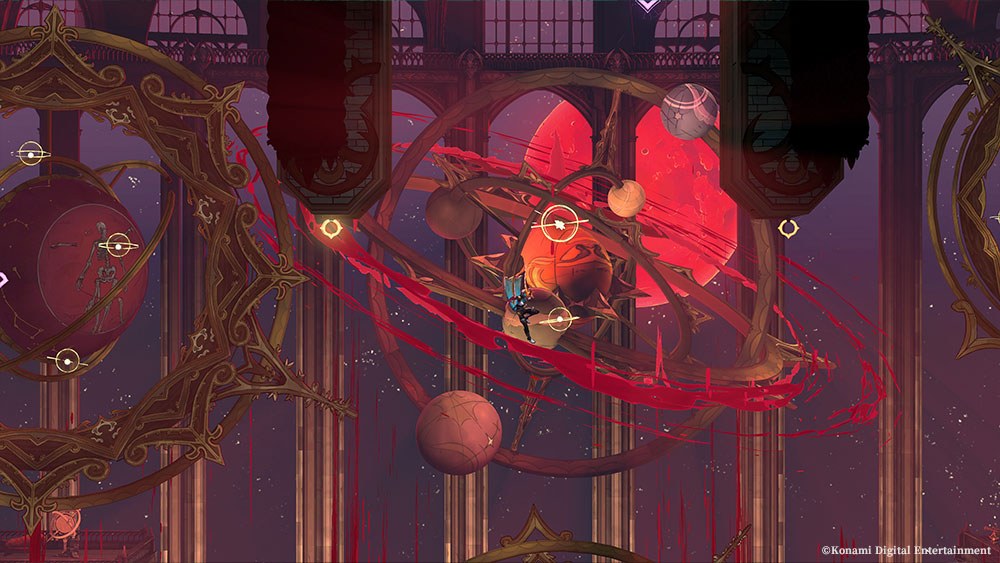
There isn’t an overwhelming amount of build optimisation to get lost in, either. Finding the weapons and stat upgrades tucked away throughout the map matters more than endlessly tinkering with combinations. You’ll want those improvements when dealing with everything lurking above and below the streets of Paris.
A different kind of Castlevania
The big question is whether Belmont’s Curse is the salvation of the Metroidvania faithful. Or the cult, if you prefer.
Well, yes and no. Around 14 hours in, my feeling was that Evil Empire had put its own stamp on the genre while also daring, at least initially, to take a considerable step sideways within the Castlevania universe. You’re playing as a Belmont again and the platforming feels familiar, but Paris in 1499 gives the adventure a distinctly different atmosphere. Castlevania Goes France!, if you will.
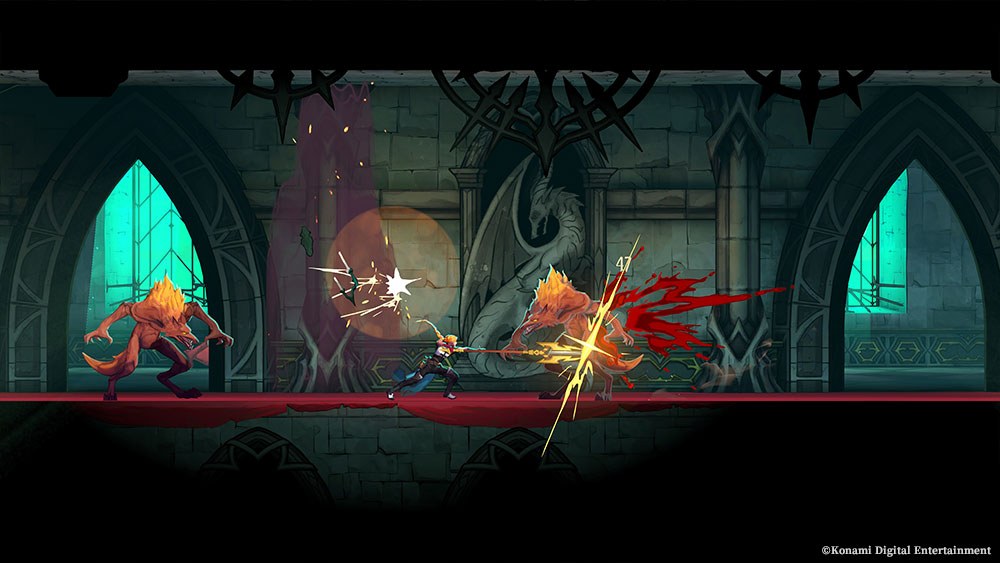
Both the platforming and combat clearly draw on Evil Empire’s work on The Rogue Prince of Persia and Dead Cells. Combat, in particular, feels substantially more fluid and modern than in Igarashi’s handheld entries, which themselves once helped move the series forward.
Fights become an almost improvised ballet between Rose and her enemies, with the whip, parries and slides playing a much greater role once you unlock them. The whip lets you zip seamlessly between enemies, keeping you on the move as you fight. These additions carry a recognisable Dead Cells influence and make it feel as though you have complete control over the situation. At no point did I feel that a death came down to Rose failing to respond accurately or quickly enough.
Almost every tarot ability you unlock serves the familiar Metroidvania purpose of opening another route through the map, but these skills also offer meaningful advantages in combat. The aforementioned whip grapple, acquired early on, remains one of your most useful tools throughout the game. Exploration regularly demands it, but you can also latch onto enemies, pull yourself into striking distance and give them a proper beating.
The parry is another particularly useful addition. Once you get the timing down, even some of the tougher bosses become considerably more manageable. Combined with the whip, it allows you to stay right in their faces and keep dishing out punishment. Taken together, these changes represent a substantial step forward for the series’ combat.
I would rather say as little as possible about the story and its twists, except that something happens around the halfway point that genuinely gave me goosebumps. It is one of the best gaming moments I can remember from the past few years.
A city worth looking at
Visually, Belmont’s Curse is remarkably refined. Some scenes are so carefully composed that I found myself stopping to take them in. Hidden, overgrown tombs, clock towers and abandoned places all contribute to a world that invites a closer look.
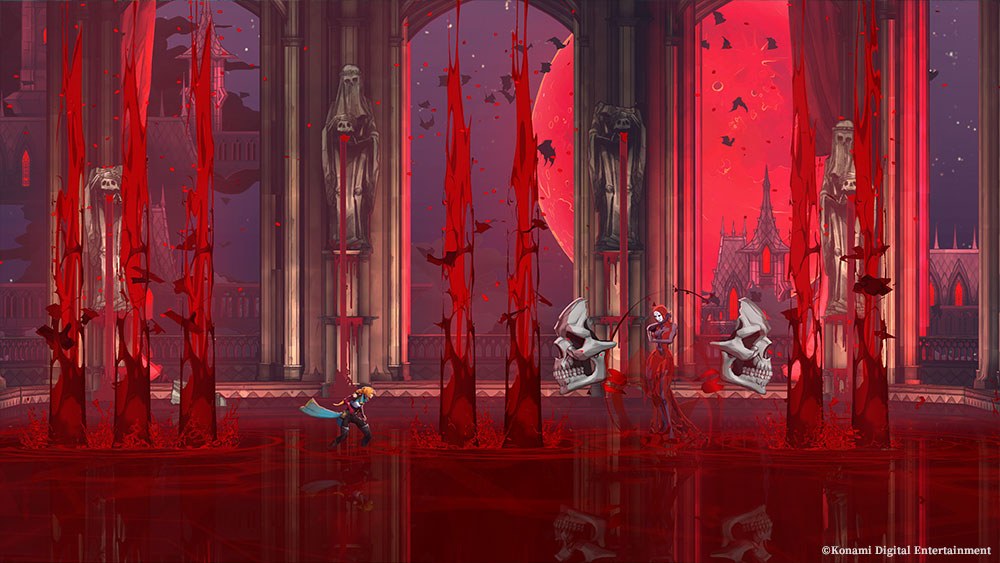
Beautifully designed scenery passes through the background, while the structures you actually move through contain enough detail to suggest that people once built and inhabited them. That sense of physical construction comes across surprisingly well despite the illustrated 2D art style.
Which brings us to the less attractive side of the picture: the technical state of the Switch version.
For reasons I don’t understand, Konami has opted against a native Switch 2 release, leaving Nintendo players with a version that feels compromised. That applies both in comparison with the PC, PS5 and Xbox versions and on its own terms.
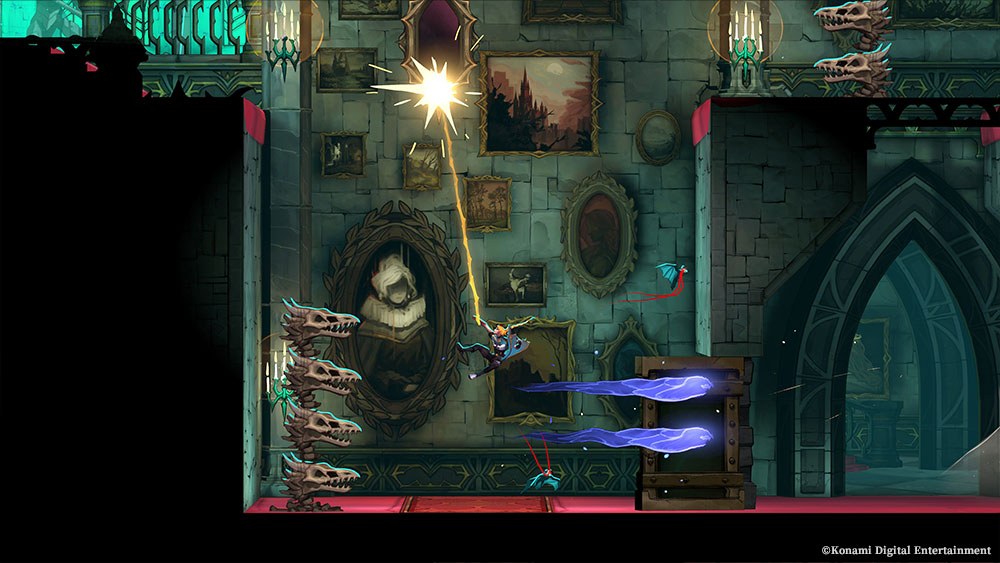
Foreground textures can look painfully poor, the overall resolution is disappointing and the characters occasionally look as though they have become pixel art entirely by accident. Playing the Switch version on Switch 2 raises the frame rate from 30fps to 60fps, but the image quality still makes the absence of a native version difficult to understand.
If Nintendo hardware is your only handheld option, the Switch release may be worth considering. If you own a Steam Deck or another PC handheld, though, that is the obvious route to take.
Taking on Symphony of the Night
For me, the real question is how Belmont’s Curse compares with the exploration-based Castlevanias of the IGA era.
To get straight to it: this is a home run, competing with Symphony of the Night for the top spot. Evil Empire has made a game that broadly follows the same principles while feeling sufficiently different, reworking familiar mechanics and giving combat a much-needed update.
Belmont’s Curse has even made Symphony of the Night feel a little dated to me, which is something I didn’t expect to say. I have spent years arguing that IGA’s finest work had barely suffered from the passage of time or the changes the games industry has gone through since its release.
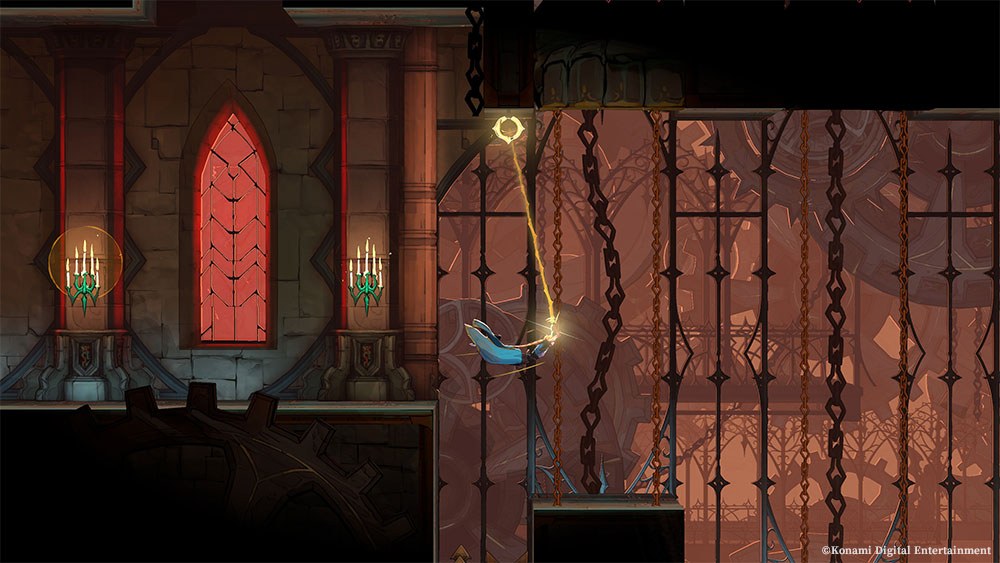
There is also more variation in how the adventure unfolds. Some stretches feel considerably more linear than Symphony of the Night, while others fully embrace the interconnected exploration you would expect, all supported by a solid and engaging story.
I do find the endgame structure somewhat disappointing, though. After carrying you through that story, the game suddenly loosens its grip and asks you to track down the remaining unexplored routes and Arcana. Following everything that comes before it, that shift feels like an awkward way to bring the adventure towards its conclusion.
Belmont’s Curse has a curse of its own: it will always be compared with its grandfather, Symphony of the Night, which, much like Dracula himself, seems immune to the passage of time. That is quite a legacy to live up to. The fact that there is a debate to be had about which game is better is a testament to just how strong a return Belmont’s Curse is.
On its own merits, Belmont’s Curse has shaken up the genre primarily through its refined combat and a different approach to structure, starting as a straightforward platformer before gradually introducing familiar Metroidvania elements and eventually embracing the genre in full. It is a masterclass in balancing a Metroidvania, and its numerous difficulty options also make it one of the most accessible.
For now, we declare Belmont’s Curse the rightful heir to the Castlevania legacy and a worthy claimant to the Metroidvania throne.
