

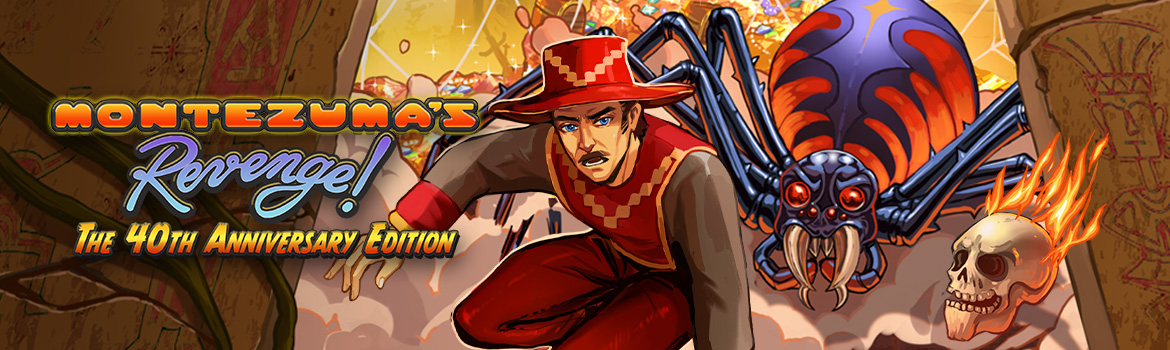

In the 1980s, almost every viable home computer platform produced at least one Indiana Jones inspired single screen platformer. Every gamer brought up in the 80s can come up with at least a couple of examples. Pitfall! on the Atari VCS, Rick Dangerous and Caverns of Khafka on the Commodore 64, while the Apple II had Aztec. On top of that came the officially licensed Indiana Jones games, of which dozens were released during that era. Parker Brothers’ Montezuma’s Revenge (not to be confused with traveller’s diarrhea, although the pun was clearly intended) arrived in the post-VCS Atari era as the platform’s own take on the genre. Forty years later, Eastasiasoft and Mission Critical Studios have released a remastered version of this 8-bit classic.
From Atari 800 to multi-platform success
Montezuma’s Revenge was originally developed for the Atari 800 and was almost immediately ported to cartridge for the Atari 5200, the successor to the Atari 2600, also known as the VCS. As a third-party release, it eventually found its way to nearly all major platforms of the time. Collectively, the various versions sold around 600,000 units, which qualifies as a success given the market conditions of the early 1980s.
Although often criticised for being difficult and demanding, Montezuma’s Revenge stood out as one of the few games of its era that encouraged players to take notes and draw maps in order to keep track of items that were needed elsewhere. In that sense, the game is often cited as an early example of what would later be called the Metroidvania formula, albeit without any form of hand holding. Reading the manual, assuming you did not copy the game, at least informed you that the adventure takes place inside a pyramid structure and that your goal is to descend nine levels to find and defeat Emperor Montezuma II.
A 40th anniversary return from abandonware
Developer Normal Distribution and publisher Eastasiasoft have now taken on the IP, pulling it from the realm of abandonware and presenting it as a special 40th anniversary remake. As regular readers know, we generally welcome remakes and collections, as reflected in several of our previous reviews. Montezuma’s Revenge, however, turns out to be something of a head scratcher. A remake implies that the original visuals and audio, and optionally gameplay elements, are brought up to modern standards, made playable on contemporary hardware, and ideally enhanced with accessibility options or quality-of-life improvements that address some of the original design limitations. This is where this production sort of derails.
A visual overhaul that misses the mark
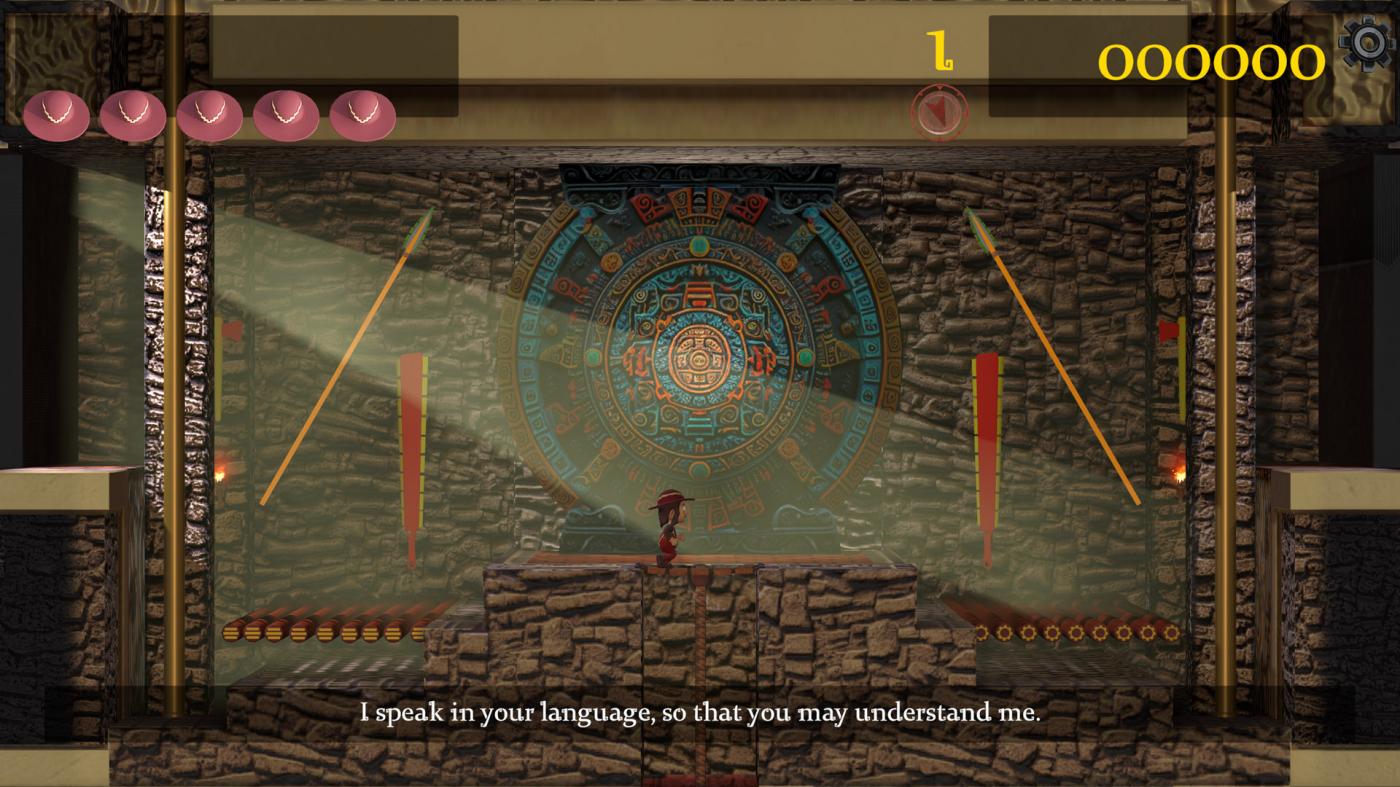
To a certain extent, this release does tick some of those boxes, but not in a particularly tasteful way. The graphics neither feel appealing nor aligned with current indie retro standards. Taste is, of course, subjective, but it is difficult to imagine many players finding the mid-2000s Flash or early mobile game aesthetic anything other than dated and sloppy. The overall presentation feels more like a hastily dressed-up 25th anniversary release than a carefully considered modern remake. A reinterpretation in high-quality pixel art, perhaps along the lines of Flynn’s Arcade releases, or a more cohesive non-pixel art approach similar to Beyond the Shadow Gate, would likely have been a better fit.
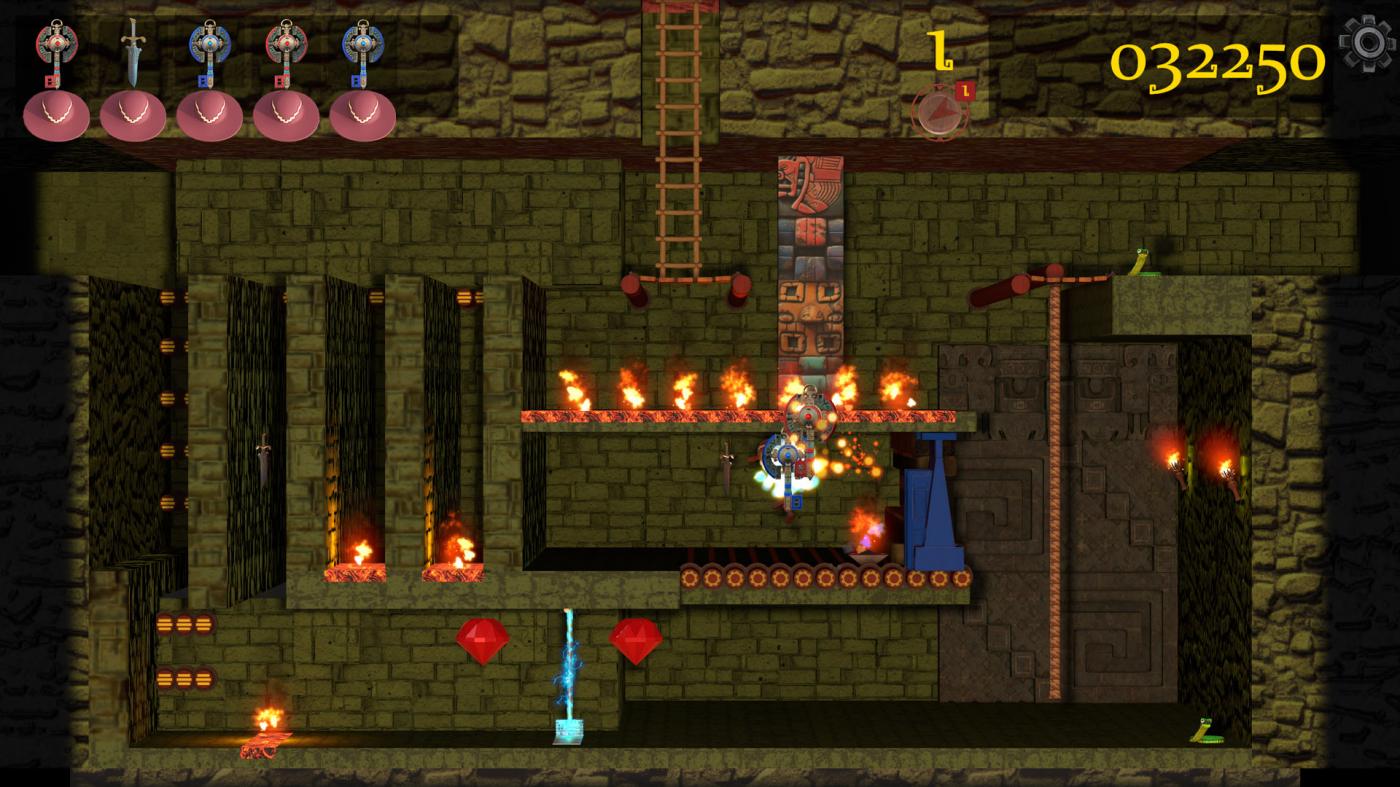
Even within its chosen visual style, the sprite work lacks cohesion and direction. Objects appear creatively scattered, with little effort made to translate the abstract visuals of the original game into a consistent modern sprite set. The user interface and menus suffer from the same issue and come across as equally outdated. So, on the presentation side, this rather feels like a low-budget effort.
Limited enhancements
Moving on to gameplay, my second key criterion for a remake is that the original mechanics are preserved and, where appropriate, refined. On a positive note, the gameplay itself has not been altered from its original. The modern visuals are layered directly over the original game logic, preserving mechanics such as jump distances, maximum fall height, and overall movement behaviour. Very little has been added or enhanced, but given the questionable visual overhaul, it is probably for the best that the core design has been left untouched. Some concessions to modern players have been made, including the addition of a temple map, difficulty options, a scoreboard, and the choice between a male or female character, which is of course a blessing for gamers that were frustrated by the originals difficulty and lack of guidance.
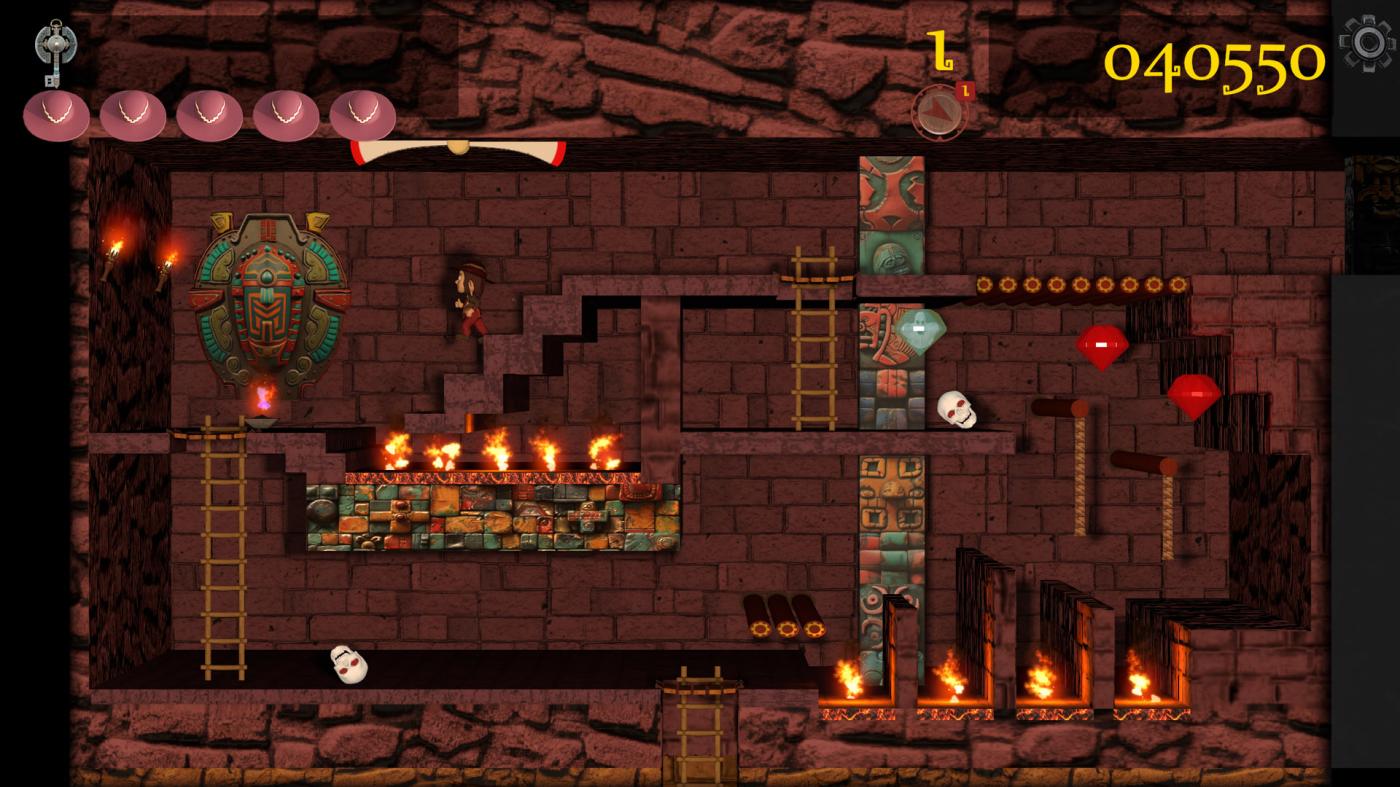
Finally, for an anniversary release, one would expect some form of historical context or bonus material to celebrate the game’s legacy. Unfortunately, there is no reference to any of the earlier versions, nor any archival content that acknowledges the history of Montezuma’s Revenge.
At its full asking price of $/€12.99, the game may be worth considering for players who are primarily interested in the original gameplay and are willing to look past the remake’s visual style. Even so, this feels better suited to a sub-$ / €10 price point, making it a title I would rather wait to pick up at a discount.
Montezuma's Revenge's archaic 'flash game' look and production feels more in place somewhere in the early 2000's than 2025. That said, it meticulously stuck to the original mechanics and character behaviour making it at least authentic while playing, which should trigger veteran players muscle memory quite easily. The big question for fans is if they would rather play this production or search out the originals, which would be a choice between ease of play or the authentic nostalgia with some of the quirks of a mid eighties video game.
