



One of the added benefits of going on vacation to the Canary Islands was the huge number of tax-free electronics import stores. From my early teens to well into my twenties, I’d scour these shops looking for not-so-legal “X-in-1” cartridges for the Nintendo, Game Boy, Game Boy Advance and Mega Drive. I must have been around 15 when I stumbled across a 5-in-1 cartridge with mind-bending box art featuring several games. The fact that the box was plastered with spaceships and techno sci-fi creatures immediately made it a must-buy. The side of the box listed Tatsujin, Forgotten Worlds, King of Peacock (which turned out to be some kind of Chinese interpretation of Mystic Defender), Hellfire and Magic Precious. I assumed Magic Precious was meant to be Columns, which I already owned, but that hardly took away any of the excitement.
The shop’s somewhat dubious proprietor clearly noticed my 15-year-old heart racing with joy and made me an offer nobody in their right mind should accept, hoping to make an inflated buck from my desperate need to own it. I politely declined. Since I was spending my own money and my dad clearly wasn’t interested in dealing with this guy, I made it my personal mission that vacation to get that cartridge for the best price possible. All I remember is eventually walking away with it for roughly 60% less than the original asking price.
Truxton, the corner stone of my gaming habits
Ever since then, that cartridge has been the backbone of my Mega Drive gaming habit. I couldn’t care much for Mystic Defender, but I poured countless hours into Hellfire and Forgotten Worlds. The absolute standout, however, was Tatsujin, better known in the West as Truxton. It handed me my rear end for years, but it looked and sounded so incredibly good. Until then I didn’t own any shmups on the Mega Drive and it opened up an entirely new genre to me. I eventually tracked down an original Japanese copy and played that to bits as well.
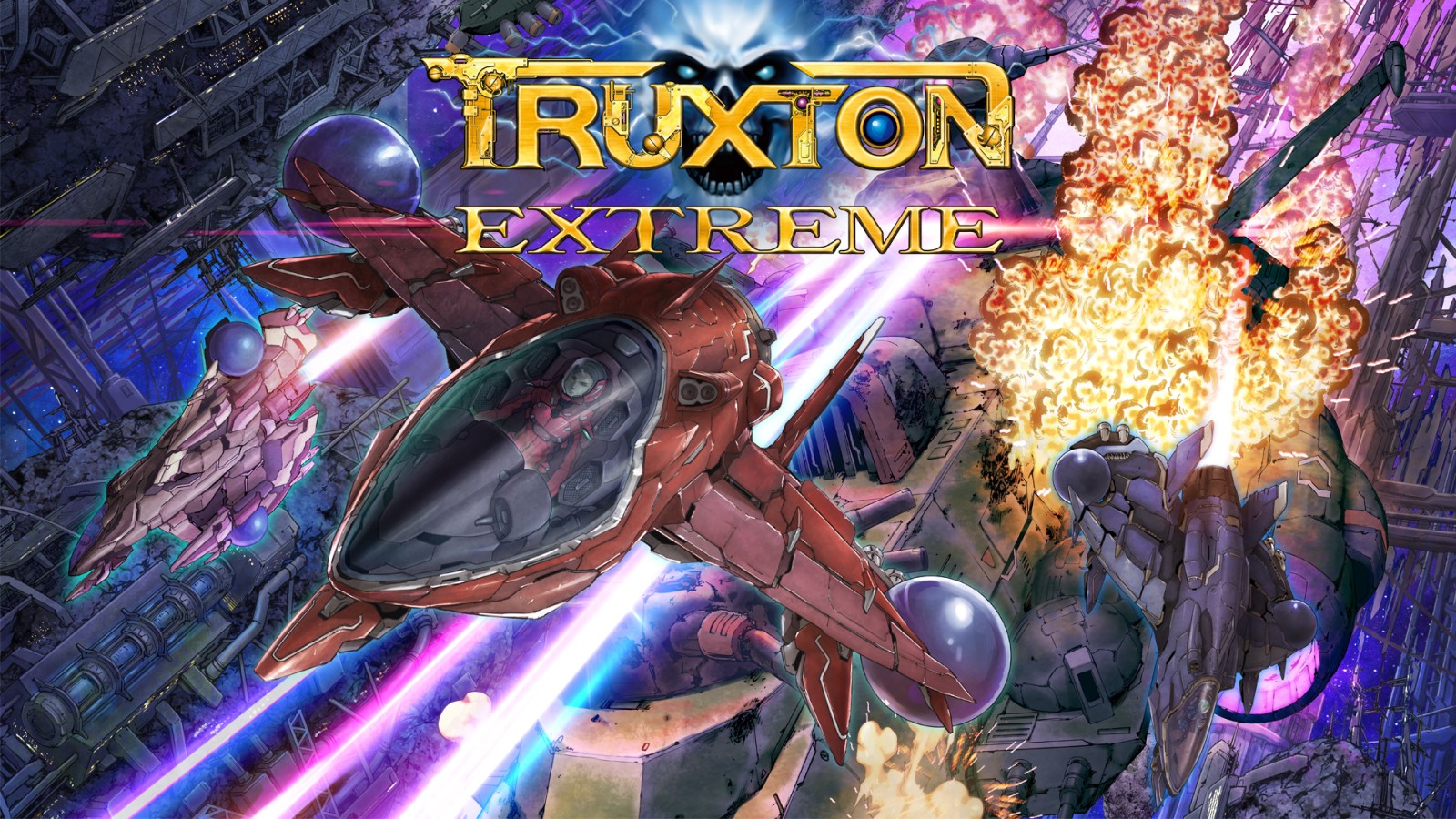
And it seems a lot more than just me cares about Truxton and the rest of Toaplan’s library of shmups. Their legacy has led to numerous re-releases, both individually and as collections, on virtually every modern platform, including Evercade. That renewed appreciation for Toaplan’s catalogue eventually inspired one of its original founders and the creator of Truxton, Masahiro Yuge, to revive the series with an entirely new entry developed by his Tatsujin studio: Truxton Extreme.
A true sequel
Of course, Truxton Extreme builds on the core gameplay of Truxton and Truxton II. The game consists of eight stages that play much like a its predecessors, albeit with several additions. There is an Arcade Mode that lets you play through all stages in sequence without continues on, essentially, hard difficulty. Story Mode breaks the game into individual stages, allowing you to start where you left off once you’ve cleared the previous one, this time in Normal difficulty. In addition to these core modes, the game is offering several extra modes such as Arena Mode, which gives you a limited amount of time to achieve the highest possible score. Team Mode lets you play together in local co-op while sharing a single score.
All of these modes maintain separate online leaderboards. You can set records in Arcade Mode, but also for every individual stage in Story Mode. Progressing through Story Mode unlocks additional story paths for different playable characters. Beyond the various game modes, Tatsujin has also included a tutorial, a dedicated training mode and a 3D model viewer, among several other extras and unlockables.
Weapons Old and New
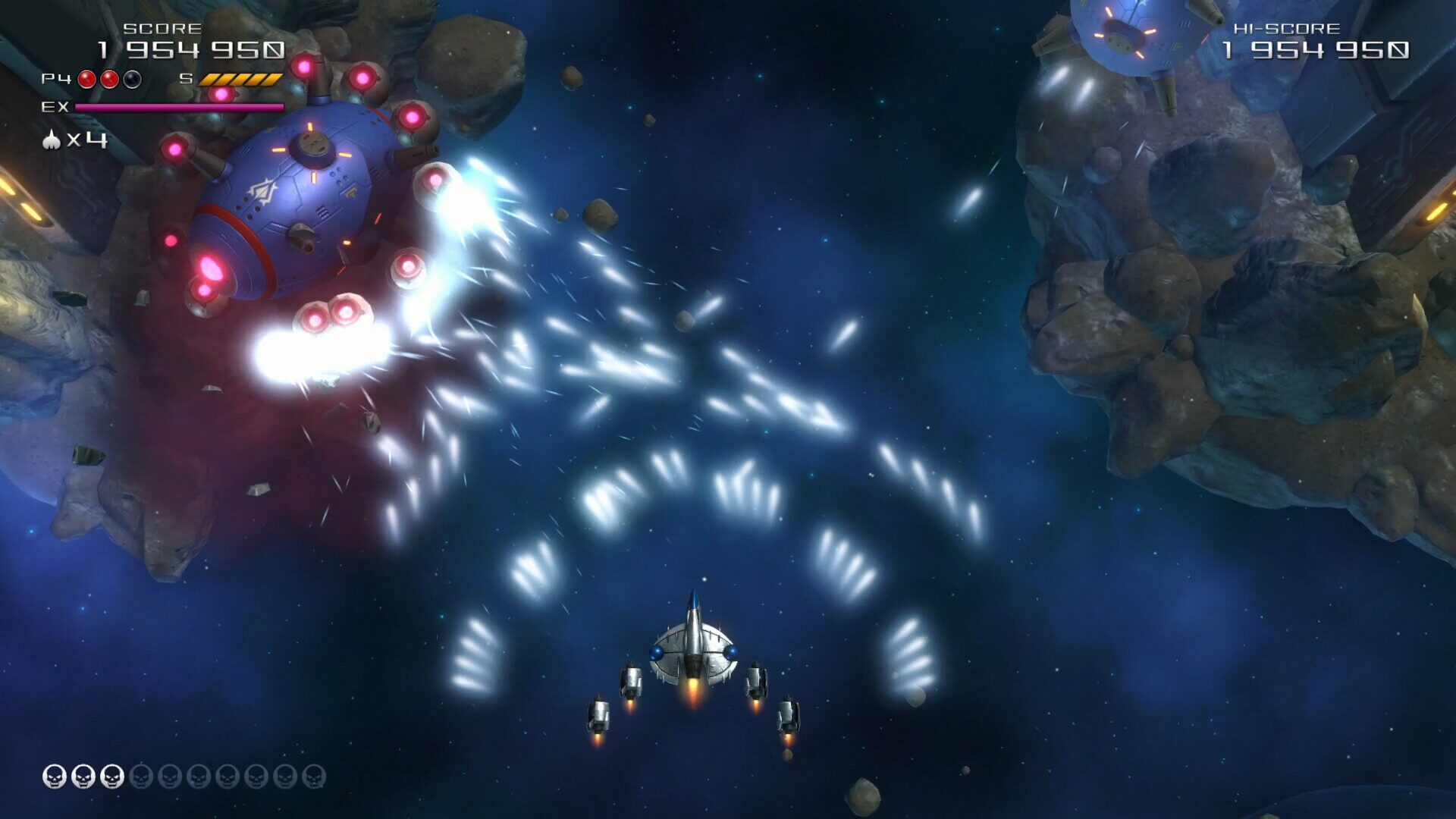
For those unfamiliar with Truxton, the series are a very well paced vertical shoot’em ups that offers a range of weapons that can be picked up throughout each stage. You have the red container (Power Shot), the green one (Truxton Beam) and the blue one (Thunder Laser), all returning from the original games. Extreme introduces the white Homing Shot and the purple Star-Mine Shot.
While the unique homing laser remains an all-time favourite of mine, switching between weapons definitely has its advantages, as each serves a very different purpose with its own strengths and weaknesses.
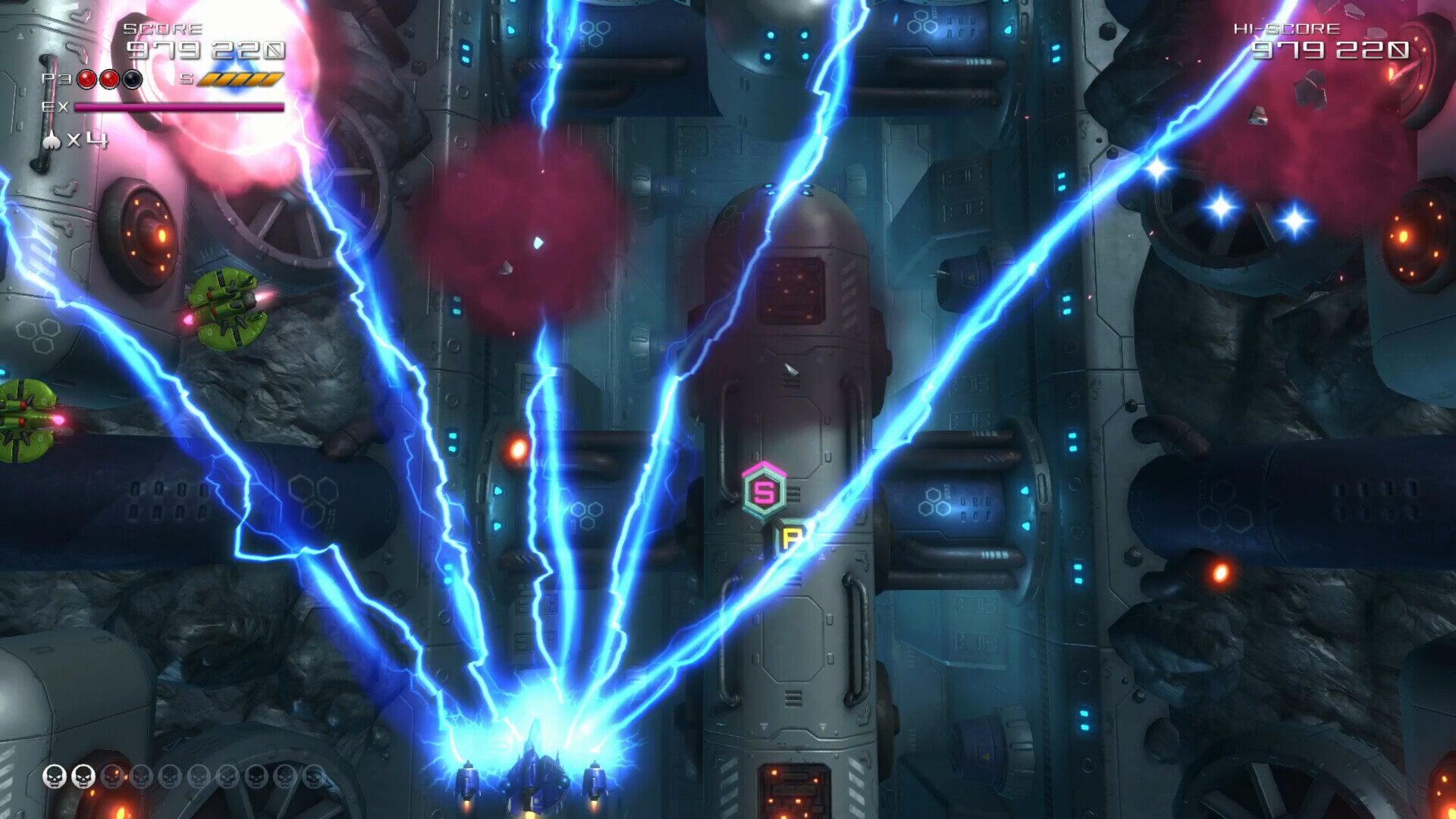
The new weapons add some genuinely interesting ideas to the mix. The purple Star-Mine Shot has a limited range but is incredibly powerful, forcing you to completely rethink how you approach each stage, but leans heavily on getting closer to targets than you might want. Playing a shooter where your bullets can’t even reach the edge of the screen is asking for trouble. The Homing Shot feels like an upgraded version of the original Power Shot: a rapid-fire spread weapon that actively seeks out targets on screen. It is incredibly effective and almost feels like the alpha and the omega of the entire arsenal. In fact, it may be a little too effective, especially when enemies start entering from the bottom of the screen. Once fully powered up, it reminds me a lot of Cave shooters like DoDonPachi. I feel a little dirty when using it, as it definitely feels like cheating.
Scoring depth
Additionally, Tatsujin has incorporated a few semi-modern bullet hell concepts. Rest assured, though, that Truxton Extreme is by no means a full-blown bullet hell shooter. For me, it stays true to its roots, and thankfully so. What it does borrow from the genre is the tiny player hitbox and a dedicated harvest shot.
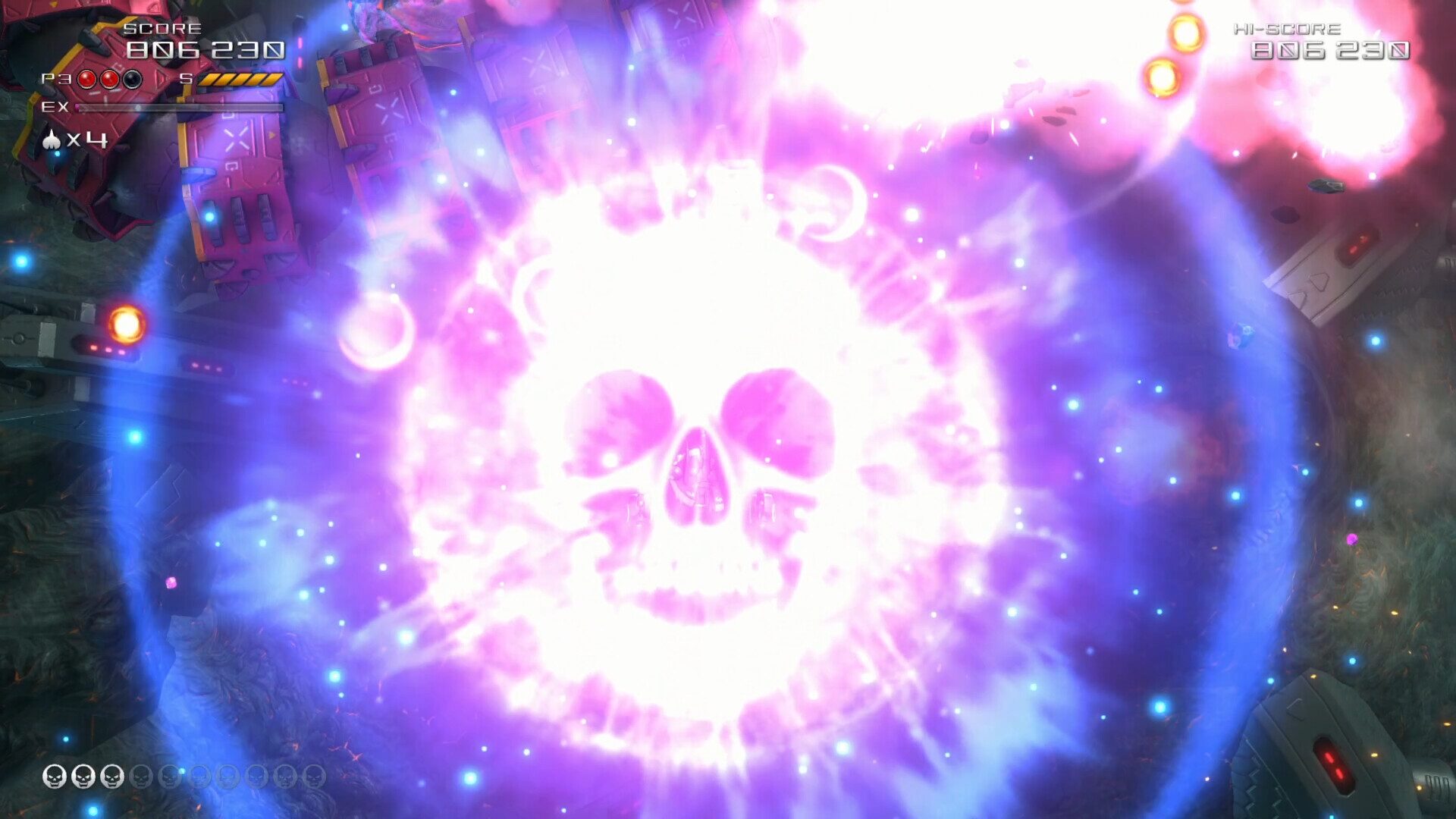
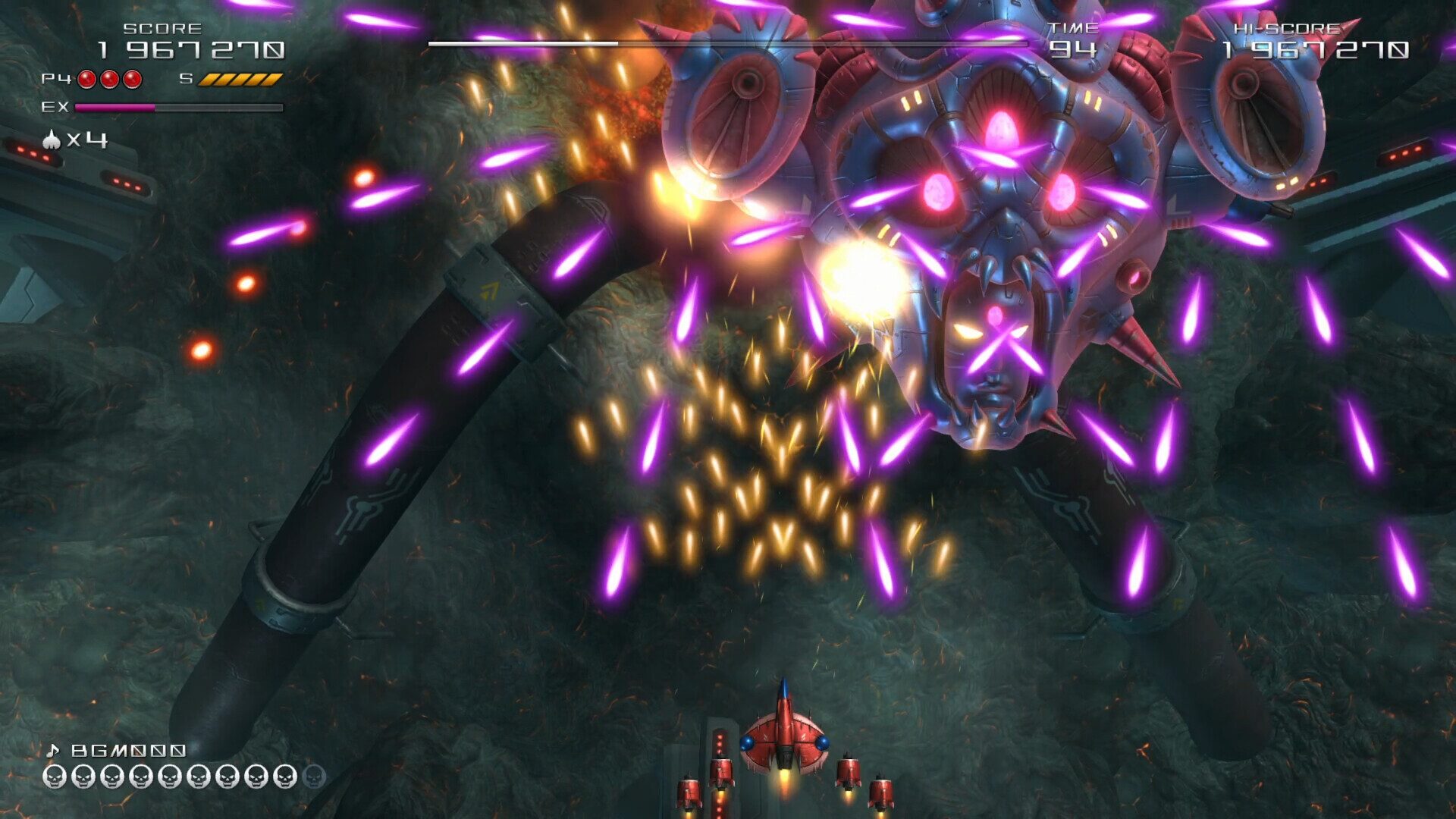
By pressing and holding X, you unleash a powerful attack that consumes EX points while generating score items whenever you destroy an enemy with it. Managing your EX gauge and saving the harvest shot for larger, high-value enemies takes practice and familiarity with each stage. It adds a surprising amount of depth to the scoring system and greatly increases the game’s longevity for players who enjoy chasing high scores.
Speeding things up (or slowing things down)
Another cool, game-defining feature is the ability to adjust your ship’s speed on the fly. Feel free to collect as many S icons as you can, because pressing the Y button lets you cycle through your Speed Bar and select the speed that best suits the situation. For both survival and score chasing, it’s well worth experimenting with different speed settings.
When you maxed out your Speed Bar, S-items turn in a gradually more valuable score item, just like its P counterpart.
Much of this mechanic is tied to the fact that Truxton Extreme is played in a full 16:9 aspect ratio. Unlike the original arcade games, you’ll occasionally need the extra speed to traverse the wider playfield effectively, while at other times slowing down gives you the precision needed to weave through dense bullet patterns.
Difficulty
In terms of difficulty, Extreme compares well with the original Truxton. Enemy behaviour is snappy, and projectile speeds vary considerably from enemy to enemy, making stage knowledge and pattern recognition an absolute necessity. It is very on point with the toaplan games in general. For veteran Toaplan-players fast bullets, aggressively aimed shots and punishing recover is the core attraction to them. To add insult to injury, there are no shortcuts. No continues. Only start-overs. There are a few accessibility options, and you’re free to increase your number of starting lives, but Truxton still derives much of its depth from its uncompromising difficulty.
Widescreen
The biggest take most veteran vertical shmup players will probably have is the fact that Truxton Extreme uses the entire 16:9 widescreen real estate. I would even go as far as calling it a “verizontical shmup,” where the game becomes somewhat ambiguous about what kind of shooter it wants to be. Vertical and horizontal shooters are different breeds, and Truxton Extreme is still, at its core, a vertical shooter.
That said, it introduces a problem where the original weapons, and even the new Star-Mine Shot, don’t always offer the flexibility to cover all that ground. To compensate for this, the variable speed option gives you the mobility to cover the 16:9 playfield more effectively, but the game suffers from leaning even more heavily on memorisation than the originals already did.
It is a different angle for the genre, and I’m not convinced the game is better off for it. The game is fully balanced around the widescreen format, but I still can’t help wondering how this game would have played if the playfield had been snugged between two sidebars.
I also feel that the Homing Shot is a compromise for the added horizontality as well.
Familiar tunes, fresh presentation
The iconic Truxton soundtrack makes a welcome return. Masahiro Yuge, who composed the original music and, besides being a game designer and programmer, is also a classically trained pianist, has modernised the soundtrack with richer instrumentation while adapting it to the longer stages too.
Another welcome addition is the manga-style artwork that livens up the presentation and adds story scenes between stages. Its main purpose is to provide context for the Story Mode and it succeeds surprisingly well. The game would have been perfectly enjoyable without it but it’s hard to complain when you’re treated to beautifully illustrated, lightly animated comic sequences that add just enough flavour without overstaying their welcome.
Modern coat of paint
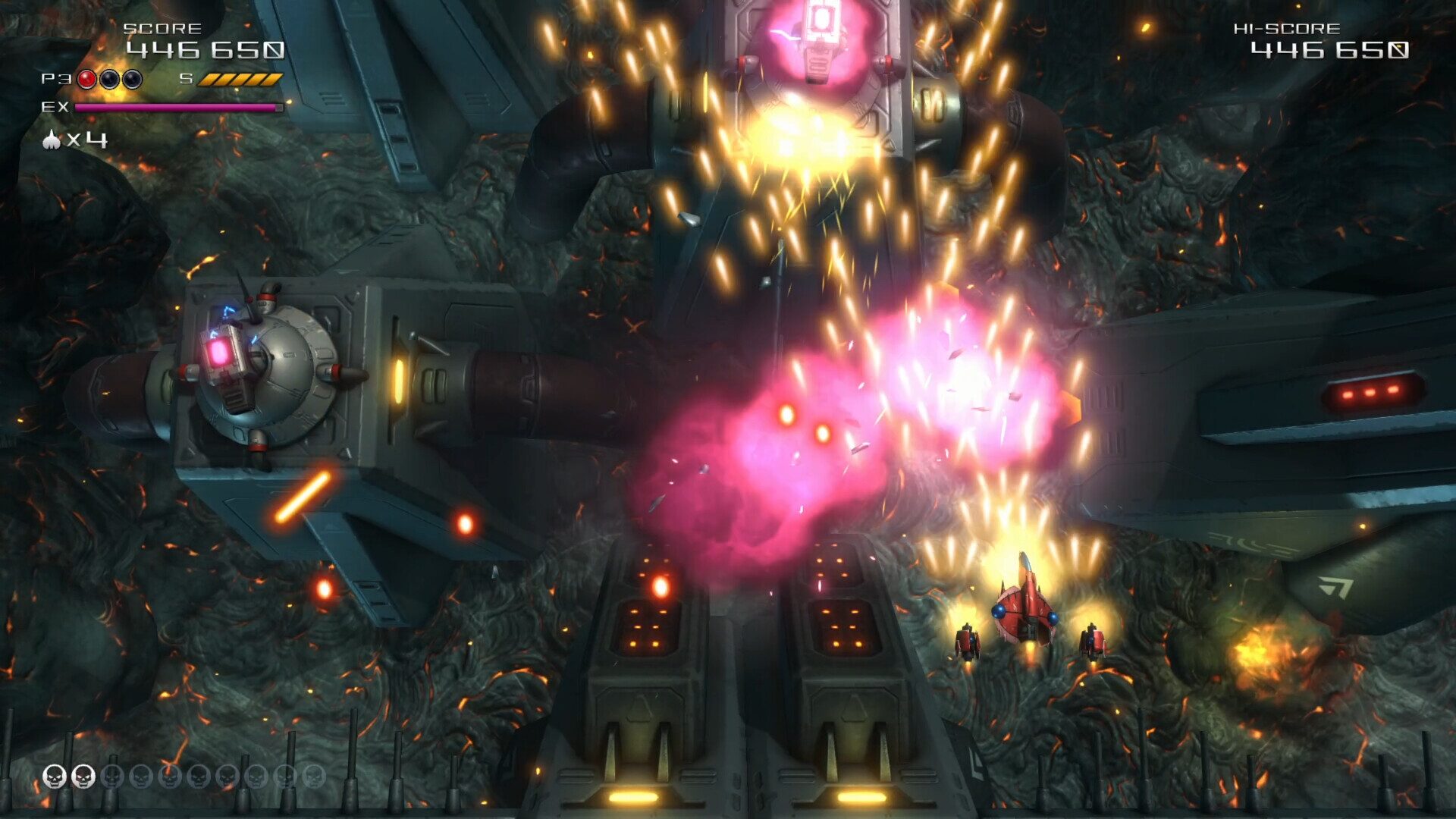
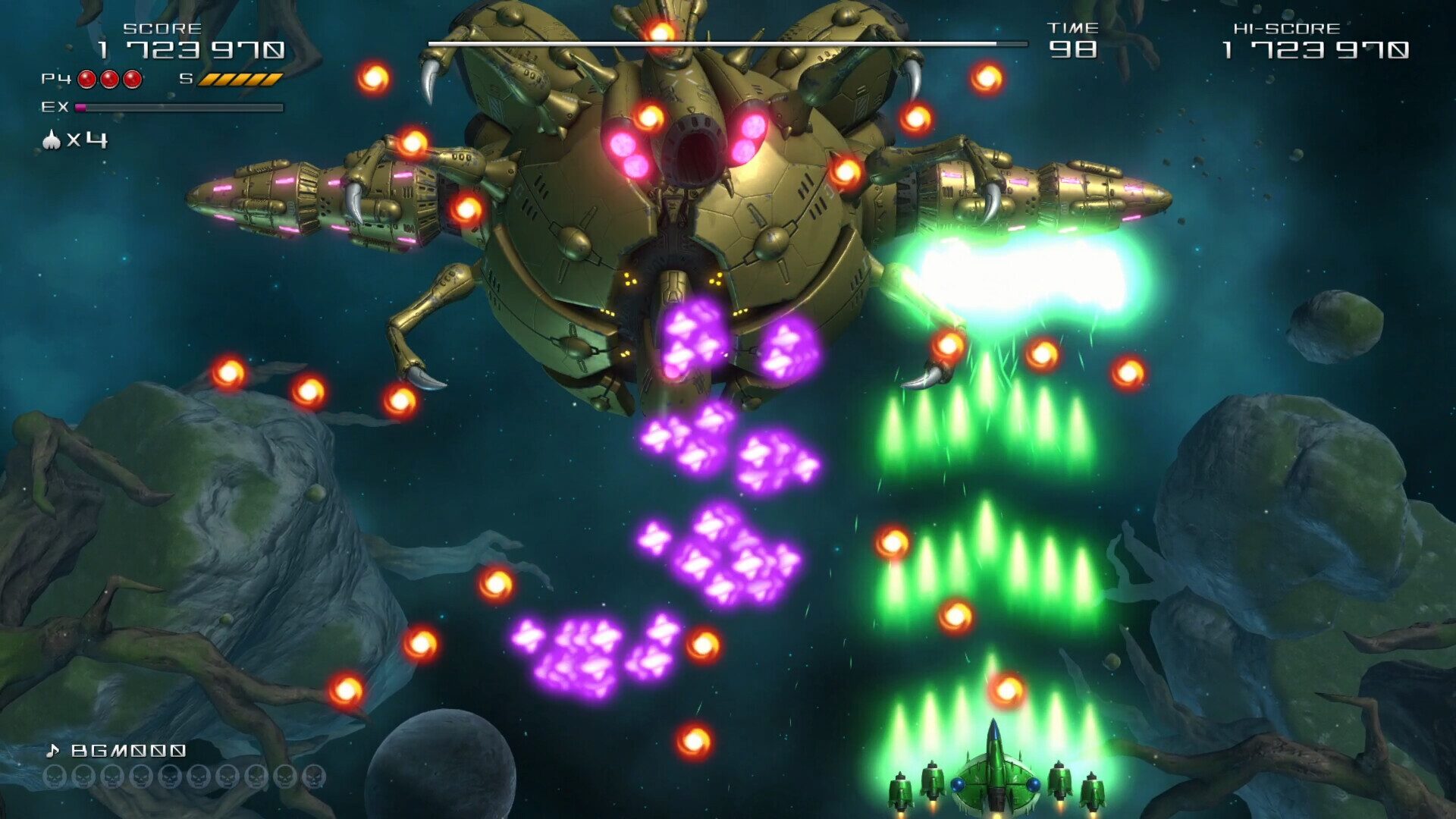
Visually, like many modern revivals of classic shmup franchises, Truxton Extreme uses fully 3D models presented from a traditional 2D perspective. In that respect, it feels less distinctive and closer to contemporary shooters such as the recent Raiden and R-Type games. Compared to those, however, Truxton Extreme is noticeably more colourful, retaining hints of the vibrant colour palette that defined both the arcade original and the Mega Drive version. Also the sprites are fairly large compared to the various other shooters out there. A side effect of the wide screen approach, it seems.
More than a revival
Well, what can I say? I always try to distance myself from reviewing franchises I love this much, sometimes even passing review keys on to other members of the team to uphold our standards of impartiality and avoid getting carried away by nostalgia. As a huge Truxton fan, however, I found myself holding this game to an incredibly high standard, one that I can separate quite easily from nostalgia.
Apart from the familiar ship design and soundtrack, Truxton Extreme isn’t trying to rely on fan service alone. Compared to, for example, the Raiden franchise, Masahiro Yuge seems to have set out to create a true sequel, one that introduces meaningful new gameplay systems rather than simply recreating the past. The added mechanics bring a shipload of depth to the experience, while the demanding difficulty is clearly aimed more at seasoned shmup enthusiasts than newcomers. Yet it never feels spiteful or unfair.
Instead, it throws genuinely interesting shmup concepts at you that demand thought, experimentation and mastery. That’s exactly what makes shooters like these so much more rewarding than many of the run-of-the-mill bullet hell games released over the past fifteen years that build their scoring systems around unlimited continues or various forms of first-hit saves. Don’t get me wrong, there have been dozens of fantastic bullet hell shooters during that time, but many of them, in one way or another, iterate on the Cave formula established in the Y2K-era.
Truxton Extreme deserves to stand alongside those classics while also honouring its own predecessors. Still, the widescreen setup makes this a different beast, and I still haven’t decided whether it adds more than it takes away. At the very least, I admire Yuge for trying to think outside the sidebar box and add some flavour, even if it rubs against the comforts of the STG community.
More curious is the idea that I think the Homing Shot is there to fix the issues this new approach introduces. Maybe Yuge and his team had a firm grip on balancing the game, and it’s simply there to provide an accessible way out for more casual players. It just feels too effective and throws the weapon balance off more than I’d like.
Even so, I like to judge a game not by its theoretical mechanics but by the fun and addiction it delivers. Case in point: while preparing this review, I experienced “the shmup flow” twice. That magical feeling where you become one with the game, weaving effortlessly through impossible bullet patterns as if you’ve stepped into The Matrix. DoDonPachi gave me that feeling. Fire Shark gave me that feeling. The original Truxton gave me that feeling.
Yuge and the Tatsujin team have delivered an inspired sequel to a genre legend, adding new flavours to the vertical Truxton recipe that, in many ways, evolve the game into a modern entry in the genre rather than one that rides on its legacy. Adding Story Mode makes the game digestible for commoners and veterans alike without having to forfeit its demanding difficulty. The widescreen approach and a few concessions in the name of accessibility may tick some vertical shmup fans off, but this is more than a fitting sequel. It feels like the natural evolution of the 35-year dormant franchise.
