


It has been in the works for -what feels like- ages. The title Fallen Tear: The Ascension first popped up back in 2020. Not that the game was halted or stuck in development hell, as far as I know. It appears that throughout this period, Filipino developer Winter Crew Studio kept pivoting toward new features and ideas. Six years later, their Metroidvania has finally entered early access.
Traditional Metroidvania
In PR communication, Winter Crew Studio explicitly defines the game as a Metroidvania and after playing a couple of hours, it does feel like a fairly old-school, or rather traditional, take on the genre. In many ways, its focus is set on exploring a fairly large world.
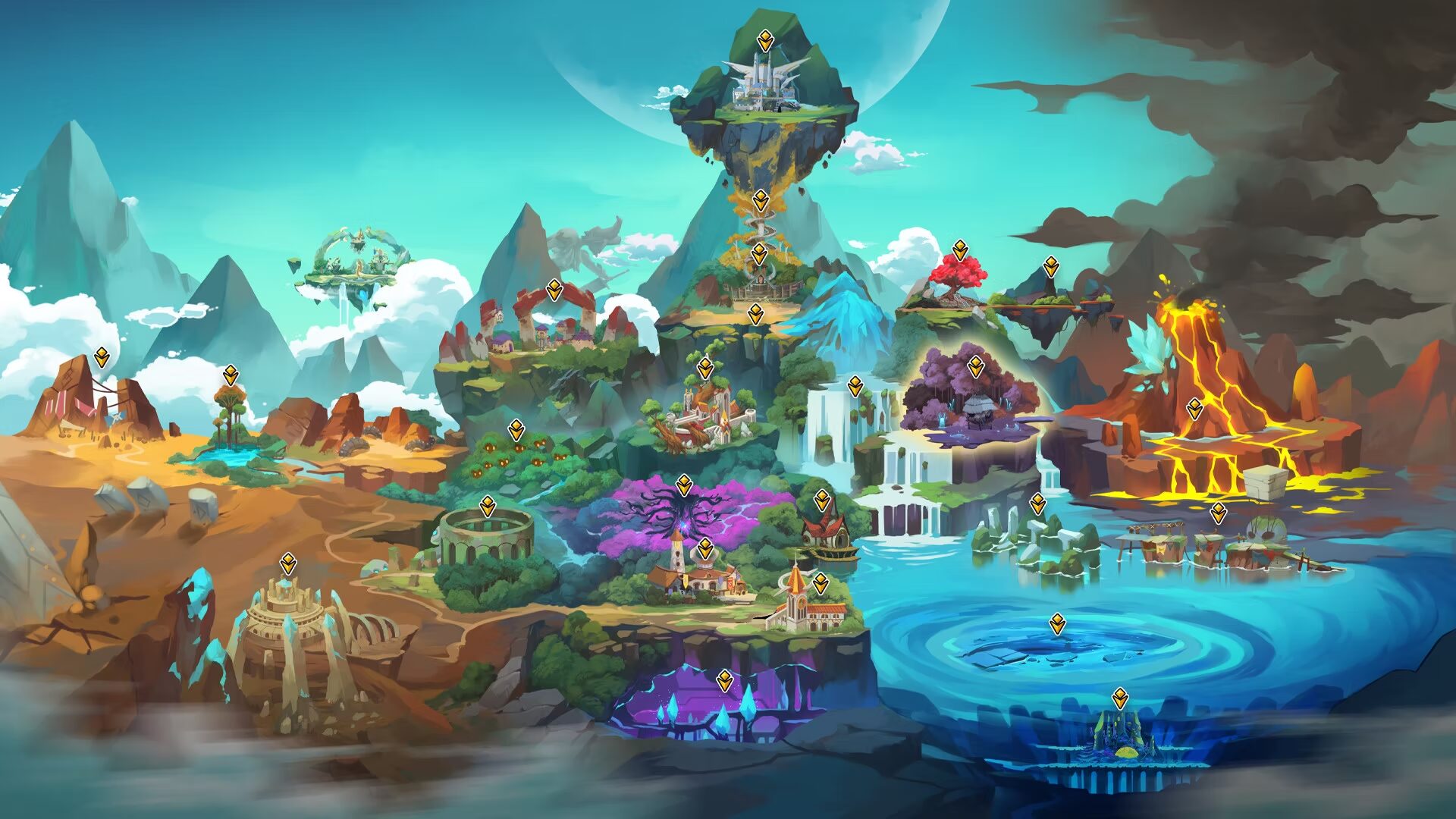
The majority of the world is unlocked in parts after you clear the introduction chapter. After that, multiple sections open up to explore, each introducing a biome. Others only become accessible after you have traveled through another region.
You play as Hira, a young warrior drawn into a world that is slowly falling out of balance. Ancient forces begin to resurface and the lands you explore carry traces of a past that has not fully faded. From a central temple, you are sent out into different regions, where encounters with allies and enemies gradually reveal more about the world and your role within it. The story remains mostly in the background, unfolding through exploration rather than direct exposition.
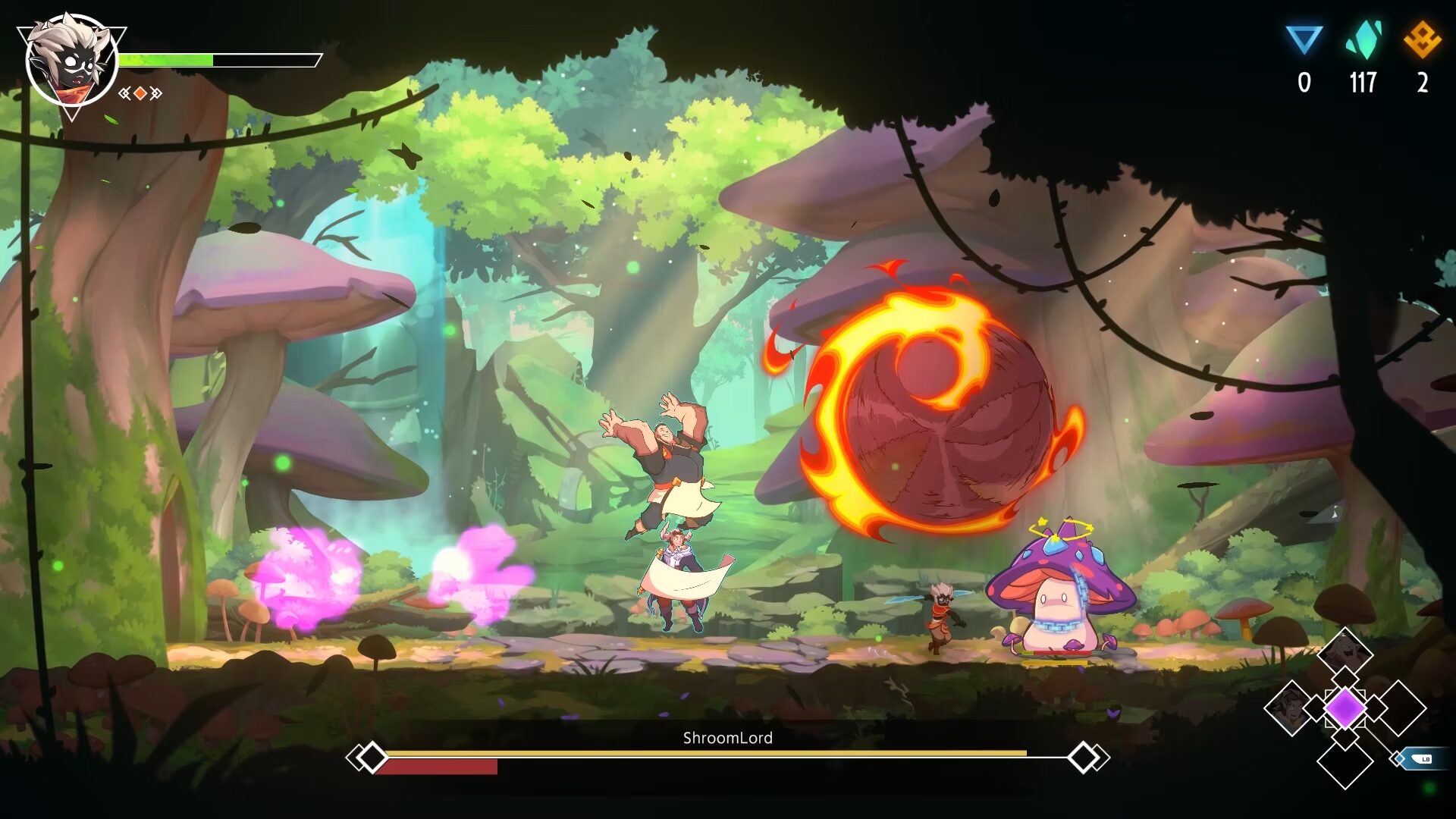
On top of the more traditional Metroidvania-style gameplay, you can also transform into the so-called ‘Overgrowth’ state as the story progresses. This ability mainly serves to solve puzzles and break through paths that would otherwise block your progression. While it may come across as a key mechanic or gimmick, it does not do much more than other abilities in practice. That said, it would be unfair to understate their importance. Beyond opening up new routes, these abilities make traversal smoother, increase your power and mobility, and extend your reach in combat and exploration.
Player-driven progression
While you are free to wander into the different parts available after visiting the temple, chances are you will run into a gap or obstacle you cannot traverse, simply because you have not unlocked the required skill yet. This is, of course, a key Metroidvania mechanic. However, you are free to unlock skills in a less fixed order, which slightly shifts how this system plays out. Your route through the game is partly defined by the choices you make and the order in which you pick up abilities.
I am not sure if this is entirely unique, as games like Hollow Knight already allow for some flexibility, but it does set Fallen Tear apart from many Metroidvanias that are more sequential or lean on roguelite or card-based systems. On one hand, it feels refreshing that the game sticks to the essentials of the genre. On the other, this design choice adds a layer of replayability through different possible routes.
World design considerations
This decision likely has consequences for how the world is designed, but it all seems to blend together quite naturally. That said, I am fairly sure that some genre purists may not appreciate this approach and could be put off by the lack of a more directed progression.
Visual presentation
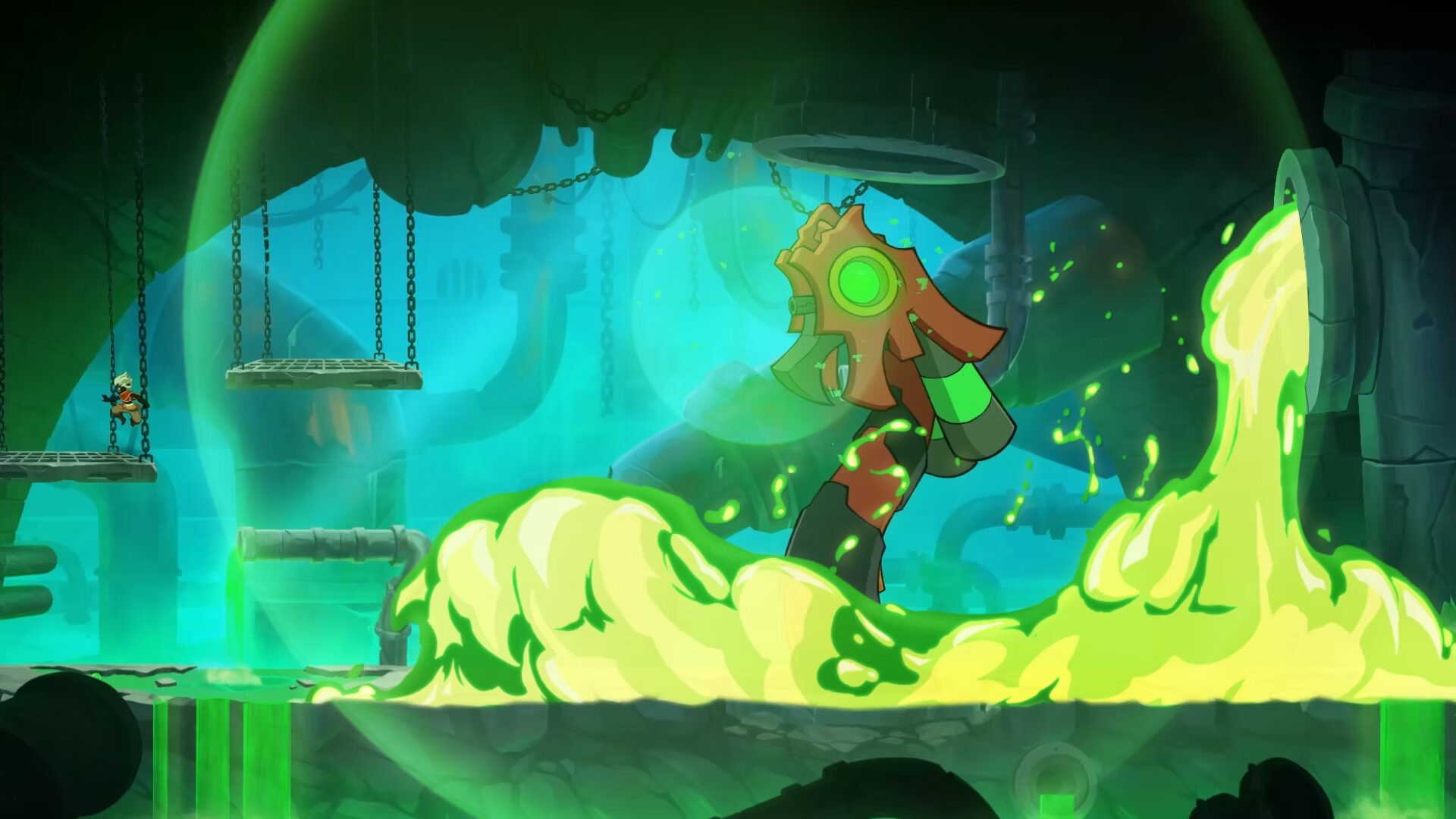
Not only is the gameplay design well considered, another striking feature is the visual presentation. It is genuinely impressive. It has been a while since a game presented such a beautifully hand-drawn world, with a colourful and detailed backdrop. The range of biomes is varied, yet there is a consistent look and feel that ties everything together. I consider a game that triggers you to push through so you can discover more of its world, must be doing something exceptional. I’m not sure it translates as well in screenshots, as the animation does a lot as well. The character design feels unique with a very high level of polish, while still maintaining a fairly cartoony look. For me, the looks of Fallen Tear are one of the key selling points. Simply lovely.
Audio and soundtrack
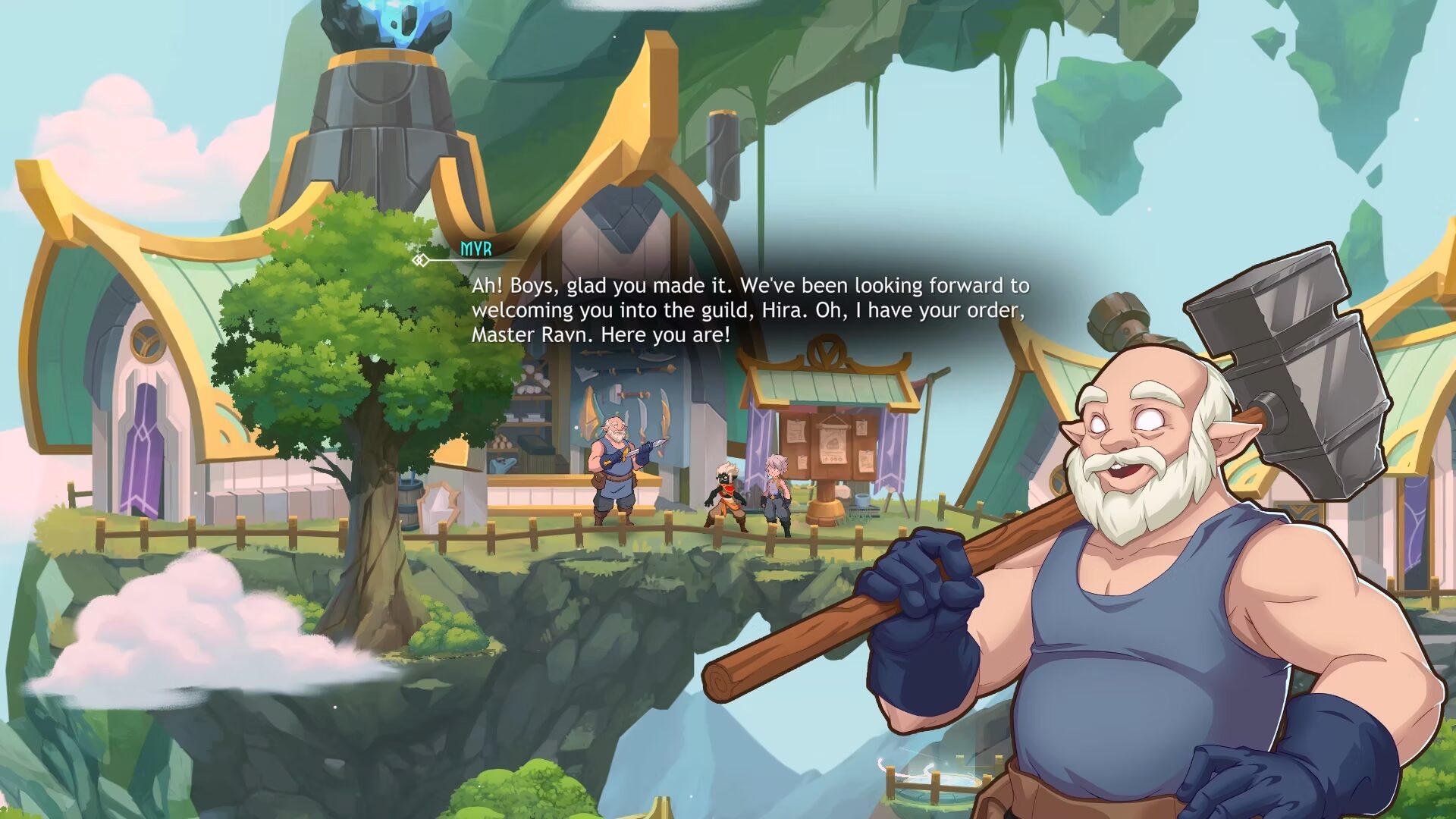
The music and audio seem to be handled with similar level of care, even if they have a more subtle presence overall. There is a noticeable influence from modern orchestral film composers such as John Williams and Danny Elfman. The score builds during tense moments like boss battles, while remaining understated during exploration and platforming sections, but is constantly present. When you take a moment to focus on it, the level of detail becomes more apparent and stays with you throughout the experience.
Limited focus on gear
Compared to games that closely follow Castlevania: Symphony of the Night’s Metroidvania template, weapon variety is not a major focus here. While you can unlock various abilities and buffs, armour and weapon builds play a relatively minor role.
With its focus on exploration, the difficulty will not challenge players looking for a more demanding experience throughout. It does, however, make the game more approachable for a broader audience. Boss fights, on the other hand, can still put up a decent challenge and require some adjustment here and there. Personally, I think there is a strong case for not having to 20 attempts at a boss fight stand in the way of your progression. In this case, Fallen Tear never really sets that bar too high.
While Fallen Tears: Ascension isn’t turning the Metroidvania genre upside down, it introduces a few ideas that make it feel fresh enough. It doesn’t rely on modern additions like card systems or, God forbid, roguelite elements. Instead, it confidently sticks to its core as a Metroidvania, backed by strong visual and audio design, resulting in a polished experience with enough depth to keep you engaged for quite some time.
