



For outsiders to the Amiga scene, both now and back then, Apidya might not immediately ring a bell. But the 1992 game created by German developer Kaiko built up quite the cult following. The bar Kaiko set for itself was high: creating a shmup that could compete on all levels with the great arcade shooters of the time. The general consensus was that they succeeded. Apidya was welcomed with rave reviews, generally scoring somewhere between an 8 and a 9.5.
34 years after the original release, members of the original team have banded together to remake Apidya, including original programmer and co-designer Peter Thierolf and legendary Amiga musician Chris Hülsbeck.
More restoration than remake
Apidya’ Special has been completely rebuilt from the ground up, but stays remarkably true to the original. It now has a proper widescreen mode, the soundtrack features new studio versions and the visuals have been carefully touched up and expanded. Anyone familiar with the original will immediately notice the improvement, but might have a surprisingly hard time pointing out exactly what has changed. It is all very subtle.
At first glance, it may look like the game has primarily been upscaled, but switch between the original 4:3 presentation and Apidya’ Special and you start to see just how much work has been done. The extra real estate provided by widescreen opens up the game significantly, while the increased fidelity and additional layers of parallax give the backgrounds much more depth.
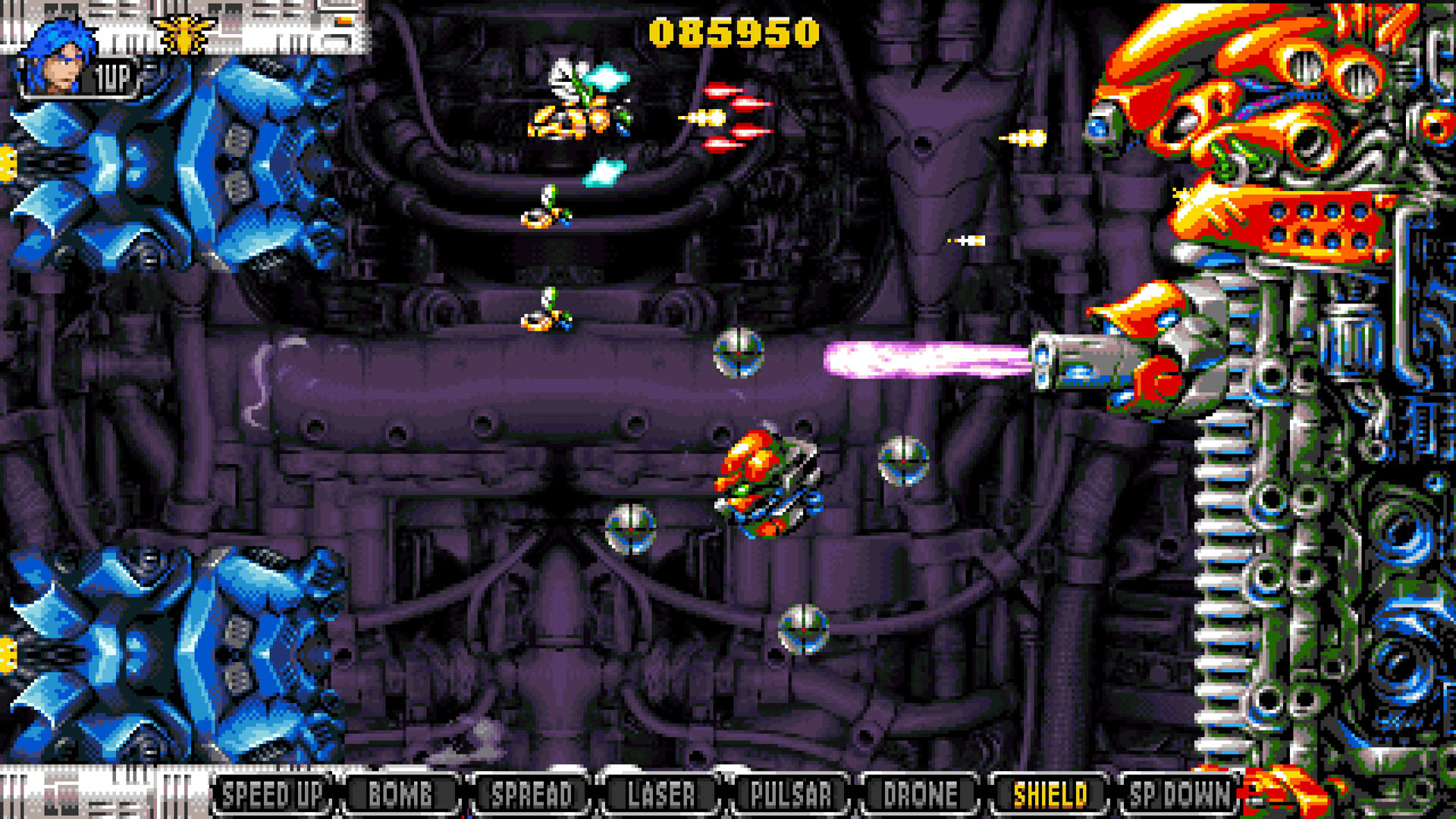
This remake feels more like a restoration than anything else. You know, like restoring a 16th-century Old Master painting, repairing the damaged canvas and carefully applying a fresh coat of varnish without painting over what made the original special.
The 1992 version of Apidya already featured a boatload of options to fine-tune the difficulty, and Apidya’ Special builds on that with additional accessibility options.
Going Japanese
As said, Kaiko’s goal was to create a horizontal shmup that could compete with the Japanese games dominating the genre at the time. In many ways, that meant Kaiko went shopping for mechanics among its inspirations as well.
Visually, the game owes quite a bit to Taito’s cult classic Insector X, which was one of the inspirations behind Apidya’s insect theme. You play as Ikuro, who sets out to retrieve an antidote after his girlfriend Yuri is poisoned by the evil Hexaae. Transforming into a wasp allows Ikuro to enter a microscopic world that he could never reach in human form.
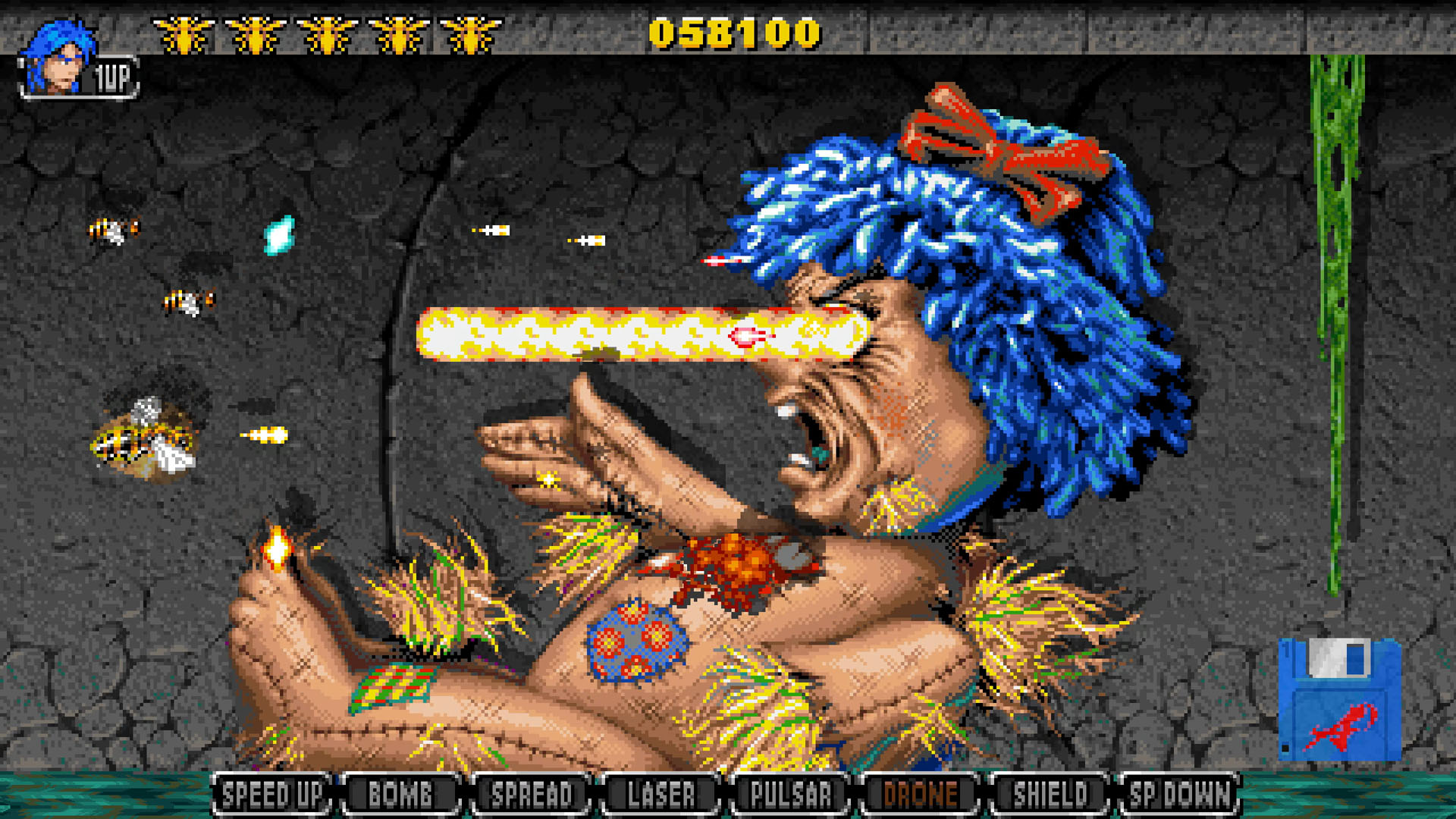
If you are familiar with Insector X, some of Apidya’s imagery will feel immediately familiar, although Kaiko took the concept considerably further with its natural environments and a more real-world collection of insects, animals and other creatures.
Mechanically, the game plays very much like Gradius. You collect flowers which can be exchanged for power-ups using a system that works in much the same way as Konami’s classic. Heck, even some of the upgrades are very similar. Like Gradius, much of the challenge comes from managing the horizontal playing field while dealing with incoming waves of smaller enemies and hazards attacking from the ground and ceiling. In Apidya’s case, those are mostly bugs, vermin and other unpleasant inhabitants of its miniature world.
The grind
One of the big topics in any shmup review is always difficulty. Speaking for myself, a shmup can be hard, even brutal, but a shoot’em up inherently needs a certain amount of grind to be enjoyable. Difficulty isn’t really a measure on its own. It needs to go hand in hand with whether you enjoy learning, practising and grinding your way through a game. I’m pretty certain nobody has exactly the same threshold here.
In that regard, Apidya’ Special definitely did not fit me or my playing style.
At specific points in the game, the developers went a bit overboard, making it nearly impossible to get through unscathed. To me, it feels like the game likes to push you into unsurvivable corners, often in situations that are difficult to train for and leave very little room for improvisation. Even with a lot of practice, certain combinations of bullet patterns, enemies and tight spaces seem designed primarily to lock the player into a corner with almost no room for escape. And later in the game, it does this multiple times within a single stage.
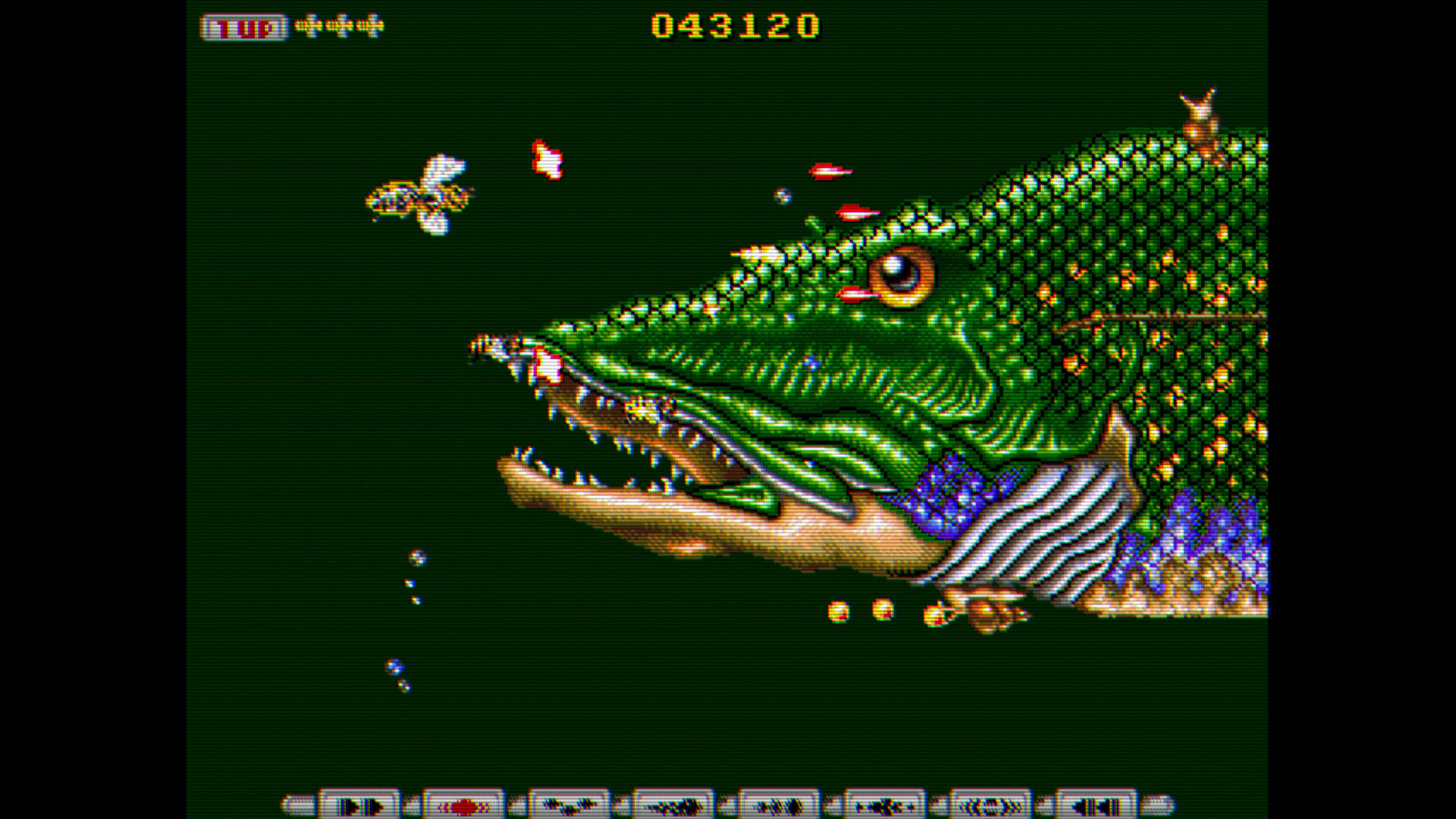
Boss battles vary quite a bit as well. The first two are fairly manageable, while the third represents an enormous spike in difficulty. I eventually had to fully exploit the game’s generous accessibility options just to get past that relentless pike fish.
Welcome to the sewers
The sewer stage is particularly notorious for bringing all these issues together and, for me, simply isn’t much fun. Even with lives and respawn settings adjusted to make things less relentless, it remains an exercise in frustration.
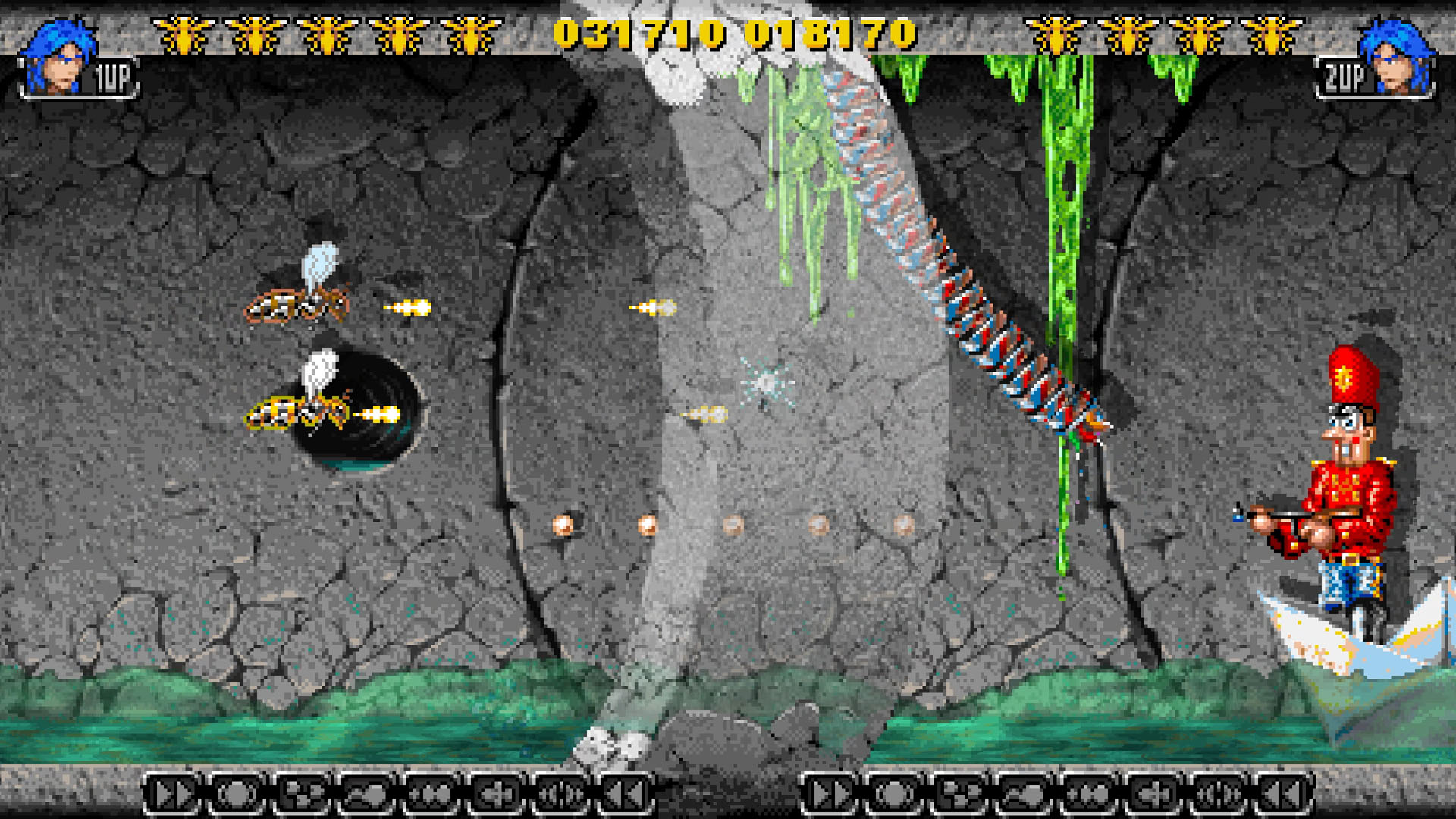
The beautifully detailed backgrounds introduce another problem. Bullets and smaller enemies have a tendency to blend into the scenery a little too well, forcing you to squint just to make out some of the faster incoming projectiles. It is a strange side effect of just how elaborate and colourful Apidya’s environments are: what looks fantastic in a screenshot isn’t always ideal when you are trying to survive.
Preserved almost too faithfully
All in all, from a game-engineering standpoint, Apidya’ Special is a marvellous remake that could almost pass as an act of preservation, handled with obvious love and care. It doesn’t try to redesign Apidya into what a modern developer thinks it should be. Instead, it carefully restores what was already there.
As a game in this day and age, however, the balancing hasn’t stood the test of time quite as well as I’d hoped. The original was already packed with options to tone down the difficulty, and Apidya’ Special adds even more ways to make the experience approachable. But inherent level-design issues and choices introduce a layer of frustration that no difficulty slider can completely remove.
In that respect, out of all the shmups we’ve reviewed on Retrolike.net, Apidya’ Special may be the one where personal taste matters most. As a remake, it is almost exactly what you would want: respectful, technically accomplished and remarkably faithful to its source material. But that faithfulness also preserves some of the things that perhaps would have been better left in 1992.
Kaiko has recreated the original Amiga Apidya quite meticulously, with what seems like genuine love and care. They've added subtle extras and, primarily, visual enhancements while staying remarkably true to the original gameplay. How well that gameplay holds up is very much a matter of personal taste, though. To me, some of its level design choices feel more like issues than features. It's hard to really get into a groove when difficulty spikes and seemingly unavoidable deaths lurk around almost every corner.
