


A familiar game has a wonderful way of making its owner feel clever. Pick up the controller after twenty-five years, press a button almost without thinking, and the old machinery starts working again. The trouble begins when somebody else takes a turn. Suddenly the obvious door is not obvious, the controls seem to have been designed by a committee of octopuses, and a level that once felt perfectly straightforward requires an explanation involving three keys and an entirely separate keyboard. Nostalgia remembers the victories. It has a poor memory for the instructions.
That is what makes the argument about remastering old games more interesting than a list of prettier textures. Re-releases are usually sold to people who remember the originals, but their real test may be the person who was not there. Two LucasArts games provide an unusually revealing pair: Star Wars: Dark Forces, the 1995 first-person shooter, and Star Wars Episode I: Racer, the 1999 podracing game. Both returned to modern systems, but each asks a newcomer to learn a different kind of old-fashioned language. The question is not whether that language should be erased. It is how a game can teach it without losing its accent.
Dark Forces: the door is the puzzle
Dark Forces begins with a straightforward assignment. Kyle Katarn, a mercenary working for the Rebel Alliance, must infiltrate an Imperial installation and steal the Death Star plans. In a film, that might take a few dramatic shots. In a 1995 shooter, it means exploring corridors, searching for security access and figuring out which parts of a heavily armed facility connect. The Empire has invested a fortune in secret bases but rather less in visitor-friendly signage.
The original game refused to keep its spaces flat. The Jedi engine let players look up and down, jump, crouch and navigate levels with bridges, lifts and rooms at different heights. Imperial architecture became infrastructure rather than scenery. But orientation was now part of the task. A useful map exists, yet a newcomer must still learn to read it, follow objectives and notice that a switch might have opened a door elsewhere. Sometimes getting lost is the price of inhabiting a place rather than racing through a corridor of enemies.
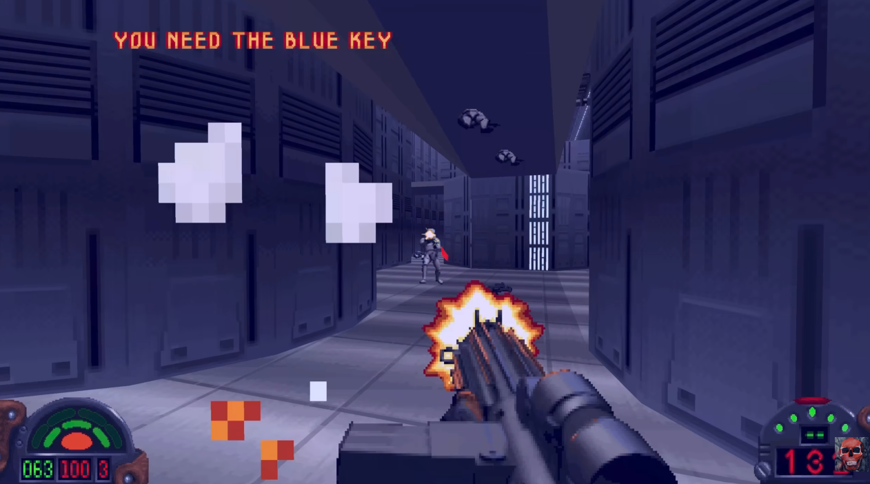
Nightdive’s 2024 Dark Forces Remaster is interesting because it improves access without rebuilding the missions into modern sightseeing tours. The studio restored the game using its KEX engine, added modern controller support, a weapon wheel, sharper visuals and other presentational improvements, while keeping the original fourteen levels. This is not the kind of remake that paints a glowing arrow on every secret door. A newcomer can handle the game more comfortably, but still has to do much of Kyle’s thinking. That balance matters: the moment a map becomes merely a line to follow, the old levels stop being places to understand.
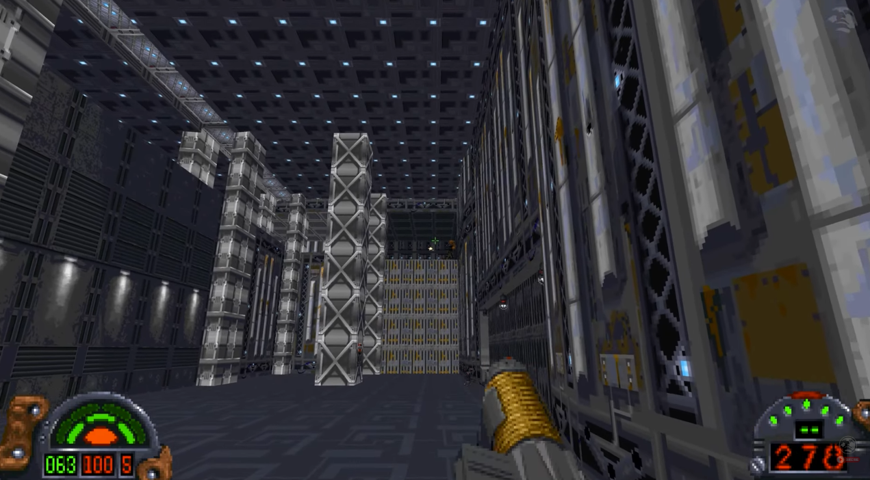
It is tempting to dismiss that friction as bad design. Sometimes it is. A confusing interface does not improve merely because it is old enough to own a mortgage. Yet a sprawling level also offers a fantasy that a glowing objective marker cannot: breaking into hostile territory and understanding how it works. Modernisation should distinguish obstacles that express the game from obstacles that merely get between player and game.
Episode I: Racer: learning at 600 miles an hour
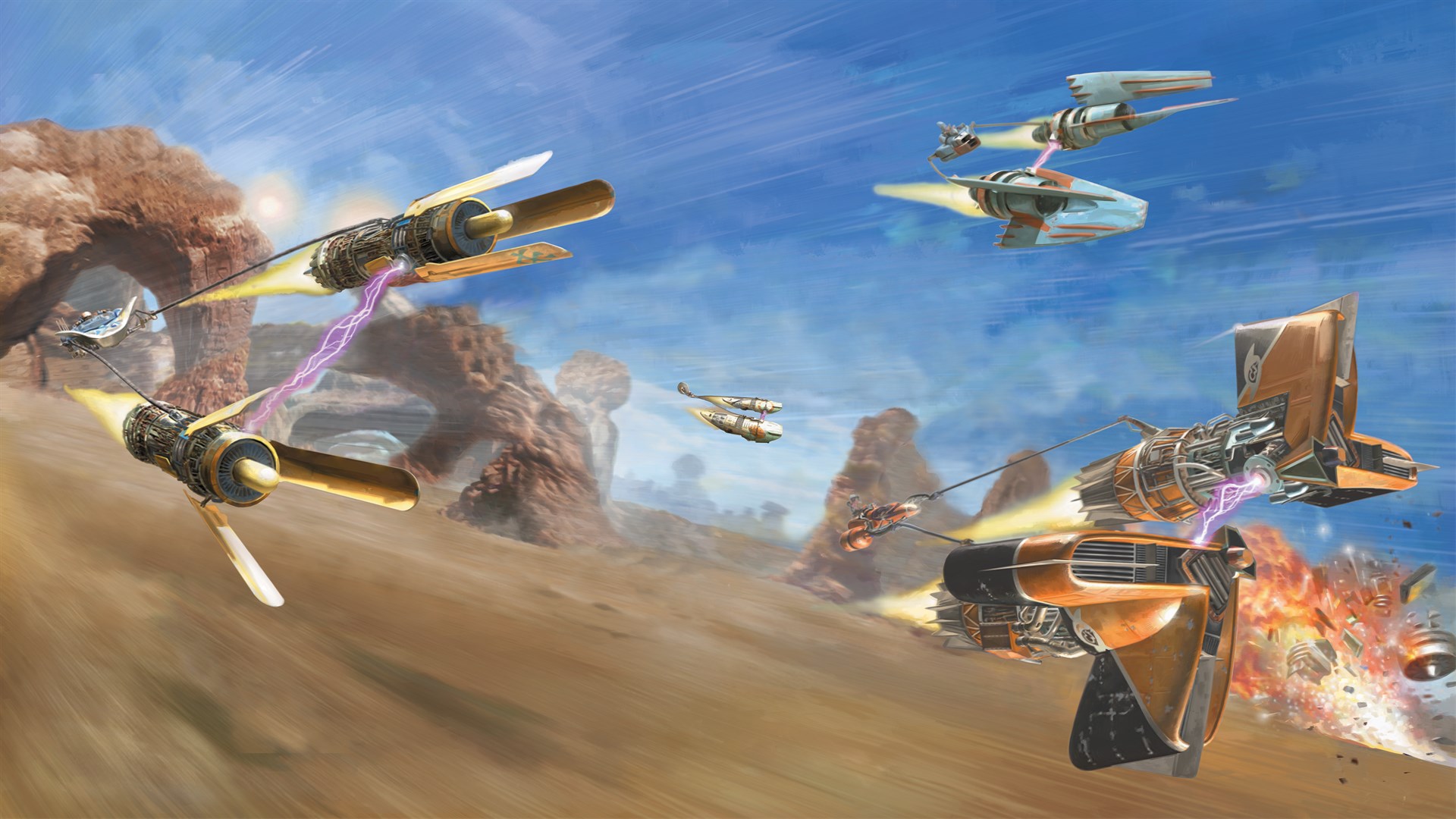
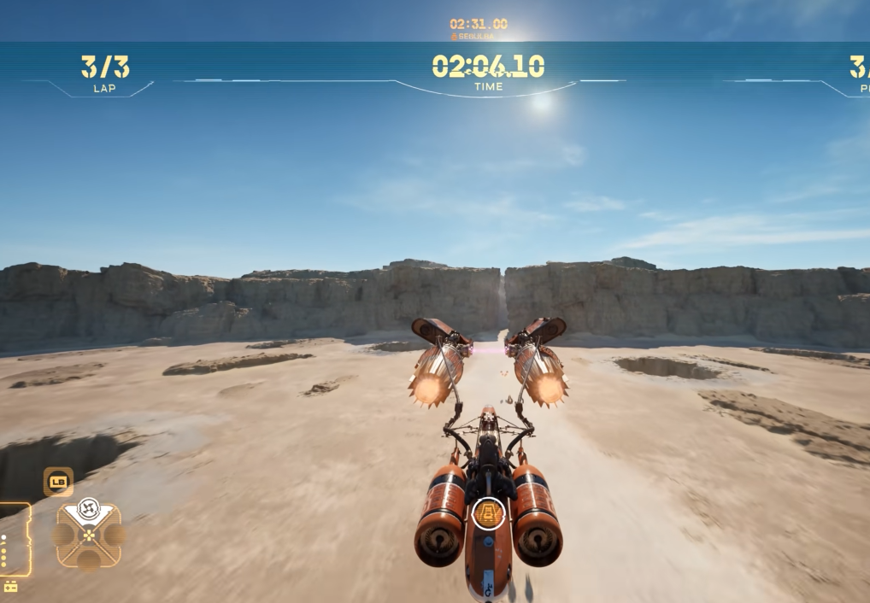
Episode I: Racer approaches the problem from the opposite direction. Where Dark Forces asks players to inspect a corridor, Racer suggests stopping would be unwise. Its twin-engine podracers tear between rocks, through tunnels and past machinery apparently exempt from safety inspections. The 1999 game took a few spectacular minutes of The Phantom Menace and made them a sport, complete with rivals, tracks, upgrades and shortcuts.
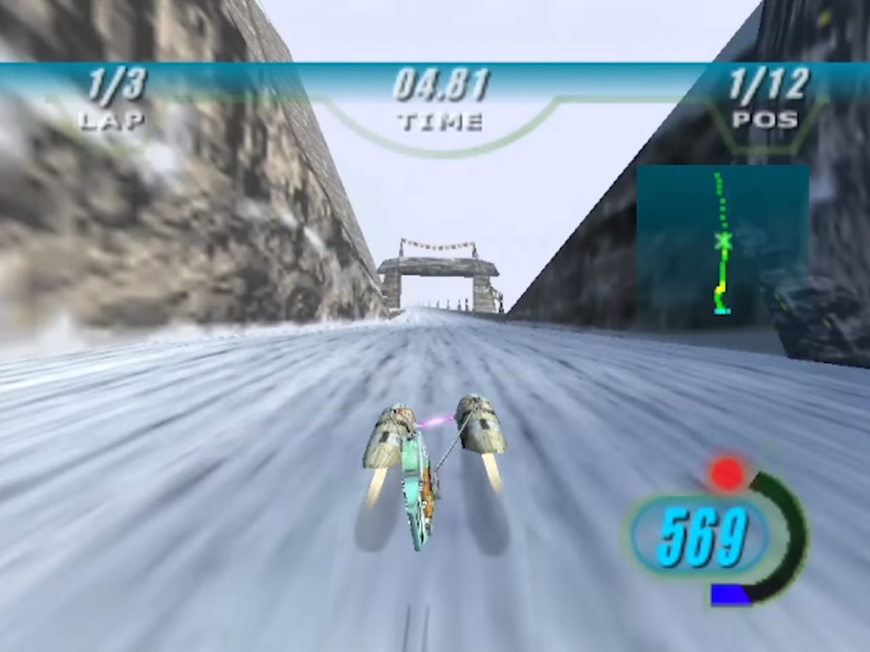
A newcomer understands the promise immediately. Forward is faster. The corner is approaching. The rock wall is not your friend. Mastery is another matter. Players must judge a vehicle’s width and handling, watch heat and damage, repair engines and learn which shortcuts are opportunities rather than efficient routes into a crash. The speedometer offers a number, not the reflexes needed to survive it. The track teaches through repetition, ideally before a third collision with the same canyon wall.
The garage offers another vocabulary. Upgrading a podracer is not simply buying the most expensive component. Speed, acceleration, cooling and traction all change its behaviour. Veterans read these statistics as tactical choices; newcomers have to discover why one upgrade matters more on a particular track. That depth is worth preserving. A remaster should clarify the vocabulary, not make every choice on the player’s behalf.
When Aspyr brought the game to Nintendo Switch and PlayStation 4 in 2020, the useful intervention was not to make every 1999 polygon look new. It was to rework the controls for modern hardware. The updated release also improved cinematic playback, but it kept the underlying courses and their demand for quick decisions. That illustrates an important distinction: improving access can preserve an old challenge instead of cancelling it.
The difference between explaining and apologising
Looking across the longer history of Star Wars games, it is clear that the licence has never required one way to play. A shooter about infiltrating Imperial facilities and a racing game about barely controlled engines share little beyond the setting and a disregard for occupational safety. The contrast matters: preserving a game also means protecting what makes it distinct. Dark Forces turns spatial memory into tension; Racer makes dangerous speed the point. Remove either, and the packaging may survive while the experience disappears.
A good remaster has to choose which difficulties are worth keeping. Uncomfortable button mapping, inaccessible resolution settings and technical limitations should not be treated as sacred objects. They may be historical, but they are not necessarily the experience players came to love. Meanwhile, reading a map, experimenting with an upgrade or learning a corner through failure may be exactly where the game’s identity lives. The planned Traditional and Story modes in Broken Sword: The Smoking Mirror – Reforged suggest one way to offer extra guidance without depriving everybody else of the puzzle. The important thing is to let newcomers in without insisting that every veteran must play in the same way.
Nostalgia is unreliable evidence. A veteran who calls an old game intuitive may mean only that months of practice made its oddities second nature. A newcomer being confused does not prove the design is bad; affection does not prove it is good. Put those experiences side by side and the useful questions appear: What communicates clearly? What needs a better introduction? What deserves to remain gloriously strange?
Nostalgia is unreliable evidence. A veteran who calls an old game intuitive may mean only that months of practice made its oddities second nature. A newcomer being confused does not prove the design is bad; affection does not prove it is good. Put those experiences side by side and the useful questions appear: What communicates clearly? What needs a better introduction? What deserves to remain gloriously strange?
About the author
Søren Ahrensborg Kamper is the editor of Star Wars: Gaming, an independent site covering Star Wars videogames and their history. His writing explores the peculiar design decisions, technological experiments and lasting pleasures of games from across the galaxy. More at Star Wars: Gaming.
