

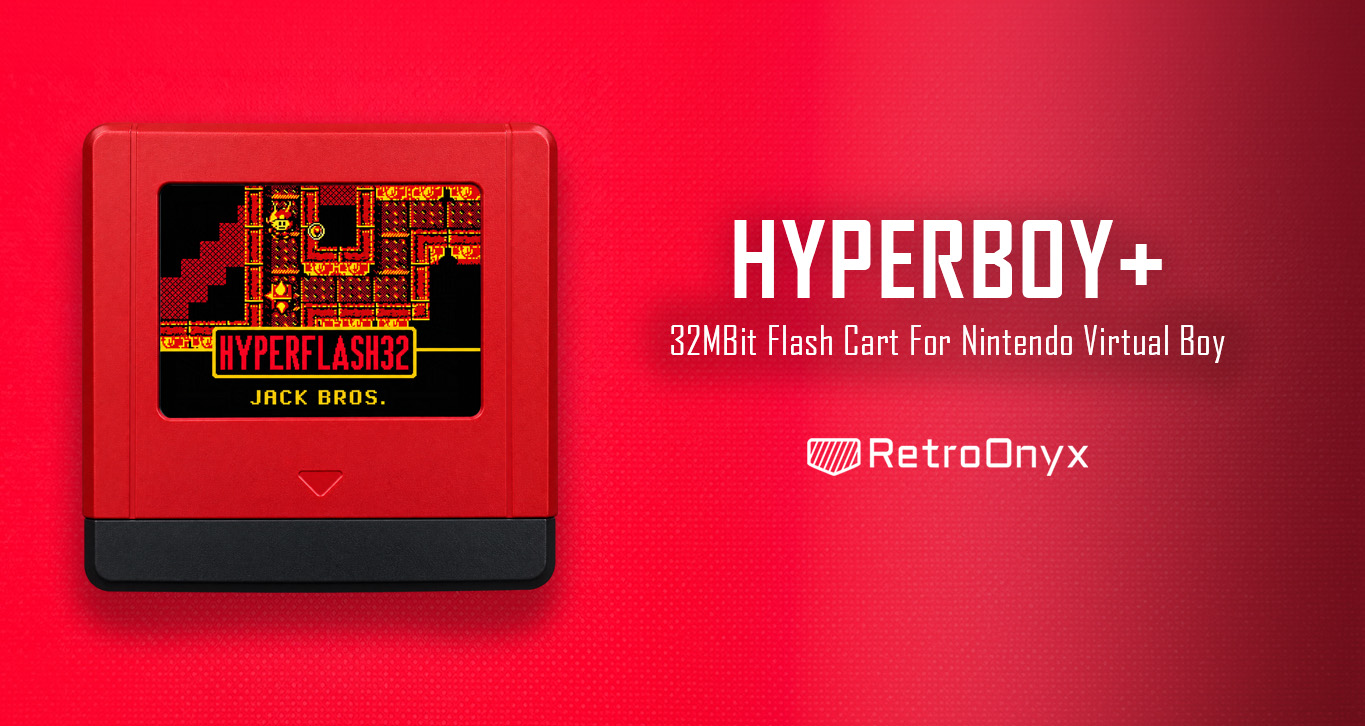

Platform: Nintendo Virtual Boy
Type: Flash Cartridge
Flash Memory: 32MBit
Save Support: 32K x 8 nvSRAM
Storage: 32MBit Flash (Single Game Slot via Flash)
Price: $215.00 USD (RetroOnyx), $224.99 (Stone Age Gamer)
Available From: RetroOnyx and Stone Age Gamer
RetroOnyx, a retro gaming company known for producing amazing accessories and flash carts primarily for the Nintendo Virtual Boy, has another evolution in its HyperBoy Flash Cart series available for purchase. The HyperBoy+ is the third major version in the series, following the original HyperFlash and the HyperFlash32 eInk Flash Cart, and it brings together several of the best features from those earlier models while lowering the price.
The HyperBoy series dates back to 2020, when RetroOnyx released the original HyperFlash. It featured 32MBit of flash memory and either 8K x 8 or 32K x 8 nvSRAM, depending on which components were available during the pandemic. It was also the first Virtual Boy flash cart built entirely with new parts.
The original HyperFlash used a PC-based program called Thunderstruck HyperBoyFlasher, created by famed Virtual Boy programmer Thunderstruck, a quintessential member of the Virtual Boy community. This was the first Virtual Boy flash cart I ever purchased, and I found it very easy to use as long as the necessary FTDI drivers were installed on a PC.
The original cart did not feature an eInk display, but that changed the following year with the HyperFlash32 eInk Flash Cart. This model was the world’s first Virtual Boy flash cart to include a display directly on the cartridge, and it was also the first flash cart in the series that did not require a PC to flash a game. A haptic module and rear capacitive touch buttons made the process possible directly on the hardware.
Like its predecessor, the HyperFlash32 was still a one-game-at-a-time flashing cart. However, it allowed users to store multiple games on a MicroSD card, making it a major step forward until the Mr. Cart arrived in 2025. The biggest drawbacks were the price, which at times exceeded $250, and its limited availability due to the lingering effects of the pandemic and the strain it placed on component supplies.
Enter the HyperBoy+
Recently, Kevin Mellott, founder of RetroOnyx and creator of these flash carts, released the HyperBoy+ 32MBit Flash Cart, a successor to the HyperFlash32 in many ways. At $215-224.99 (depending on shop), it hits a very interesting sweet spot between features, performance, and price.
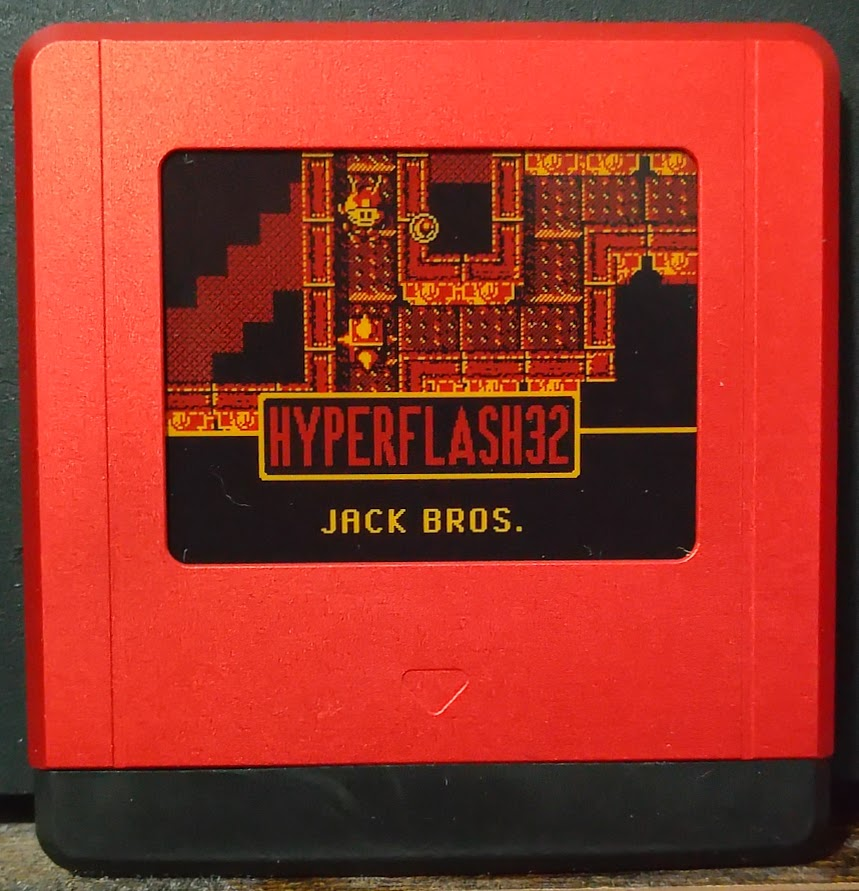
The HyperBoy+ utilizes an upgraded eInk display. The previous model featured a BWR (Black, White, Red) display, which already looked fantastic, but the new HyperBoy+ adds yellow, creating a BWRY (Black, White, Red, Yellow) display. The extra color makes the display even more impressive and opens up additional possibilities for custom images and graphics.
There are some changes compared with the previous model. The HyperBoy+ removes the MicroSD port, haptic module, and capacitive touch buttons. However, it also becomes the first cart in the series to standardize on 32K x 8 nvSRAM alongside its 32MBit flash memory, while retaining the MicroUSB connection for PC use.
The software has also been upgraded to HyperStudio, and as someone who used the original HyperBoyFlasher, I can say there are some major improvements.
I tested HyperStudio on a Windows 11 PC, and the software provides options for both the previous HyperBoy models and the HyperBoy+ itself. You can flash a game or program onto the cart, but HyperStudio also gives you a variety of options for creating and flashing images onto the BWRY eInk display.
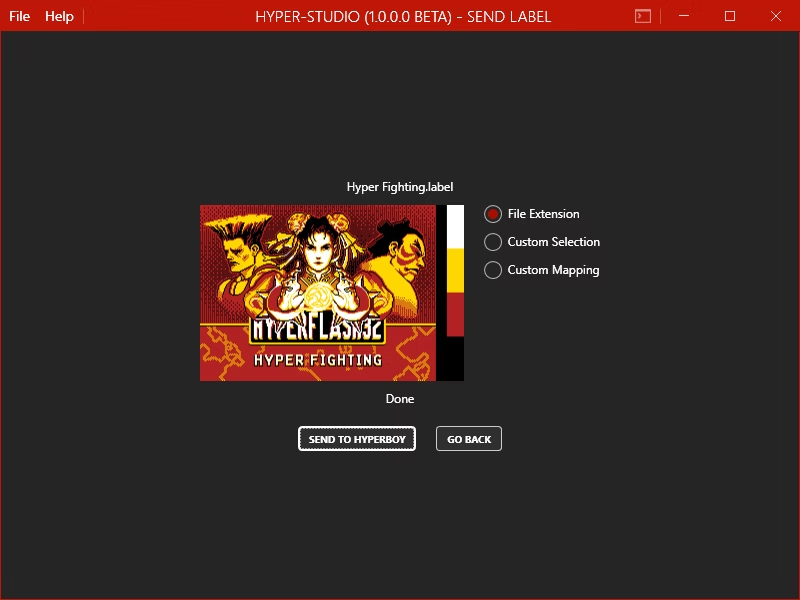
I used a photo pack provided by Kevin Mellott and experimented with several display modes, including black and white, black/red/white, and the full black/white/red/yellow configuration.
The results were fantastic.
It took only about 20 seconds to flash a photo onto the display, and the finished image looks so good that it would make a fantastic centerpiece on any Virtual Boy fan’s shelf. In fact, the picture quality is so impressive that when I showed the display to fellow colleagues, they initially thought it was a matte-finish sticker rather than an actual electronic display.
That says a lot about how good the BWRY screen looks in person.
Game Flashing Tests
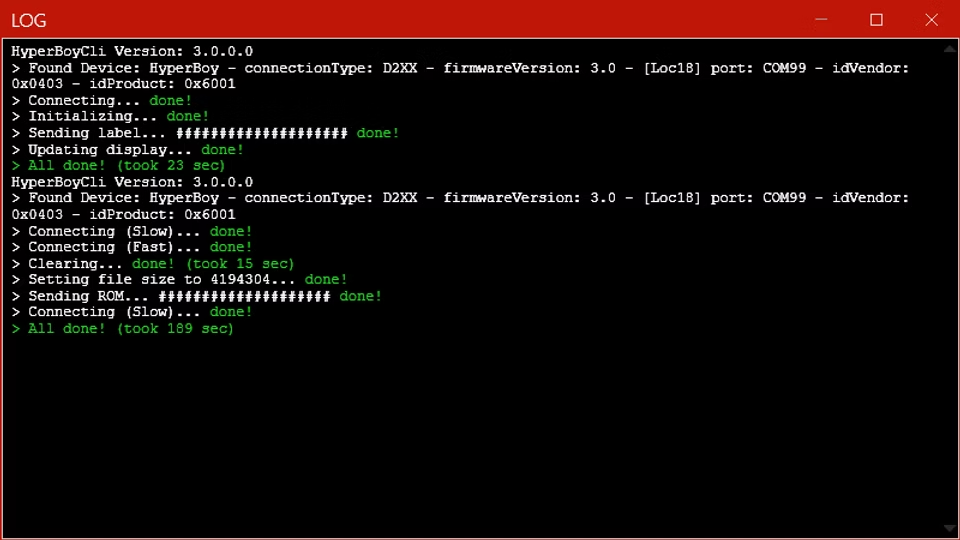
As for flashing games, the loading times were very respectable. I tested the HyperBoy+ with four different ROM sizes using three retail-sized games: 512KB, 1MB, and 2MB, along with my favorite test case, a full copy of Hyper Fighting, which is a 4MB ROM.
For the 512KB (4Mbit) test, I used Mario’s Tennis, the pack-in game that accompanied nearly every Nintendo Virtual Boy system sold at retail. The flash time came in at approximately 27–28 seconds.
Next was the 1MB (8Mbit) test using Jack Bros., a game whose complete North American retail cartridge can sell for well over $1,000. The HyperBoy+ flashed it in approximately 54 seconds, which is a very respectable result, especially considering that nearly every game in the Virtual Boy library falls around or below this size.
For the 2MB (16Mbit) test, I selected Virtual Boy Wario Land. There are not many games in the Virtual Boy library that fall into this size category, with WaterWorld being another example. The flash time for Wario Land was approximately 1 minute and 53 seconds.
Then came the big test: Hyper Fighting.
Hyper Fighting is a 4MB (32Mbit) ROM, a size that many Virtual Boy flash carts simply will not run. I flashed it three separate times, and each test produced the exact same result: 2 minutes and 53 seconds, or 173 seconds.
Most importantly, it ran perfectly every time.
Yes, 173 seconds may sound like a long time, but when many flash carts in the Virtual Boy community finish with a DNF — “Did Not Finish” — when attempting to handle a ROM this large, being able to flash the entire game and run it correctly is excellent news.
There are faster options for flashing 32MBit ROMs, but considering the $215-224.99 (depending on shop) price point and the BWRY eInk display alone, the HyperBoy+ won me over.
Final Thoughts
Kevin Mellott and RetroOnyx did an excellent job deciding what to retain from previous generations of the HyperBoy series, what needed to be removed, and what could be improved.
At $215 (from RetroOnyx), or $224.99 (from Stone Age Gamer), the price will still be high for some buyers. However, being able to run the full version of Hyper Fighting without compromise while also taking full advantage of the impressive BWRY eInk display makes the HyperBoy+ a very compelling piece of Virtual Boy hardware.
Add in the signature red or black anodized aluminum housing, the years of experience Kevin has gained designing flash carts, and the improvements made to the HyperStudio software, and you can really see how far the HyperBoy line has evolved.
Having owned multiple flash carts that Kevin and RetroOnyx have produced over the years, I have genuinely enjoyed seeing that evolution. The move toward a lower-priced option while retaining some of the series’ signature features should make this cart appealing to plenty of Virtual Boy enthusiasts.
I am looking forward to seeing whether Kevin and RetroOnyx decide to make a fourth entry in the series and, if so, where they take it next.
For Virtual Boy fans interested in picking up the RetroOnyx HyperBoy+ 32Mbit Flash Cart, it is available directly from the RetroOnyx shop for $215 USD:
Or if Stone Age Gamer meets your fancy, they also sell the RetroOnyx HyperBoy+ 32Mbit Flash Cart at $224.99 USD and you can grab one from this link:
