


For me, Boulder Dash is a clear example of what made the first home computer generation such a wild and adventurous era in gaming. While the early console industry struggled after its initial boom and eventually crashed in the United States, home computing was already gaining ground across both Europe and North America. With programming languages available out of the box, a wave of bedroom coders emerged, often working with small publishers to bring their ideas to a wider audience. Without large corporate structures steering development, creativity was less constrained and far more experimental. While this movement was especially visible in Europe, North America maintained an active computer scene of its own, with the post-crash landscape further accelerating interest in home computer gaming., especially for Apple and Atari 8-bit computers
While much of the bedroom coder scene is often associated with the UK and mainland Europe, this particular case emerged from North America. In Canada, Chris Gray, a programmer with a background in geometry, created an early BASIC prototype and sent it to Inhome Software. The publisher connected him with Peter Liepa, who reworked the concept for the Atari 400/800. Although Inhome stepped away from the project, the duo continued development and eventually partnered with First Star Software in New York City.
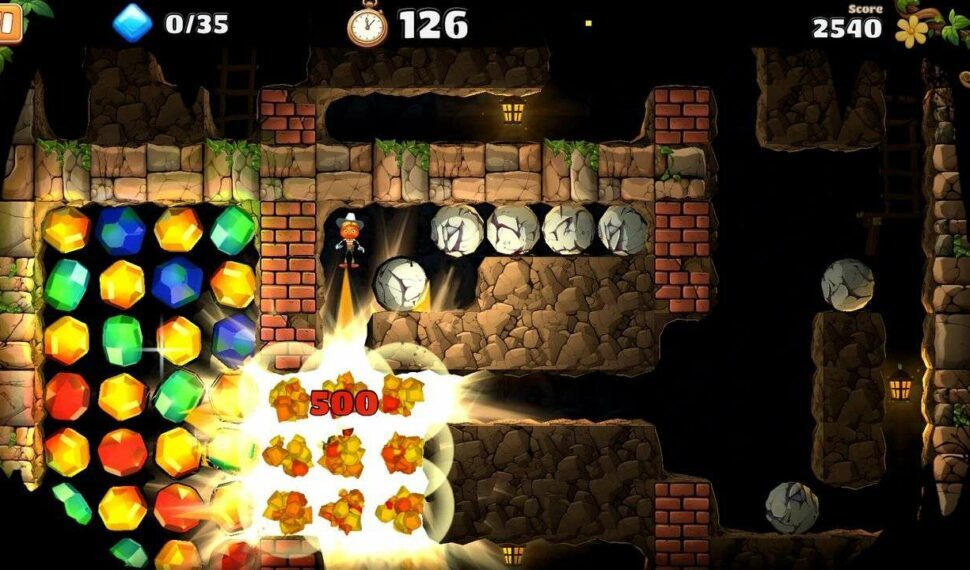
The result was a game built around falling boulders and increasingly complex puzzle design. It became a standout title on Atari systems and later on the Commodore 64, spawning a long list of ports and follow-ups.
Celebration release
With the industry’s ongoing interest in legacy franchises, it was only a matter of time before Boulder Dash returned. German developer BBG Entertainment picked up the license and released Boulder Dash 40th Anniversary in August 2025. Since then, it has made its way to both PC and consoles, combining newly designed content with the original games in an attempt to give the series a renewed push.
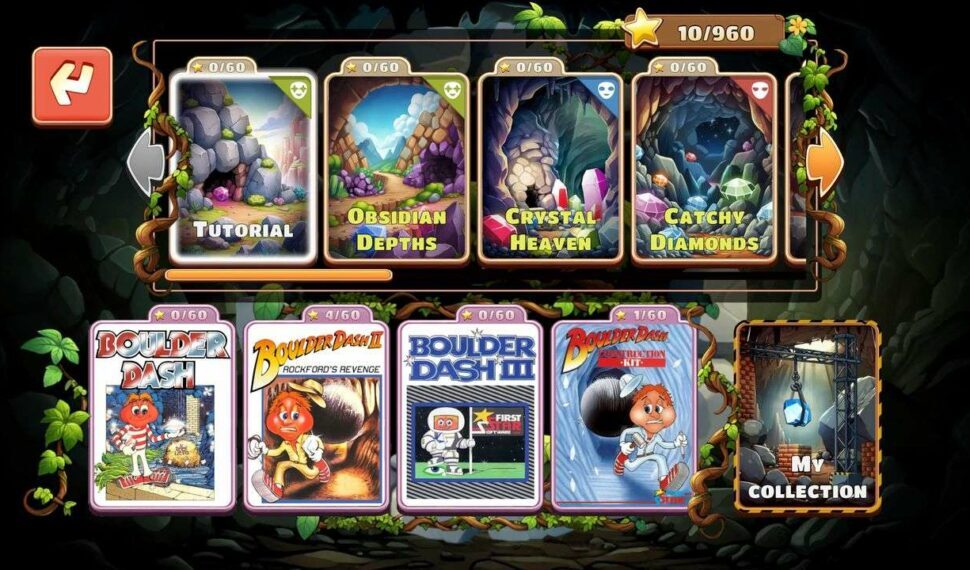
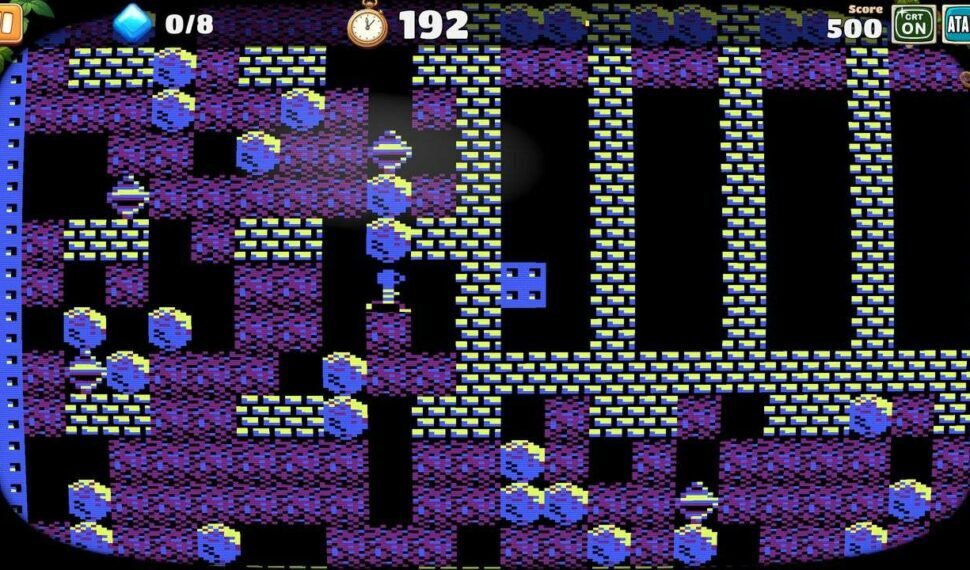
This release includes 240 newly designed levels, presented in a refreshed visual style, of course. The levels are divided into themed sets, all accessible from the start, with progression unlocking additional stages within each set. Alongside the new content, the first three classic Boulder Dash games are included in their original, emulated form. You can even switch between Atari 800 and Commodore 64 variants in the settings.
The early stages of the new content act as a structured introduction to the game’s mechanics. That is a notable improvement over the originals, which offered little guidance. As a result, this version works both as a return for experienced players and as a more approachable entry point for newcomers.
Features
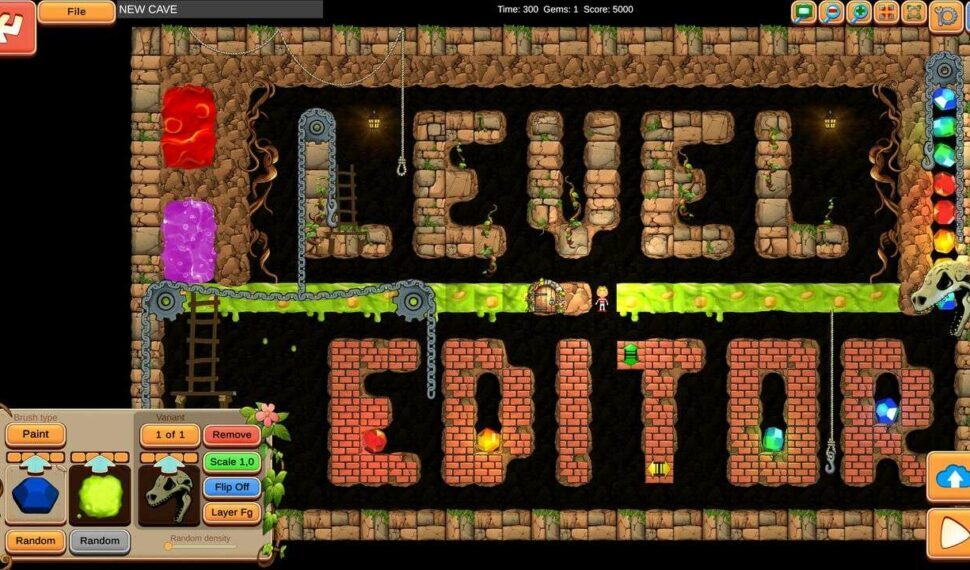
If you want to experiment with Boulder Dash’s mechanics, BBG Entertainment has included a level editor. I have not spent much time with it yet, but it looks like a feature that could add a lot of longevity once you start ‘digging’ into it.
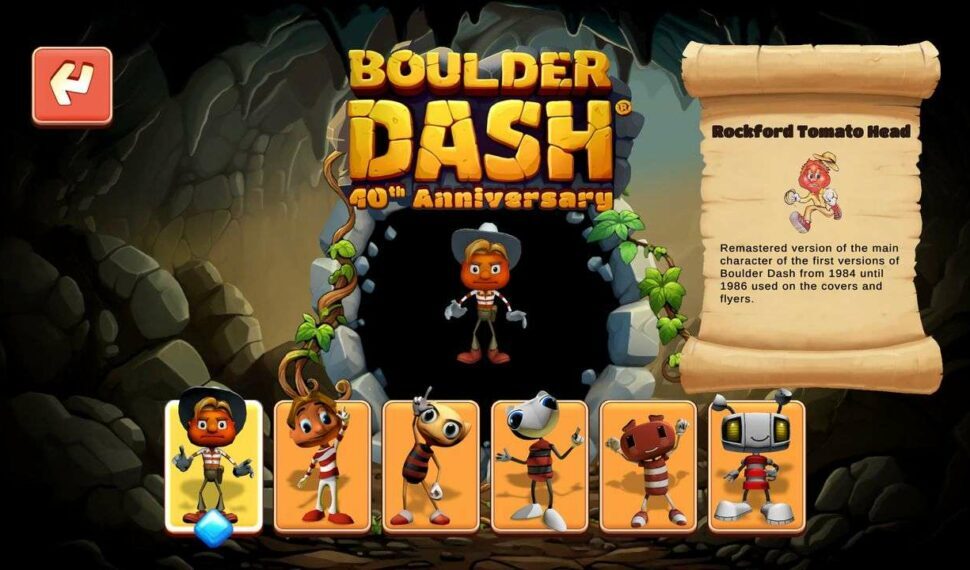
Beyond Rockford, the game also offers a range of alternative characters to play as. These do not drastically change the core experience, but they add some variety as you move through the level sets.
The most impactful additions, however, are the modern convenience features. Quick restarts in particular make a noticeable difference. Once you get used to retrying a level instantly, going back to the original versions without it feels unnecessarily slow. These features are also available when playing the included Atari and Commodore 64 versions, which helps make those far more approachable.
Save states are included as well. While they can feel like they remove some of the intended challenge, it is better to have the option available than not at all.
Puzzle design
A key attraction of Boulder Dash has always been the illusion that levels can be approached in multiple ways. As you progress, it becomes clear that success is not just about solving a puzzle, but about solving it efficiently. You need to collect enough diamonds within the constraints of the level to unlock the exit. The newer levels communicate this far more clearly, reducing the trial-and-error that defined much of the 1980s experience.
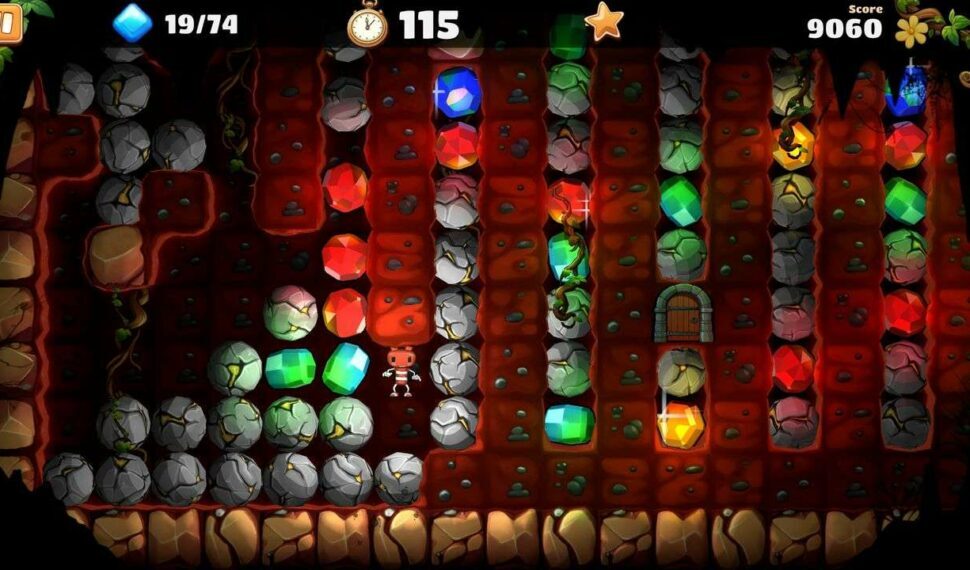
The difficulty curve in the new content is measured. Mechanics are introduced gradually, with new enemies and hazards layered in at a steady pace. Around the midpoint of the third set, the challenge starts to ramp up more noticeably.
After spending some time in the new content, switching back to the original games is a stark contrast. Even early levels can feel unforgiving, especially after spending time with the modernised stages. Solutions are less clearly signposted, and progress often relies on repetition and memorisation. While the new levels help you understand the mechanics, they do not fully prepare you for the rigidity of the originals.
Presentation and performance
On a technical level, the presentation does what it needs to do. Visuals and audio are clean and functional, but do not stand out. The transition from the original single-screen layouts to the updated style works well, as the game’s design lends itself to a straightforward visual overhaul without losing clarity.
BBG has opted for a slightly more “mobile-style” presentation. It can feel somewhat dated, but within the context of the game it fits well enough. More importantly, the controls are tight and responsive, and the game runs without noticeable bugs. That is not always a given in this category of games.
Value
The main consideration is value. At €19.99, the package offers a large amount of content, especially for dedicated fans who want to work through a astonishing 320 levels in total. For more casual players, the price may feel on the high side. With a discount in the 30–40% range, it becomes much easier to recommend to anyone interested in single-screen puzzle design.
If you are a fan of Boulder Dash’s legacy, 40th Anniversary delivers what you would expect from a release like this. The new levels offer a more accessible take on the formula, while the original games remain largely intact for those who prefer the classic experience with add accessibility features. Visually, it is unlikely to impress, but it serves the gameplay well and preserves what makes Boulder Dash work in general. What matters most is that the game delivers on features and is overloaded with content, things that actually matter. - Played and reviewed on XBox Series X
