

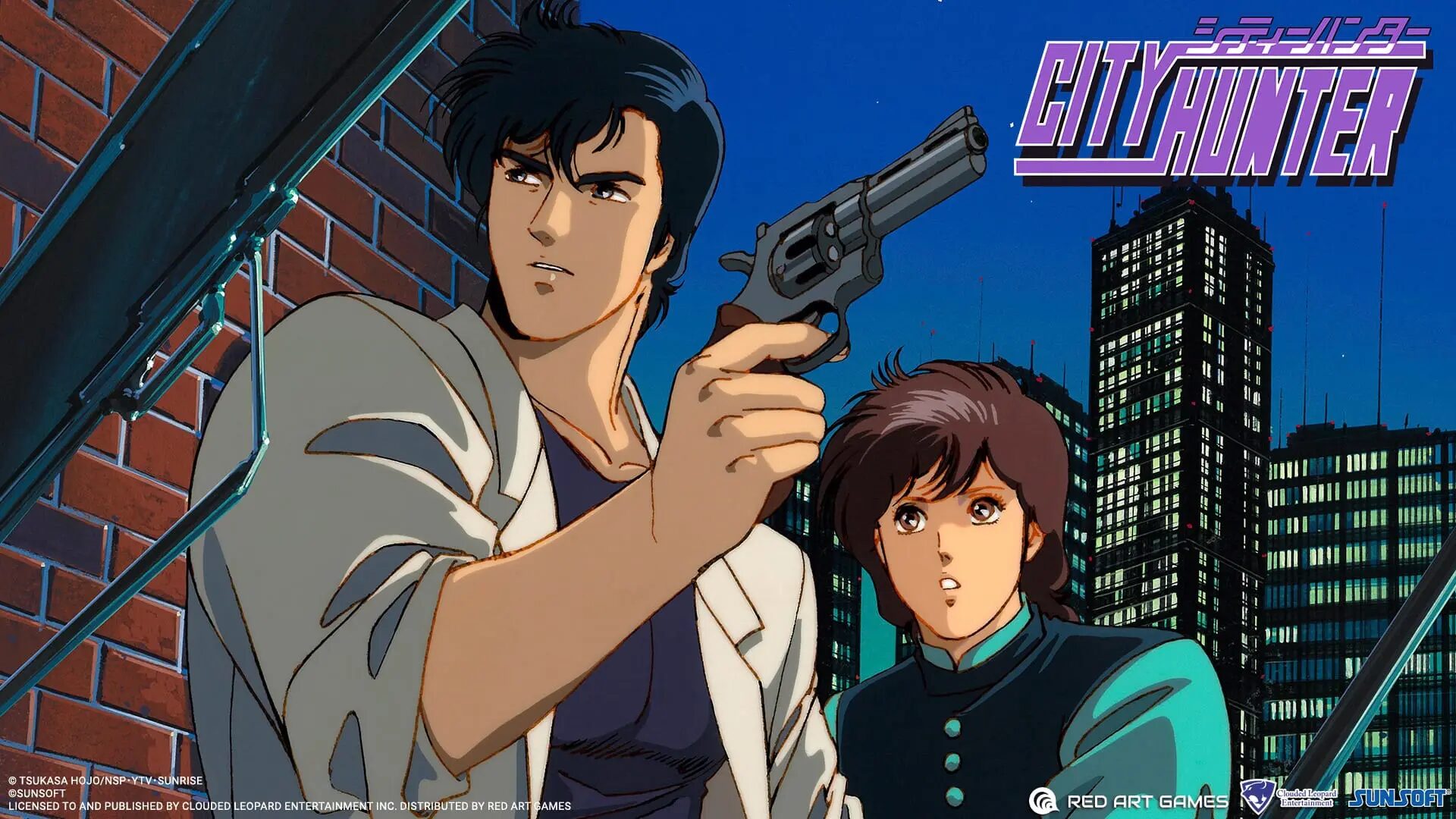

As a 1989 PC Engine original based on the popular manga and anime series, City Hunter feels like one of the earliest console action-platformers to seriously experiment with narrative progression as part of the gameplay itself. At the time, storytelling mechanics of this kind were still mostly reserved for RPGs and adventure games. Games like Ninja Gaiden pushed cinematic storytelling through cutscenes, but City Hunter goes a step further by tying progression directly to clue gathering, NPC interaction and exploration.
The 37-year-old City Hunter you are Ryo Saeba, better known as City Hunter, a detective tasked with solving three cases. Each case sees you dealing with corporate overlords gone mad with power. Along the way, you obviously have a license to kill the ever-spawning henchmen, guards and the like.
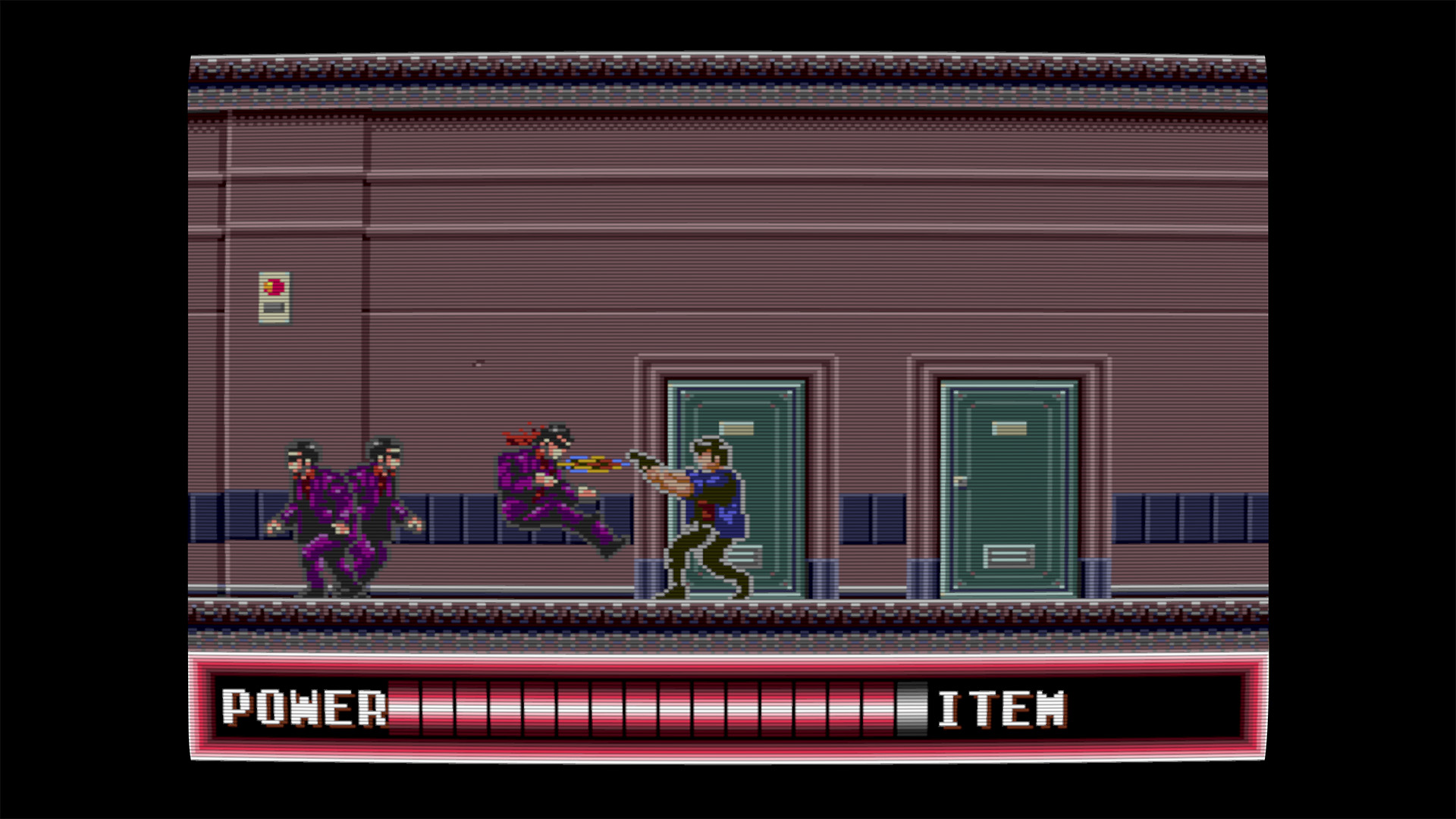
Each mission involves traversing a building in a very Rolling Thunder kind of way. Like in Namco’s classic, you can hop into most doors scattered throughout these buildings. Compared to Rolling Thunder, however, the doors in City Hunter actually lead somewhere. Some rooms are little more than set dressing, while others reveal characters linked to your target who help you out by giving clues, keys or access cards. Other rooms serve as hideouts for tougher henchmen waiting to duke it out with you.
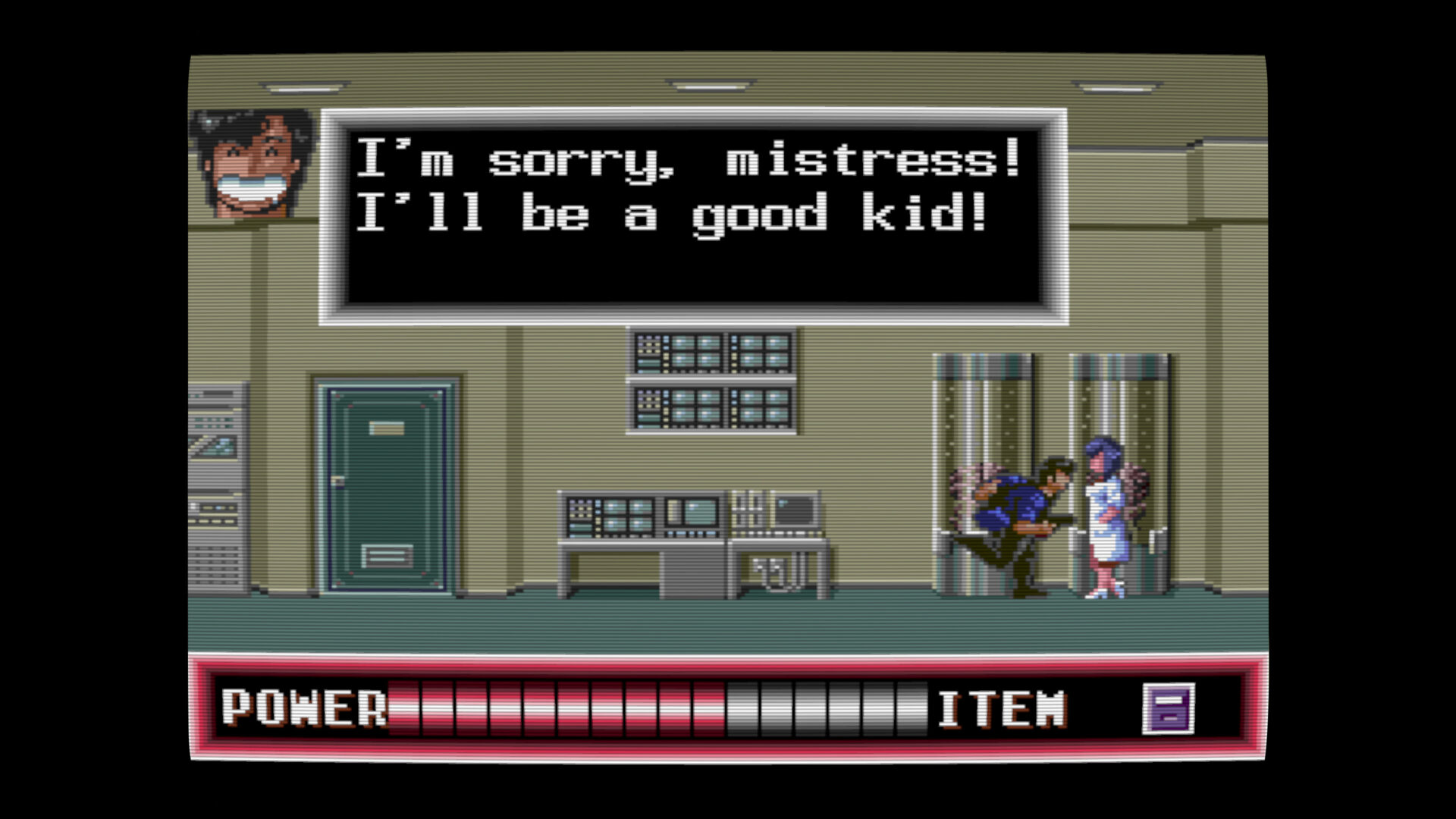
The purpose of the game is to tie the various story beats together and progress through each mission in a particular sequence. This means finding the first person who unlocks a clue or item from another character, and so on. If you talk to someone out of sequence, they reply with “What do you want?” or “Who are you?”, meaning you first need to find another person connected to them.
So, the biggest challenge is finding the right person and kicking off the correct chain of events. Many times, the character giving you a clue or story beat also points you toward the next person by revealing their location within the level, which helps tremendously. If you’re unfamiliar with City Hunter or the way its clue system works, it can feel mildly daunting. At first, you seem to be running through the stage like a headless chicken, picking up chip damage from goons popping up out of nowhere. Once you actually lock into solving the case, though, it becomes far more interesting.
That’s not to say the game doesn’t have issues that need to be addressed. First of all, going through doors often leads to even more doors, creating numerous branching paths through the building. Since most interior sections look nearly identical, getting lost is practically guaranteed, turning navigation into a trial-and-error exercise much more often than I would consider fun. This is without a doubt a direct result of the limitations of 1989 technology, where developers had to cleverly reuse memory allocations, sprites and background layers. Still, it doesn’t change the fact that the game’s ambitions were a bit ahead of what the hardware could comfortably support.
The shoot-’em-up elements feel heavily inspired by Rolling Thunder, but are noticeably cruder and less responsive. Like in Rolling Thunder, you have to manage crowds carefully, as shots have a slight delay that requires some strategizing and anticipation. Turning to face the opposite direction also takes a moment, something you constantly have to account for.
Besides the shooting mechanics, the game occasionally takes some cheap shots at the player, seemingly just to balance the difficulty. If you enter a door and immediately return, chances are high that a goon will be waiting right outside, practically standing on top of you. Combined with the turning animation delay, this often results in unavoidable damage.
All three missions end with a boss fight and, compared to arcade and home console games of the era, these bosses feel like pushovers. I get the sense that difficulty balancing is at play here as well.
With that said, thanks to a huge life bar and a nurse hidden behind one of the doors in every stage, City Hunter is anything but brutally difficult by 1980s standards. The nurse fully restores your health and there’s no limit to how many times you can visit her. Now we’re getting really ‘80s Japanese: every level also features a dressing room where you, or rather your character, can peek at a half-dressed woman through the keyhole. And of course, this “heals” you completely too, you little perv.
The game is based on the popular anime series of the same name and fully embraces that distinctive mid-’80s anime aesthetic that I personally love. From a visual gaming perspective, it shares a surprising amount of DNA with Policenauts and the anime-inspired atmosphere of Golgo 13. In that respect, I absolutely understand the appeal of City Hunter as both a release and an artifact of a specific era.
The always-attractive color palette of the PC Engine works especially well with the game’s more grounded and rowdy anime visuals. In that sense, the platform and the City Hunter IP feel like a perfect match. Viewed through a 1989 lens, the game genuinely looks fantastic.
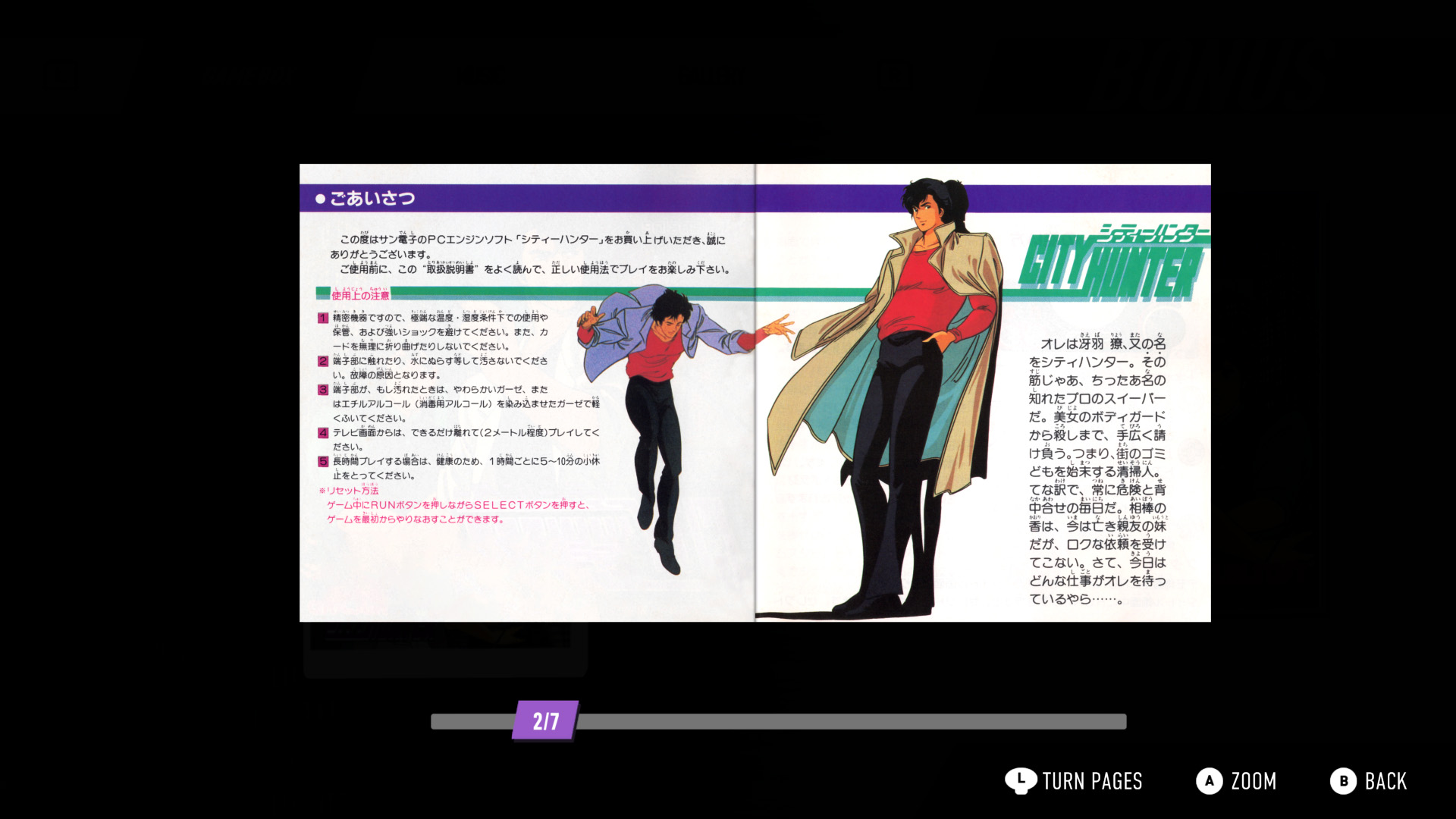
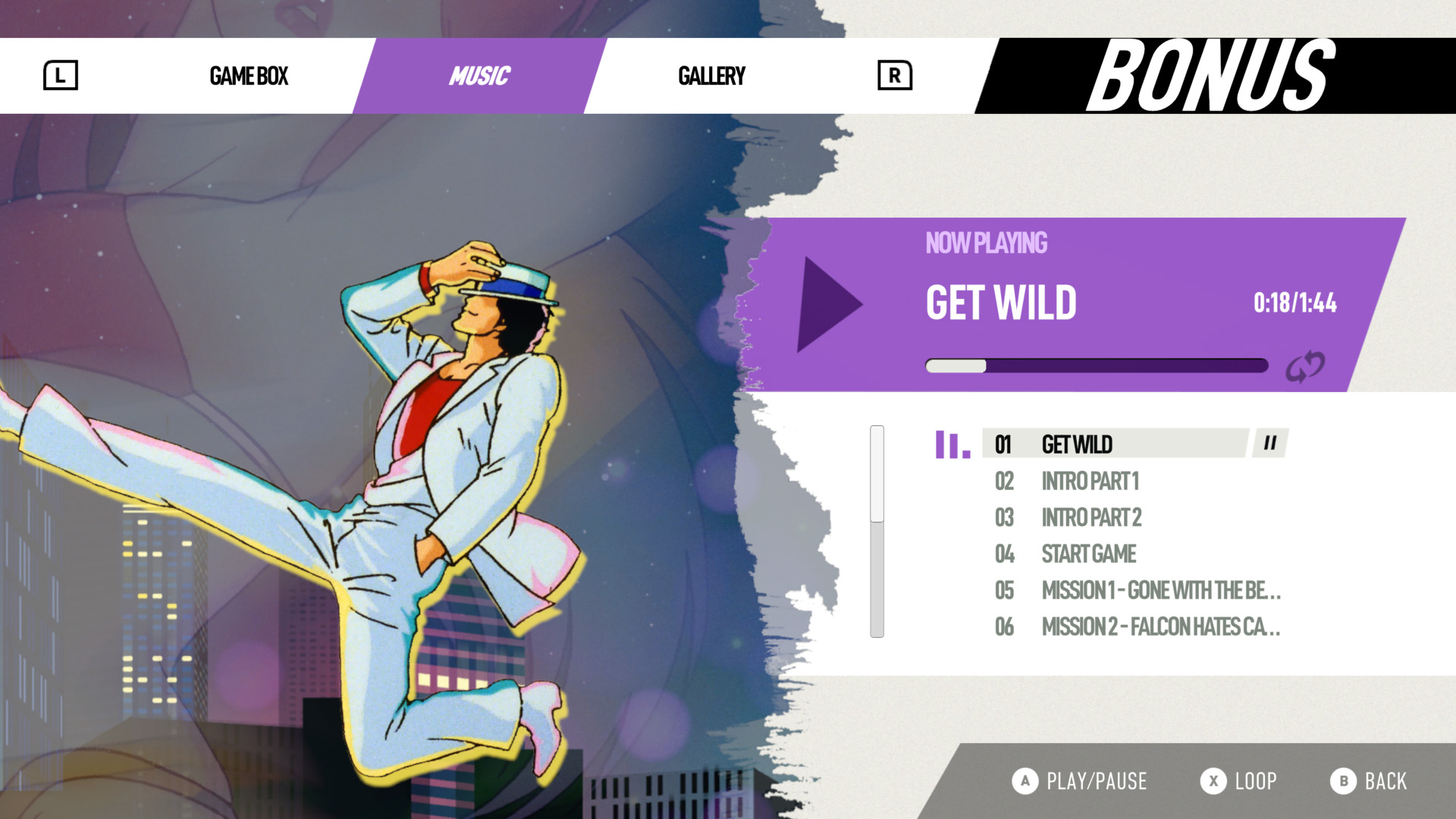
I’m fairly confident the game itself won’t win over many new fans, though. It feels like an outlier in Sunsoft’s library, attempting to adapt the anime’s “job-of-the-week” structure while simultaneously feeling like a sidestep compared to the company’s long list of excellent platformers. For nostalgia value alone, however, it is worth a look, and both Red Art Games and Clouded Leopard Entertainment have done about as much as they possibly could in terms of extras, including soundtracks, box art, manual and additional artwork. Any retro shonen anime fan will probably grin from ear to ear hearing the fantastic theme song looping on the title screen and menus. And of course, Sunsoft, alongside Capcom and Konami, had one of the best sound departments in the business. City Hunter is no exception, with a soundtrack that is once again absurdly catchy and head-bobbingly good.
The biggest sticking point may ultimately be the launch price of €24.99. That is a steep ask for what is, at its core, a fairly short and niche retro release. Even longtime fans may hesitate before pulling the trigger. As mentioned, Clouded Leopard deserves credit for the production values and the amount of bonus material included, but the core game is over before you know it. That makes the asking price difficult to fully justify.
