

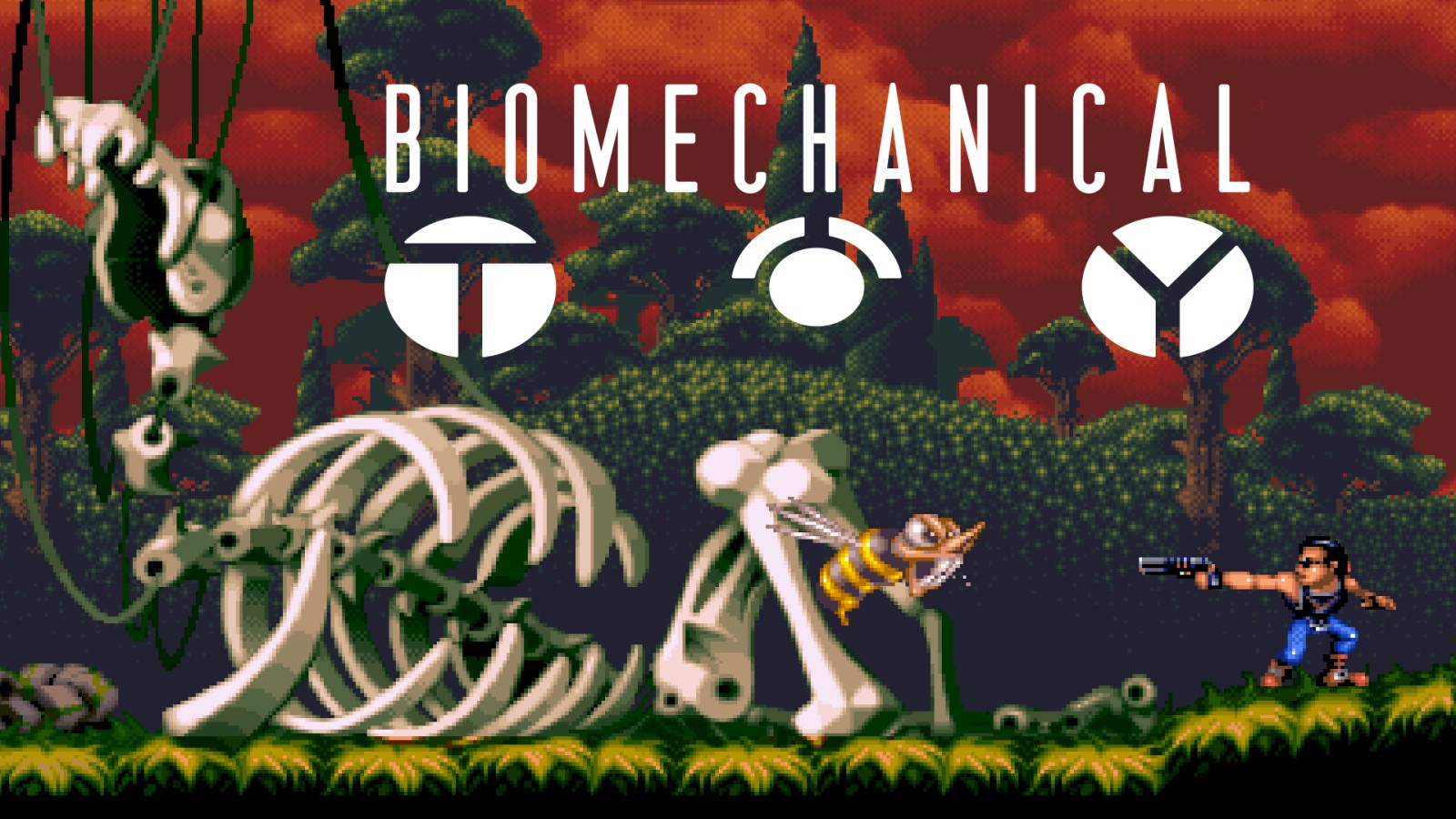

QUByte has a knack for picking projects for its QUbyte Classics label that are so niche and specific you can’t help but wonder what the ROI is. Biomechanical Toy feels like a game aimed at an audience that grew up with Spain’s often underappreciated recreativos culture. Thousands of arcade cabinets populated the bars and cafés that were, and still are, an inherent part of Spanish social life, occupying the time of kids and young adults while parents and family indulged in the country’s vibrant nightlife.
Spain’s Forgotten Arcade Gem
Spain has always been a hotbed for bedroom developers, first making their mark on the ZX Spectrum, Amstrad CPC, MSX and Commodore 64. Arcade development, on the other hand, lived an almost parallel life. It wasn’t until the end of the home computer era in the early 1990s that some of the brightest minds from the home computer scene bundled their skills and jumped to the arcade market. Gaelco was one of the first Spanish developers and publishers to move beyond the usual Eurojank and compete with the arcade heavyweights of the day, such as Sega, Capcom and SNK.
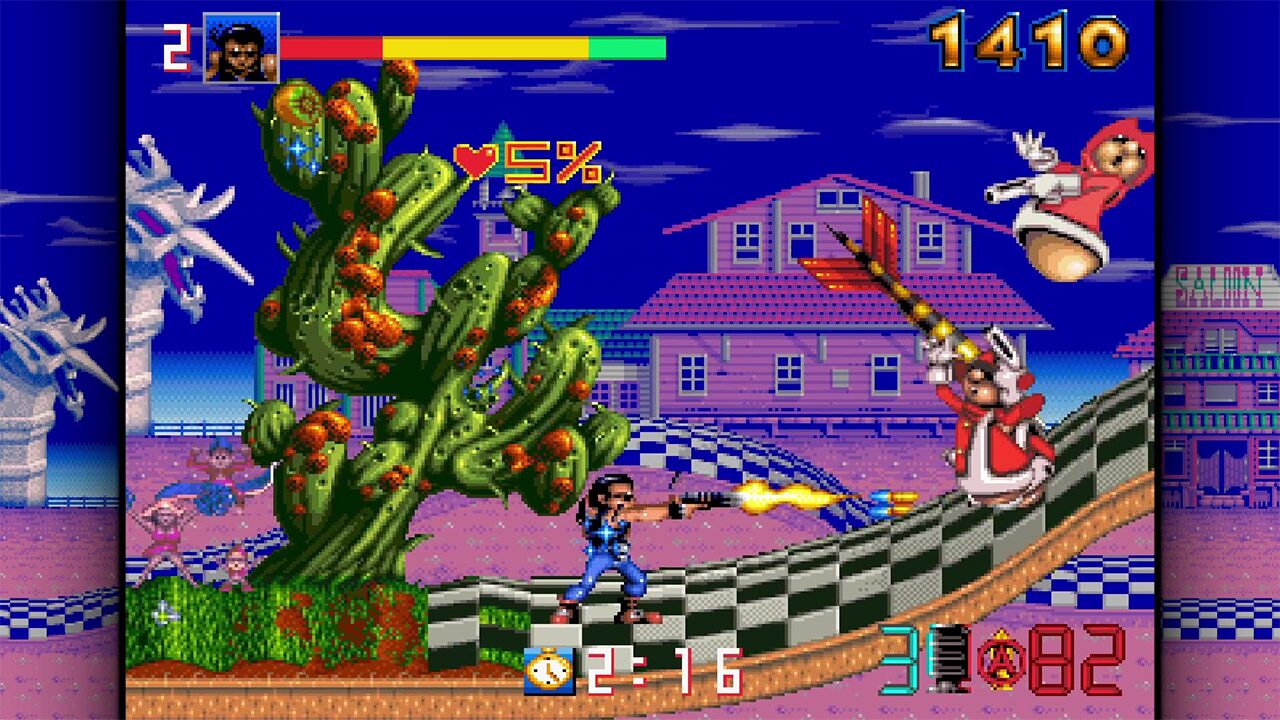
Biomechanical Toy arrived quite late in Gaelco’s 2D timeline, well after its biggest successes like Thunder Hoop and World Rally. It was released in 1995, just before the arcade and console industry pivoted almost entirely towards 3D gaming.
Within Piko Interactive’s licensed catalogue, Biomechanical Toy feels like a somewhat random choice for a re-release, as virtually no one outside Spain has ever heard of it. From a preservation standpoint, though, it is an interesting addition. The game is often regarded as a technical showcase of the late 2D arcade era. It boasts fast-moving, colourful graphics with huge sprites. The run-and-gun platformer is also known for spawning vast numbers of enemies on screen and directly into your path.
Toybox Warfare
As the Steven Seagal look-alike action figure Inguz, you’re sent on a mission to recover the Magical Pendulum that brings toys to life. It has been stolen by the inaptly named villain Scrubby from the rather incompetent guardian Relik. Inguz carries a handgun that can be upgraded along the way, giving you ample firepower to cap all the tormented toys Scrubby sends your way. You can shoot in eight directions, and you can also jump on and bounce off enemies, a mechanic that comes in handy surprisingly often. Expect enemies to come from all angles and in large numbers. Fortunately, you have a life bar that allows you to survive more than just a couple of hits.
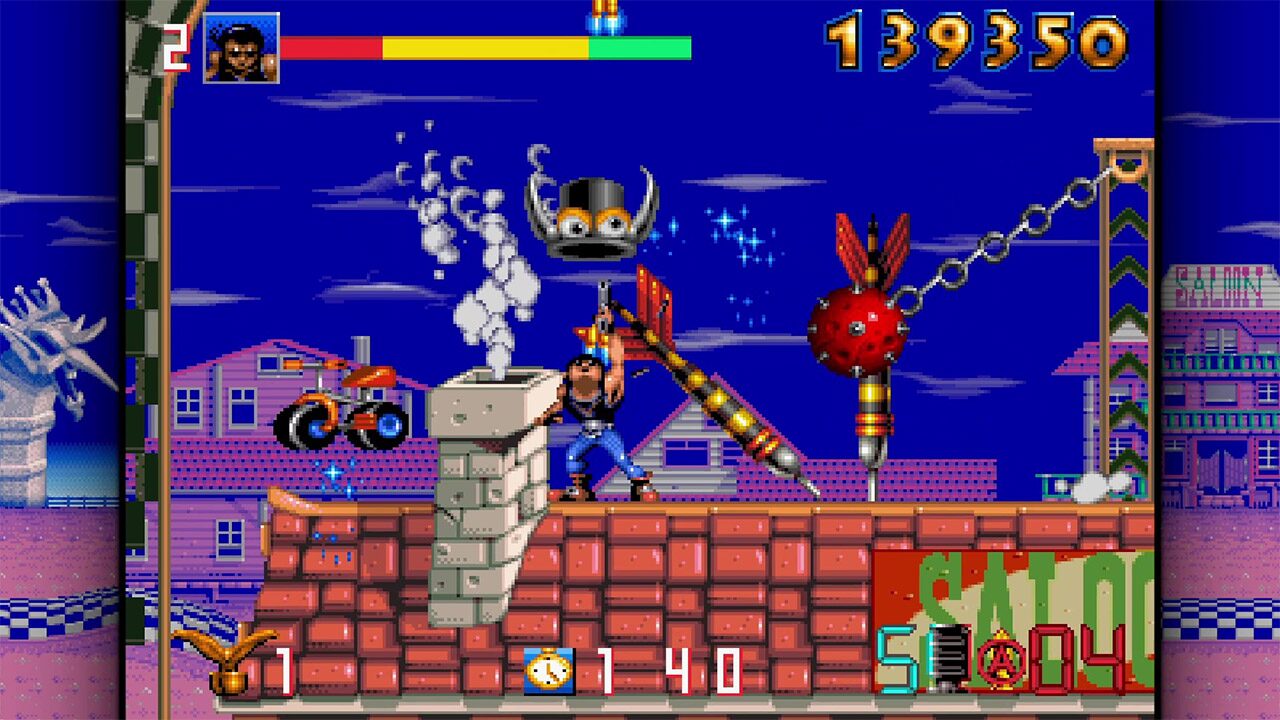
The toy-themed stages are extremely colourful and lean far more towards Zool and other Amiga classics than run-and-gun games like Contra or Metal Slug.
Embrace the Chaos
Once you click with the pacing of the game and stop trying to clear the screen before progressing, it flows better than I initially gave it credit for. Still, the game wants you dead and throws everything the hardware is capable of at you at any given moment. You’re also constantly pushed forward by a sharply tuned countdown timer that piles on even more pressure. Thank God for QUByte and Piko Interactive’s Bleem! emulation engine, which allows you to rewind and erase the cheap deaths you’ll encounter dozens of times. This is absolutely for the better, and I highly encourage you to use it. If the game is unfair, then two can play that game.
The bosses, on the other hand, are a bit of a pushover. Their attack patterns are easy to figure out and even easier to manage.
Technology Over Personality
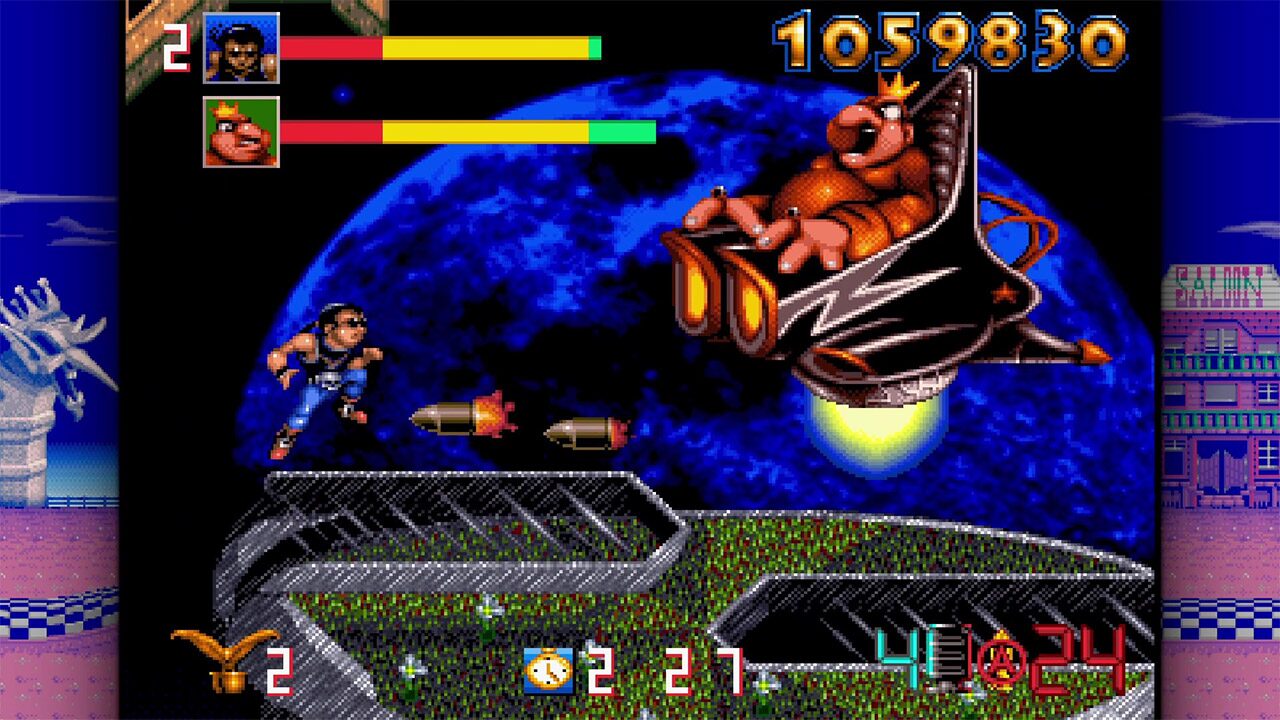
Looking back today, despite being released a year apart, the comparison with Metal Slug feels inevitable. When you compare the two, the difference in design philosophy and gameplay language becomes immediately apparent. On a technical level, Biomechanical Toy is remarkably accomplished. With virtually no slowdown, it handles its constant stream of enemies like a champ, while Metal Slug’s Neo Geo hardware would often creak under the weight of its own ambition. Biomechanical Toy is technically impressive, but where Metal Slug bursts with character, its Spanish counterpart struggles to offer much beyond technical prowess. It is fun to an extent, but often lacks any real contextual sense. Like many European action games of the era, it bombards you with enemies from the very start, overwhelming you and forcing you to abandon any tactical approach.
As always, QUByte’s treatment of the game is sublime, with solid Bleem! emulation and a clean interface that incorporates the modern features we’ve come to expect from the publisher. Rewind, Save States, CRT screen filters, a Jukebox and an artwork gallery all add value without getting in the way of the original arcade experience.
With the Eurojank still clearly present, even in a 1995 release when studios like Psygnosis had already matured their design philosophy and much of the industry was looking towards 3D, I have to say Biomechanical Toy is probably more interesting from a video game anthropological perspective than it is to actually play. But for what it is and the price it sells for, it remains a solid run-and-gun. It could have been a great one if it had just been able to suppress its compulsive need to shove everything in your face instead of giving you a chance to admire its beautiful surroundings. All in all, a decent addition to the QUbyte Classic collection.
