

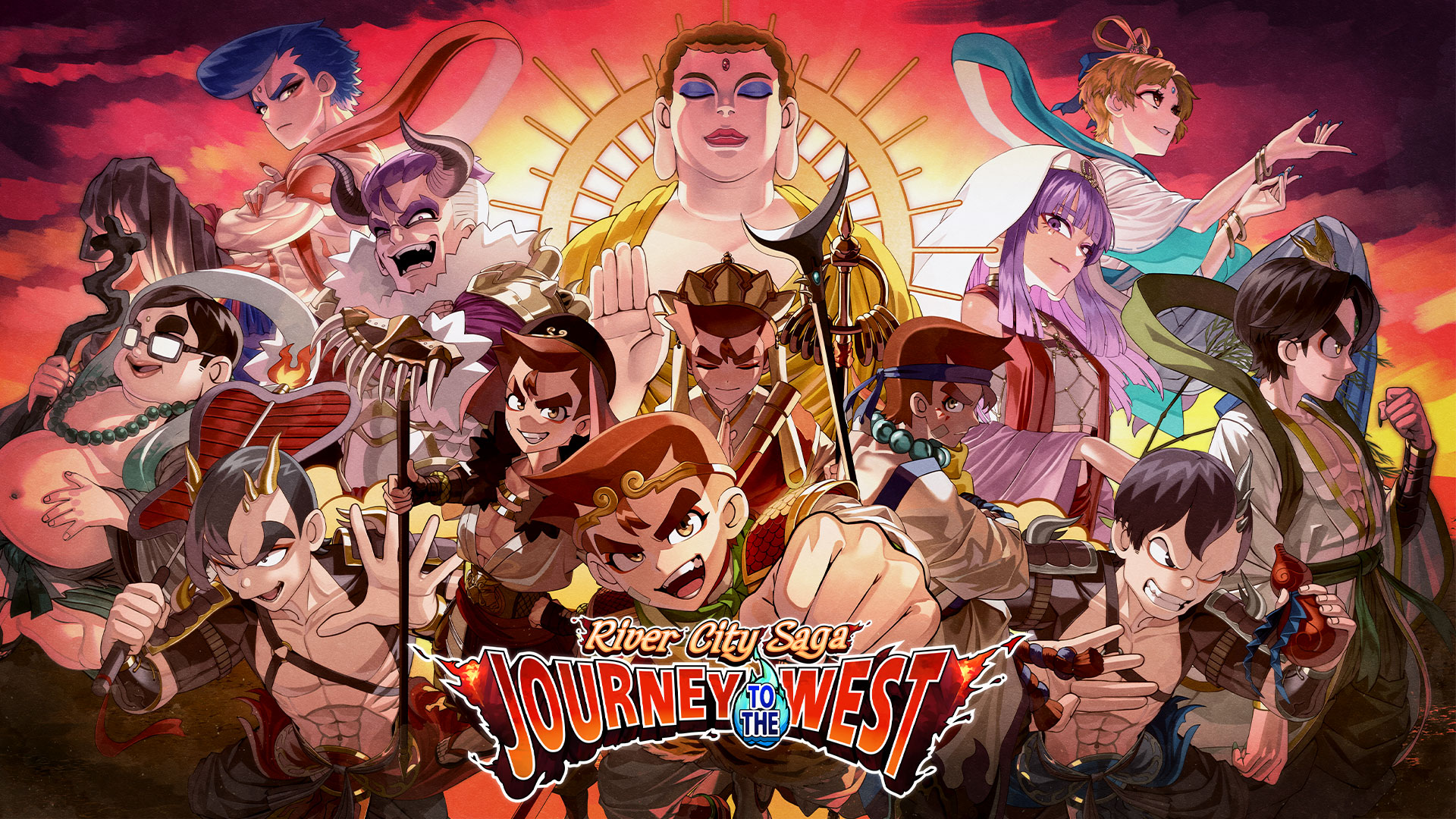

After River City Saga: Three Kingdoms, Arc System Works once again places the heroes of the Kunio-kun universe in the setting of Chinese cultural heritage, this time adapting the almost 500-year-old Journey to the West. Just like Three Kingdoms, all the familiar characters “play” a role in this epic tale as if it were a stage production. While the beat ’em up gameplay remains largely the same, the series has now succumbed to the plague that is the roguelite genre.
That probably sounds rather biased, and admittedly it is. I simply don’t think every legacy franchise needs to become a roguelite because it requires less handcrafted content and is designed to be replayed over and over again. Yes, that is almost as cynical as my earlier “plague” remark, but I have seen several personal favourites lose what made them special in an attempt to do something “new” within a more efficient development cycle. Turnip Boy is probably the most striking example that comes to mind.
The highly enjoyable Zelda-esque 2D action RPG suddenly became a roguelite and completely lost me after just a few hours. The quirky humour and silliness were still there, but the sense of progression and story building, while never perfect to begin with, simply disappeared for me.
A franchise built on beat ’em ups
Kunio-kun has a much broader universe than Turnip Boy. It is a franchise spanning decades, with spin-offs covering all sorts of genres. Even so, its foundation has always been the beat ’em up genre. Under Arc System Works’ stewardship, those classic mechanics were successfully modernised with River City Girls, whose success eventually paved the way for the return of the River City Saga series. Three Kingdoms, despite being based on Chinese literature rather than Japanese street brawls, felt like a direct continuation of its NES roots, blended with the modern gameplay refinements introduced in River City Girls.
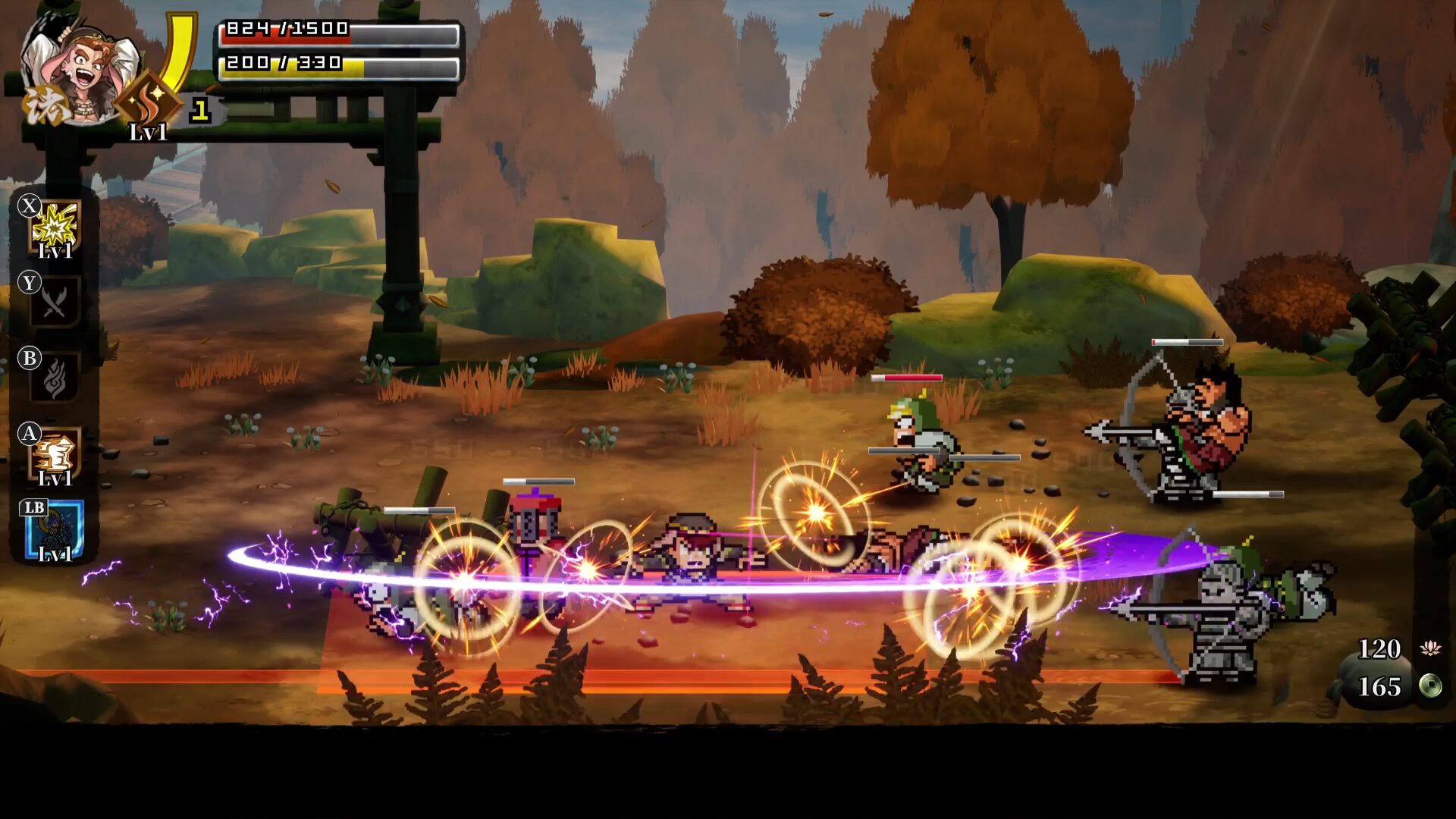
So with Journey to the West, Arc System Works adds a roguelite layer to that formula. Fortunately, it never fully commits to the genre’s harsher conventions. That is an understandable decision, as going all-in would probably have alienated a sizeable part of Kunio-kun’s Japanese fanbase.
A 500-year-old road trip
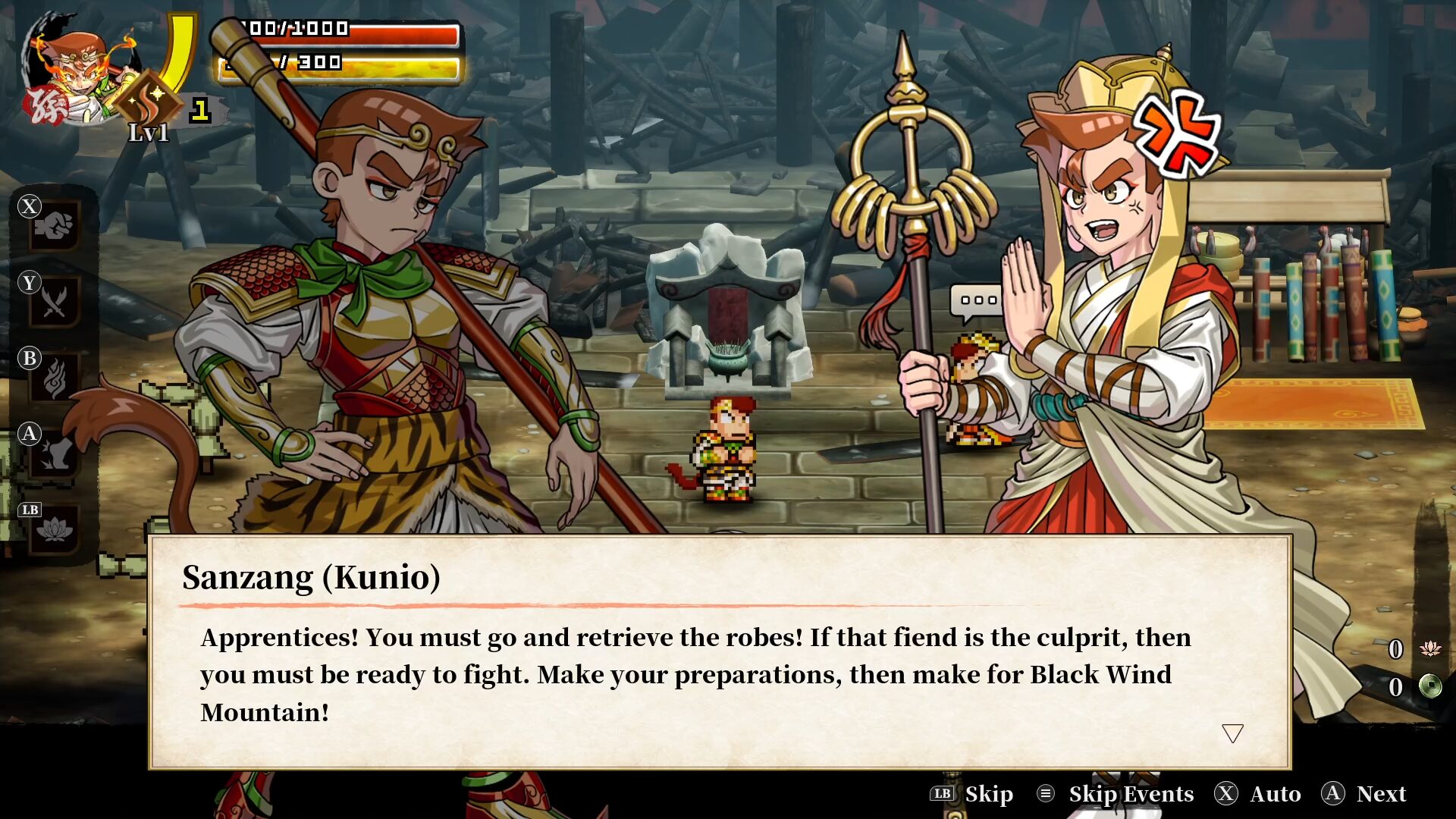
You play as Sun Wukong, who joins the monk Tang Sanzang as the first of his three disciples on a mythical retelling of his pilgrimage to India. In essence, it is a 500-year-old fantasy road trip with plenty of buddy-comedy moments. Sanzang mainly serves as the NPC who keeps the story moving, while you can choose to play as Wukong, Zhu Bajie or Sha Wujing. Each character has distinct attributes and a completely different weapon style, ranging from Wukong’s iconic staff to bows and heavy hammers.
Sutras make for a natural roguelite system
The game cleverly reimagines the sacred Sutras as blessings bestowed by divine beings, turning them into the foundation of its roguelite upgrade system. Each Sutra is connected to a divine figure and grants the heroes supernatural powers to overcome the challenges ahead.
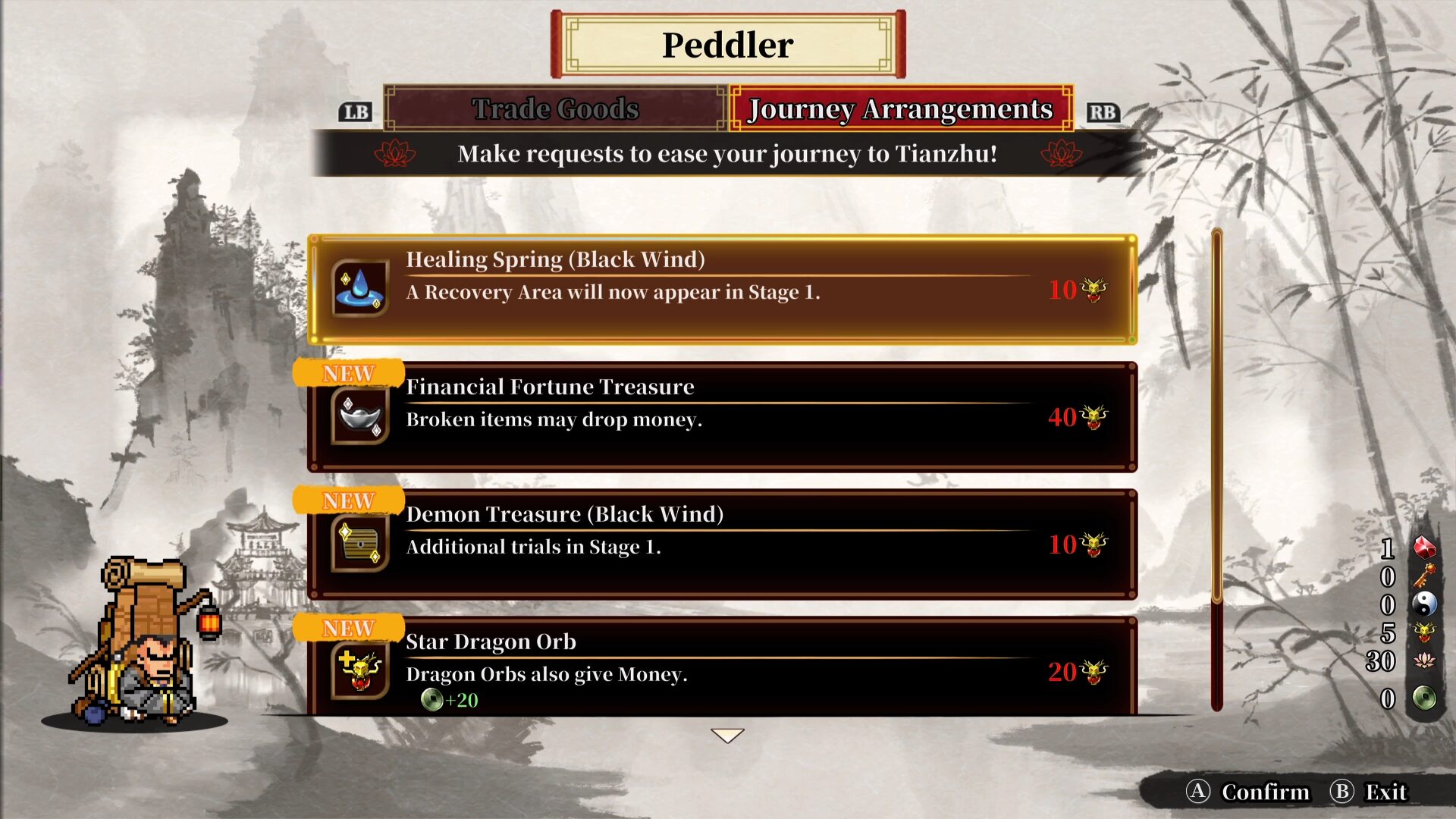
The different Sutras, together offering a pool of 80 Secret Skills, sound like they should provide an enormous variety of possible builds. In practice, however, many of those skills look visually distinct while producing fairly similar results.
Ironically, these Sutras fit the roguelite structure remarkably well. After clearing each stage, you select one of two available Sutras, each granting one of four possible attacks or upgrades. These range from passive buffs to offensive abilities and special attacks. Between stages, you can spend the various currencies you’ve collected on permanent character upgrades.
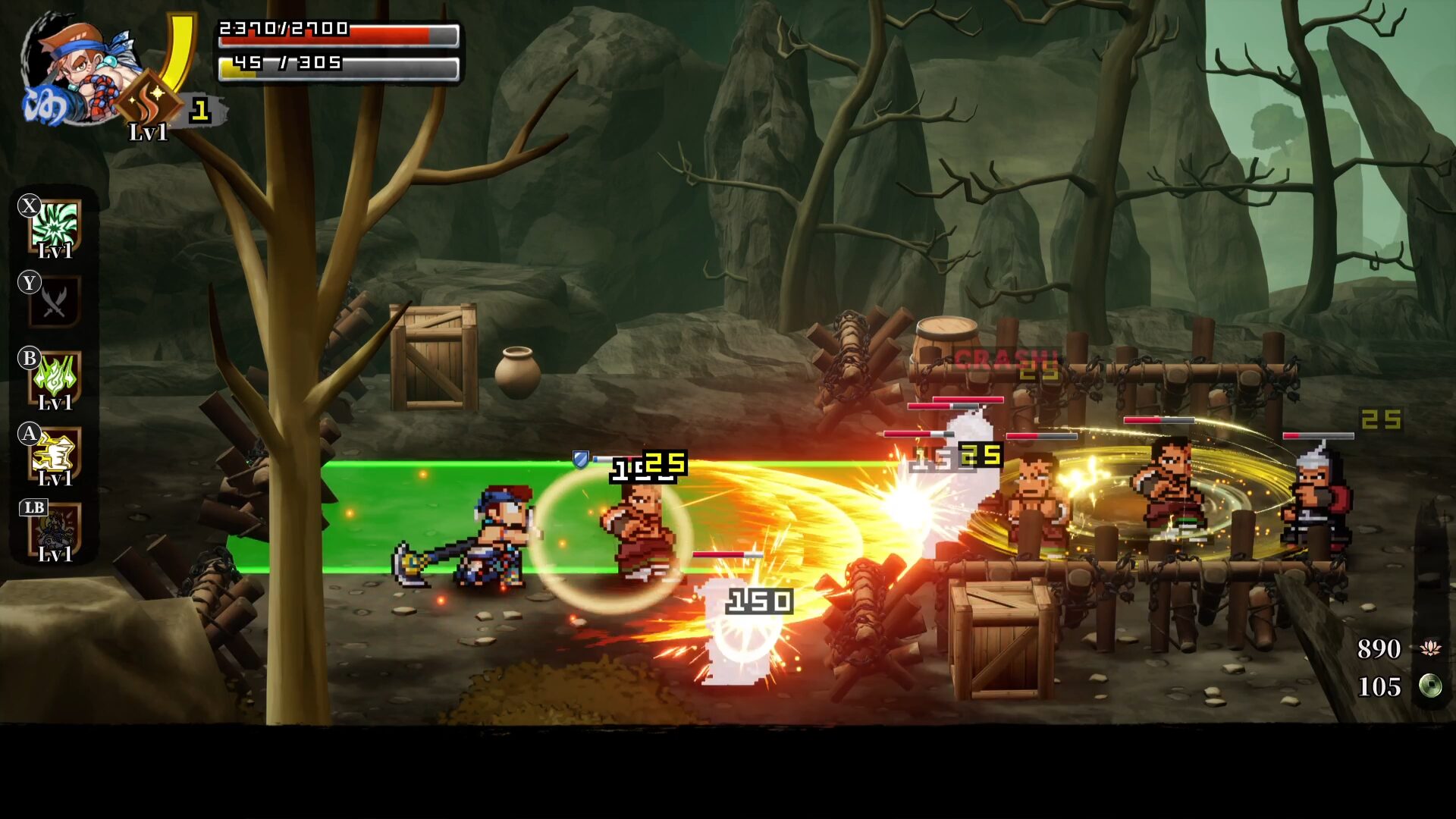
Some attacks differ only slightly in how they affect combat. Dash abilities, for example, mainly vary in range, while Specials offer much more noticeable differences by introducing ranged attacks or heavier impact moves.
Caught between two genres
The core expectation of a roguelite is that dying sends you back to the beginning, making every successful run feel earned after multiple failed attempts. That inherently requires a fairly steep difficulty curve from the outset.
This is where Journey to the West feels somewhat uncertain about what it wants to be. Mainly because the beat ’em up gameplay is not significantly more difficult than Three Kingdoms. Your first runs often carry you surprisingly far. As a result, it takes quite a while before your character build really starts to develop. Shorter, more challenging runs would have allowed players to invest in permanent upgrades more frequently, making progression feel more satisfying.
So, as a pure roguelite, the balance feels slightly off. Fans of the genre may find it a little too forgiving as well. Players who normally avoid roguelites, on the other hand, may actually find Journey to the West to be an accessible gateway into the genre.
Personally, I sit somewhere in the middle. I’m not naturally drawn to roguelites, but I’ve played enough of them over the years to appreciate what they can offer. Because of that, Journey to the West became something of a comfort game for me over the past few weeks.
The familiar River City Saga beat ’em up gameplay remains approachable and enjoyable throughout. Storytelling follows the series’ traditional style, delivering lengthy conversations filled with light sarcasm and playful humour. The whole “re-enactment” concept still feels a little strange, but just like in Three Kingdoms, it ultimately works surprisingly well.
I also found Journey to the West to be a stronger fit for a game adaptation than Three Kingdoms. Its narrative is far more straightforward, contains far less political intrigue and is considerably easier to follow from beginning to end.
Reviewed on Nintendo Switch 2.
Arc System Works played it a little safe with the usual roguelite difficulty curve in River City Saga: Journey to the West to avoid alienating its core Kunio-kun fanbase. Normally, that sounds like a recipe for trouble. This time, however, sitting somewhere in the middle actually works. Combining 80 Secret Skills to shape your favourite Kunio-kun character creates a roguelite comfort game that is fast, snappy and enjoyable, even if it never sets the gaming world on fire.
