


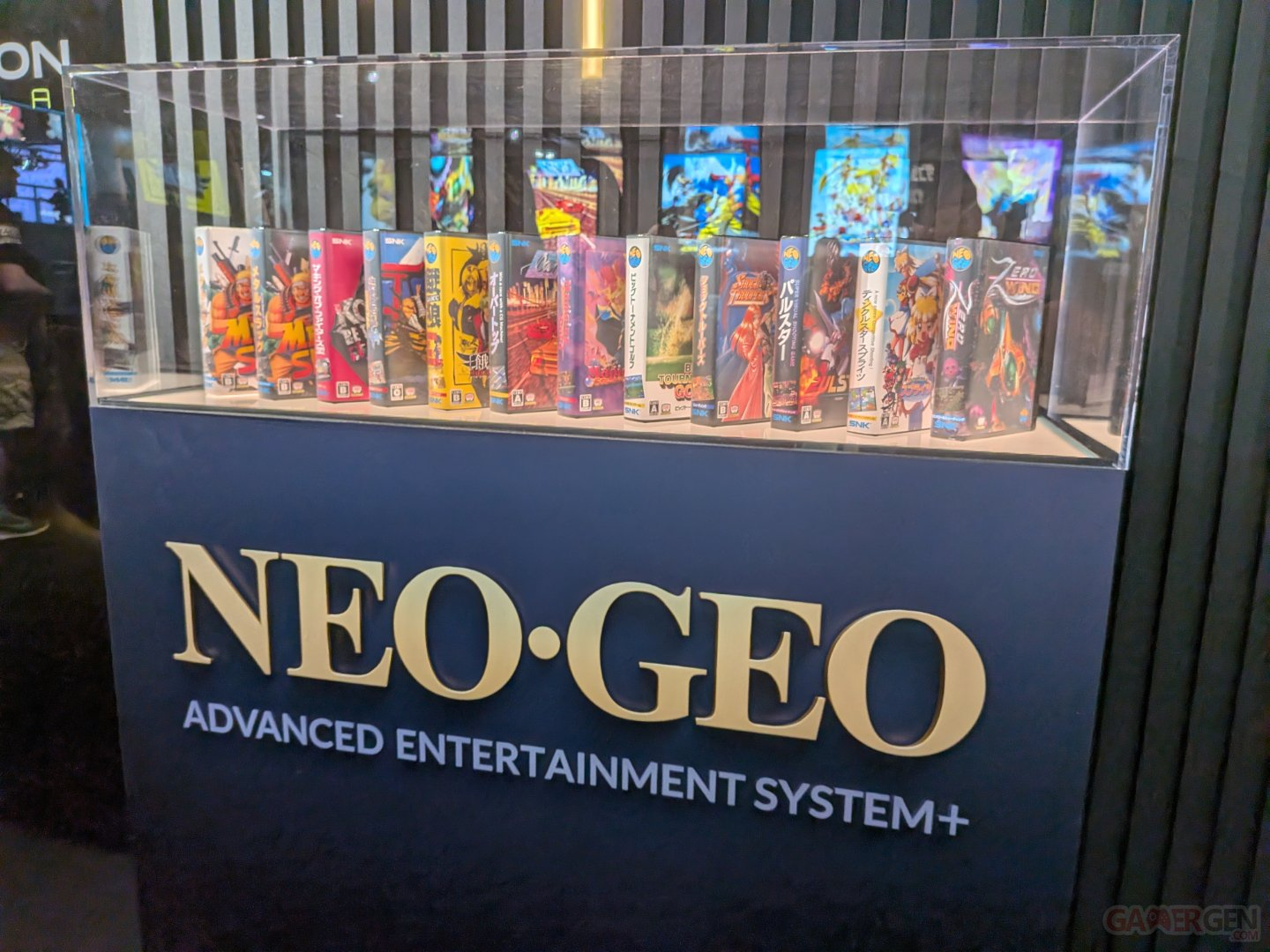
With the Neo Geo AES+ playable at Tokyo Game Show, we’re finally learning more about what is actually going on underneath its familiar black shell. In a new video from Neo Ness, the team behind the system goes into some of the technical decisions behind the hardware, including why it uses custom ASICs rather than an FPGA, how original controllers are handled and why the old AV connector has received a useful upgrade.
The details in this article are primarily based on Neo Ness’ interview at Tokyo Game Show. While several of the broader specifications have already been confirmed by PLAION REPLAI, the video provides considerably more insight into the engineering choices behind them.
Not emulation and not an FPGA
PLAION has made quite a point of the AES+ not being another emulation-based recreation of classic hardware. Instead, the original Neo Geo hardware has effectively been recreated in newly manufactured ASICs: dedicated chips with their functionality fixed directly in silicon.
This is also an important distinction from FPGA-based systems. An FPGA can be reprogrammed to reproduce different hardware designs, while the logic inside an ASIC is manufactured for a specific purpose. In this case, that purpose is being a Neo Geo.
According to the explanation in Neo Ness’ video, there are some very practical reasons for going this route beyond authenticity. One of those is voltage.
Native 5V makes a big difference
Original Neo Geo hardware and its cartridges operate using 5V logic. Modern FPGAs generally operate at considerably lower voltages, which means additional voltage level shifting would be required to safely interface with original cartridges. That becomes a rather significant consideration when you’re dealing with the Neo Geo’s huge cartridge connector.
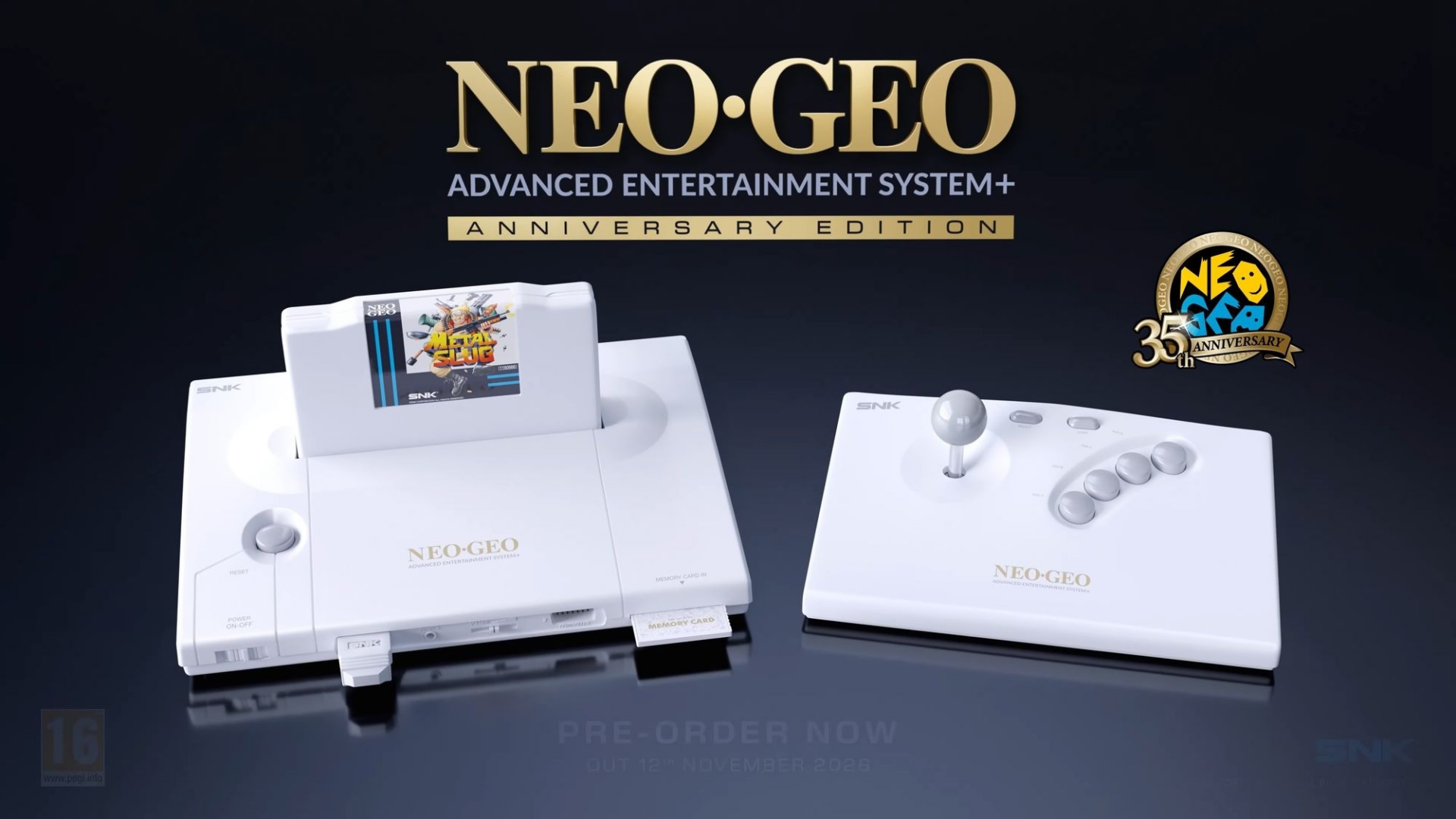
The AES+ ASICs can instead interface with the cartridge bus natively at 5V. According to the team interviewed by Neo Ness, this eliminates the need for a large number of level shifters across the roughly 200-pin cartridge interface.
For a machine specifically designed to accept original cartridges from the 1990s, that’s an important architectural choice. It also makes ASIC production more economical at the quantities PLAION is targeting.
Old controllers remain old-school
PLAION has also retained the original DB15 controller ports on the front of the machine. This isn’t simply a modern controller interface hiding behind an old connector. According to the Neo Ness interview, inputs through the DB15 ports are handled directly by the hardware, without an additional software layer introducing latency.
That means original Neo Geo controllers can effectively communicate with the AES+ in much the same way they did with an original console. The wireless controllers naturally require another step. Interestingly, PLAION has avoided Bluetooth and instead uses a direct 2.4 GHz radio connection between the controller and its DB15 receiver.
According to the interview, the complete wireless implementation adds around 2 ms of latency, coming from the modulation and hardware processing required to transmit the signal.
The old AV port gets an upgrade
While HDMI is obviously part of the AES+, PLAION hasn’t abandoned analogue video either. The system retains an AV connection for use with CRT displays, but there is a useful change hiding in that familiar-looking socket. The original AES only provided mono audio through its rear DIN connector. Getting stereo sound meant using the headphone output on the front of the console.
The AES+ instead adopts the Sega Mega Drive/Genesis 2 DIN connector layout. This allows stereo audio to be carried directly through the rear AV connection while also opening the door to readily available compatible cables. According to the Neo Ness interview, PLAION is planning its own SCART and five-plug component cables as accessories, but existing compatible Mega Drive/Genesis 2 cables can also be used.
Recreating rather than approximating
Taken together, these choices give a clearer picture of what PLAION means when it describes the AES+ as a “hardware-faithful reimplementation.” So, with all these questions out of the way, it’s going to be a long year before we can finally start playing. In the meantime, keep checking Retrolike.net for the latest NEO GEO AES+ news.
